Our Spaces
EartHand connects local makers to local materials here in our urban setting.
We operate within two primary spaces—Trillium Park and Means of Production Garden—and source most of our workshop materials from these spaces as well as Barnston Island and the KPU Flax Garden. These spaces are stewarded by EartHand members and community partners.
Trillium Park
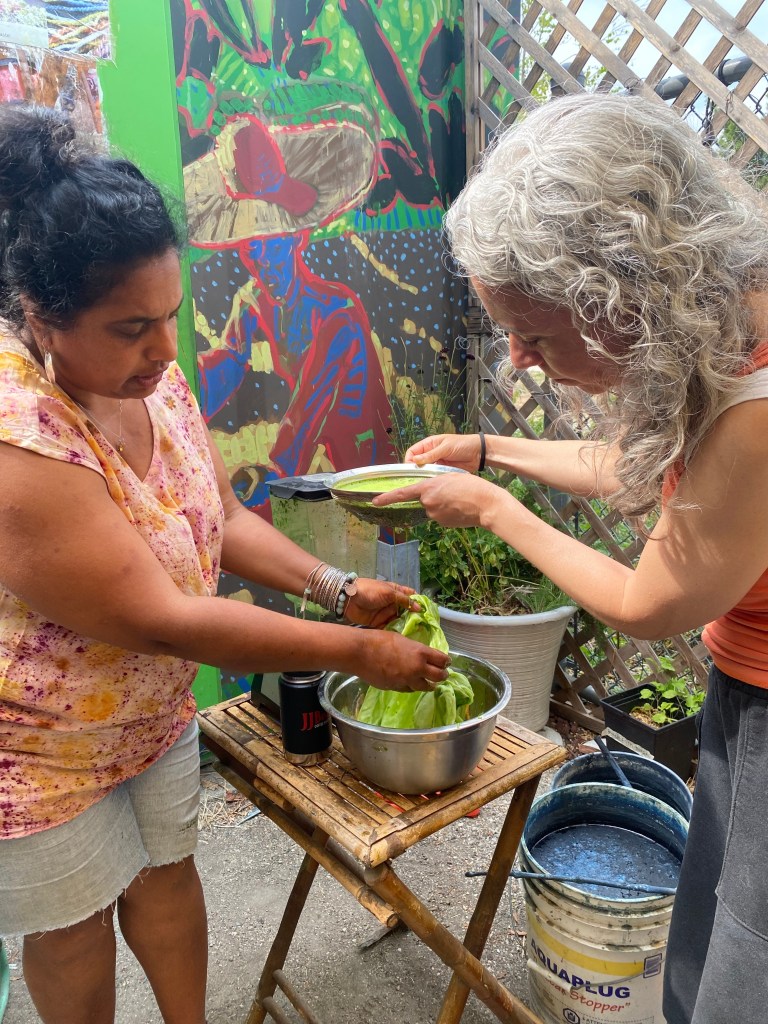
Living fibre and dye garden hosting hands-on community workshops
Means of Production
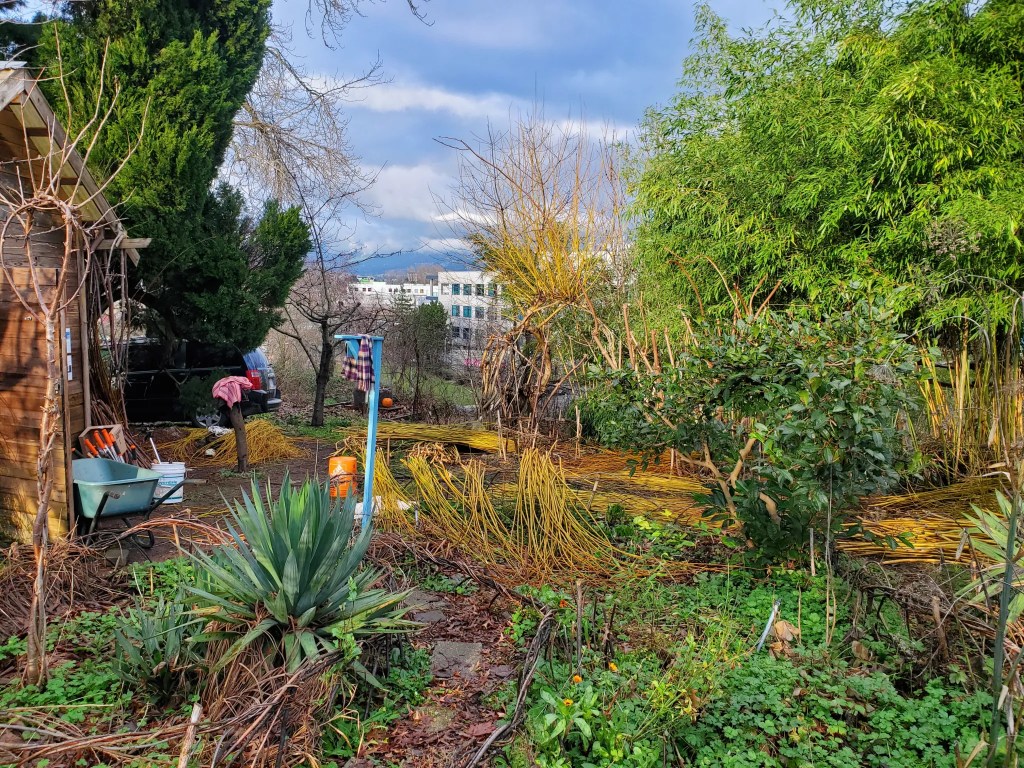
Open-source garden for art, ecology, and community land-based making
Barnston Island Wool
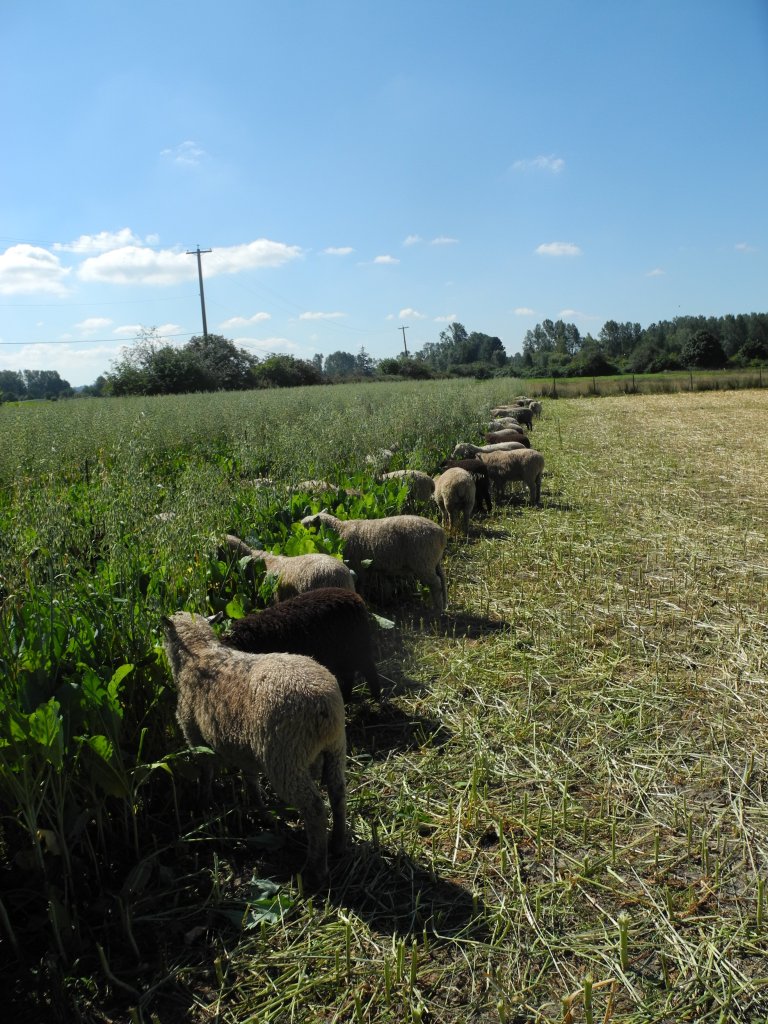
A local sheep farm where we source much of our wool for programming
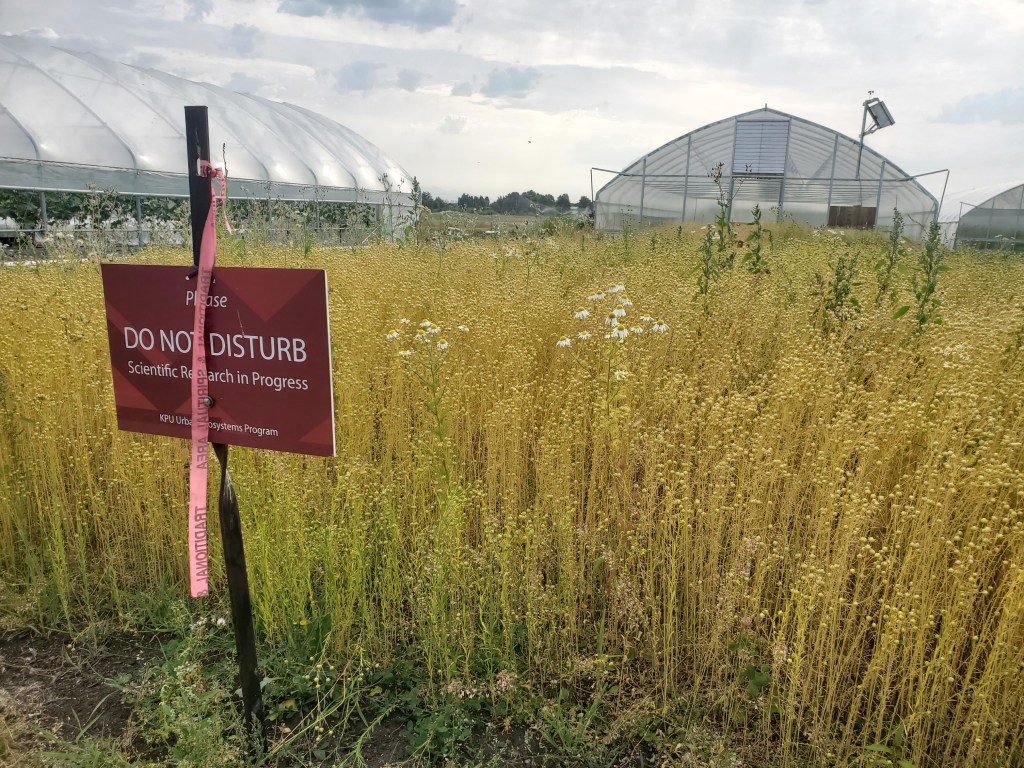
KPU Flax Garden
A university garden supporting linen research and community learning
Find These Spaces and Learn More
More about Trillium Park
Opened in Summer 2014, Trillium is on the south edge of the Strathcona neighbourhood; for millennia, three Coast Salish First Nations: the XwMuthkwium (Musqueam), Sḵwx̱wú7mesh (Squamish), and Tsleil-waututh exercised overlapping traditional rights to the land on which the park is situated. This new park’s perennial plantings were chosen for their significance in traditional hand technology by First Nations People from across the province of British Columbia.
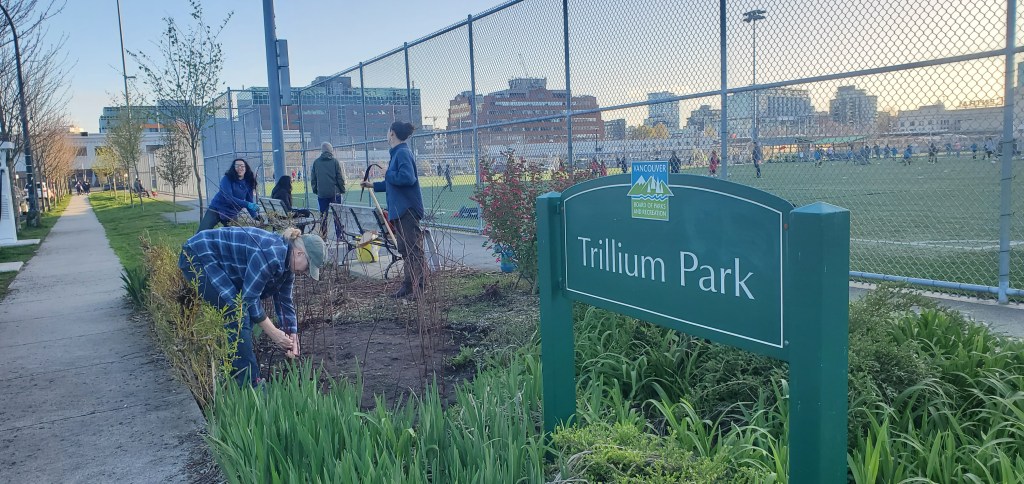
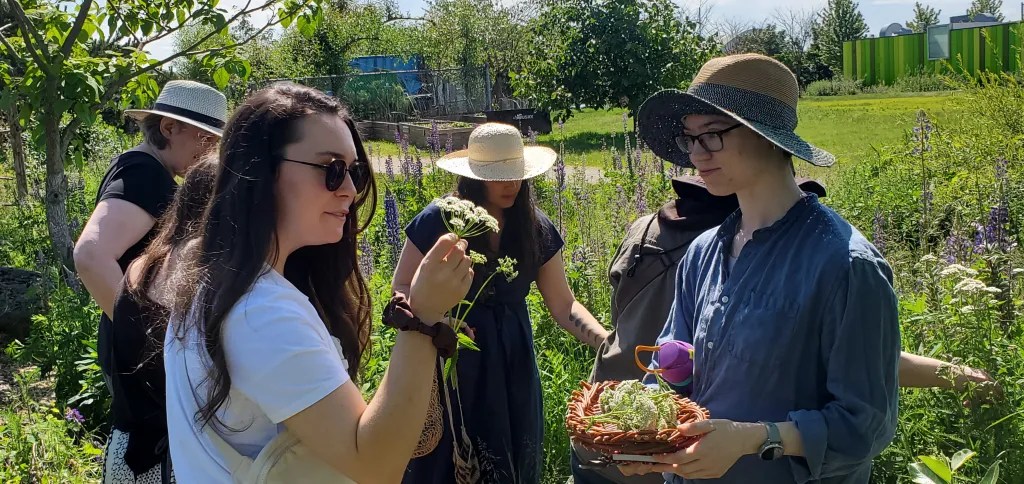
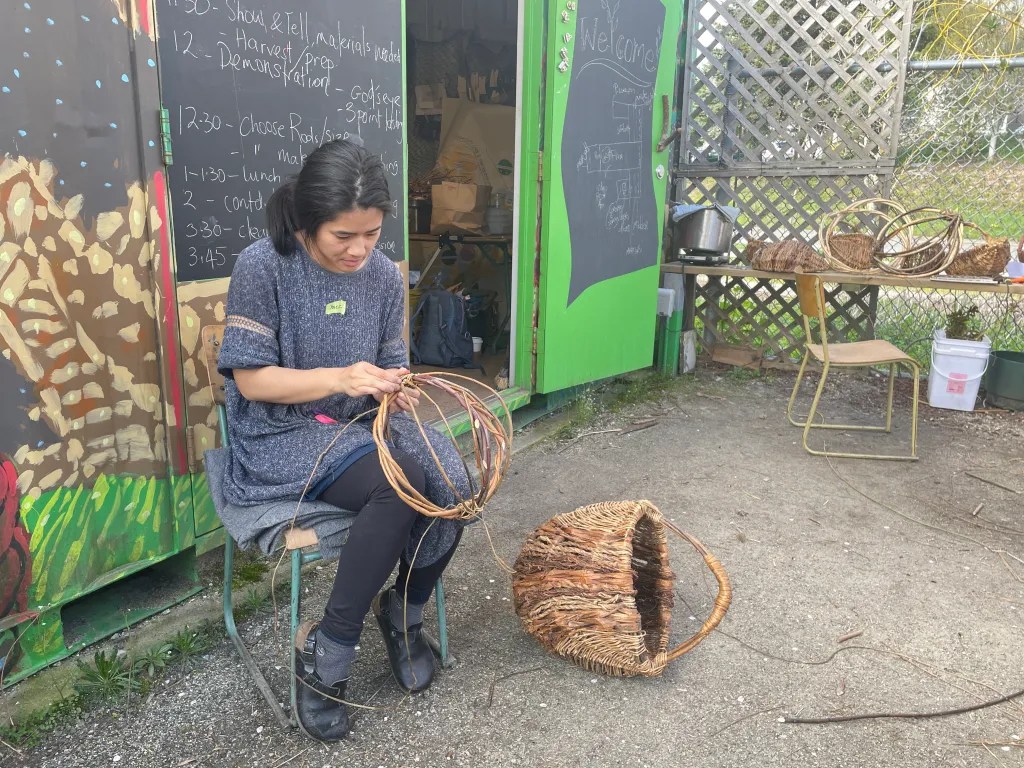
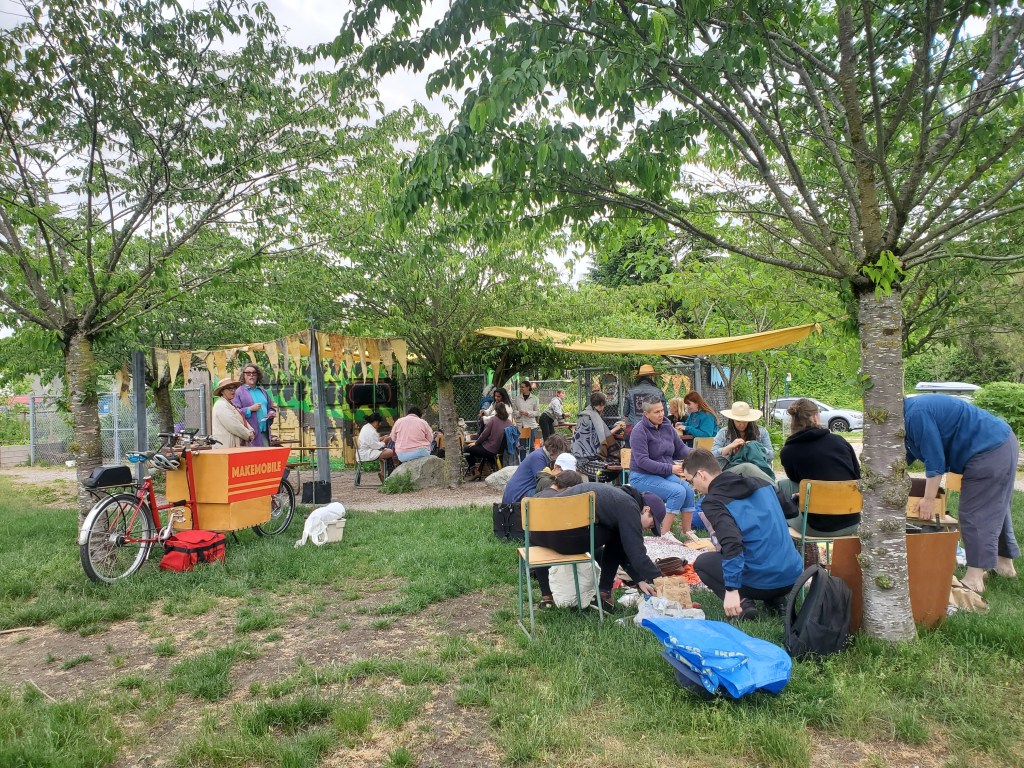
The park has a couple of fenced work bays with picnic tables and retrofitted shipping containers that allow us to store materials and tools on site and host the public, as this is our primary workspace for community workshops and events. The park is approximately 1 hectare in size.
The park is maintained by the Vancouver Park Board, with certain planted areas managed by EartHand, with the intention of teaching skills in sustainable harvesting, reciprocal plant relationships, and hand skills in using the plants harvested from the park.
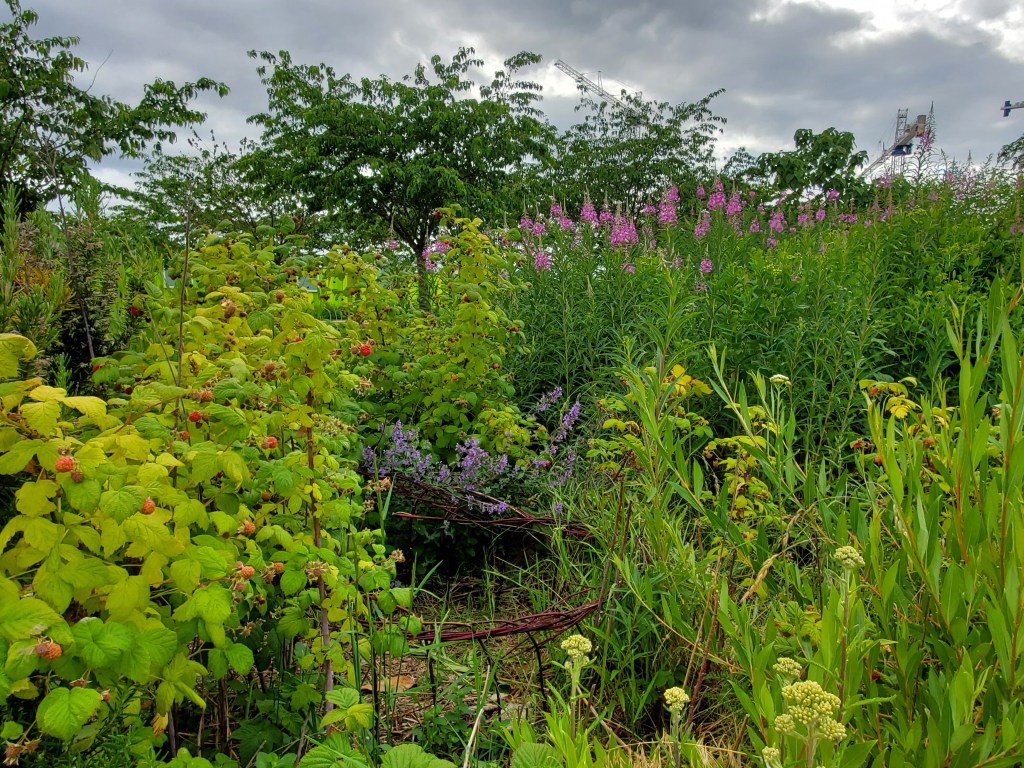
The planted areas include a tea and fibre garden, a few nettle patches, and larger swathes of pollinator-supportive plantings from which we create baskets, cloth, and dye.
Our main work bay has two picnic tables and we have access to running water and electricity on site and washrooms are available in the park.
Locating Trillium Park
We are on the SouthWest corner of Malkin and Thornton Streets, on the north side of the soccer fields tucked in behind the train station or just south of Prior Street.
Please note that the St. Paul’s Hospital construction site (2022-2028) may result in temporary changes to the information provided below.
Here is a map to locate Trillium
By bike – turn south at Jackson from the Union Bike route- cross Prior Street and coast up to the shipping containers.
By skytrain and foot – 900 meter walk from Main Street skytrain, head northeast, take the back road along National and turn left just past the soccer fields.
By bus – the #51364 stop on Prior is very close and is serviced by the #22 downtown or Knight. Less then 5 minute walk south along Malkin and into the park.
More about Means of Production
Located in the Mount Pleasant neighbourhood of Vancouver, Means of Production (MOP) Garden was created in 2002 by artist Oliver Kellhammer, in partnership with the Environmental Youth Alliance (EYA) and the Vancouver Parks Board. Kellhammer’s original conception was to create an ‘open source’ landscape where people could experiment growing their own botanical materials for art and craft use, and for the garden to be a community ‘hub’ where ongoing investigations into art and ecology would take place.
Managed by EartHand Gleaners Society, we collectively work to further MOP’s original mandate as a platform for community engagement in environmental art.
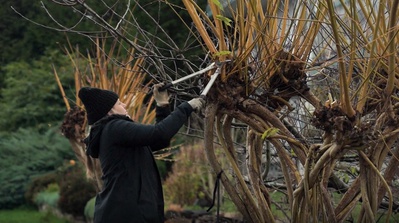
MOP engages an urban community of local residents, visual artists, environmentalists, crafters, and performers in creating art through a living, productive landscape. The garden informs the seasonal workflow for the types of workshops we offer and when they occur, based on the land-tending schedule. The garden becomes an active studio, lab, performance space, and social setting, with artists and public co-producing site-specific artworks and events. Inspired by and honouring the original intent of MOP as a working garden for artists and members of the surrounding community. The variety of collaborations undertaken ignites community passion and nurtures a participant’s involvement.
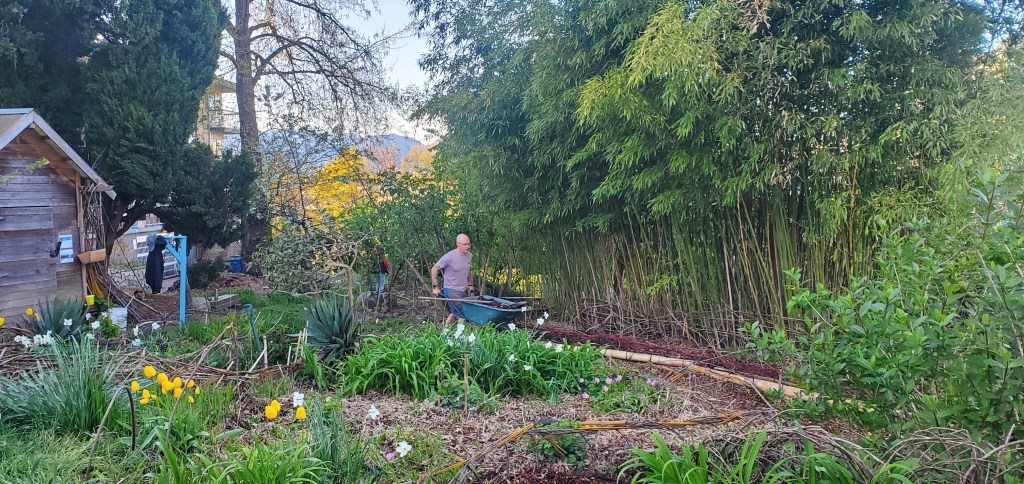
This mature garden grows a variety of plants for dye, fibre, woodworking, basketry and more. Native, introduced and unusual plants not usually seen together happily cohabit on this steep north-facing hillside. Rewilded areas and a food forest for community grazing add to the learning opportunities for land tending as well as give opportunities for materials like fruit woods for project use.
Locating Means of Production
East 6th and St Catherines in Vancouver, BC, in the corner of China Creek Park.
Please note that the garden is situated on a steep slope. Wear solid shoes; closed-toe footwear is necessary for work sessions.
Public washrooms are located at the far side of neighbouring China Creek Park.
More about Barnston Island Wool
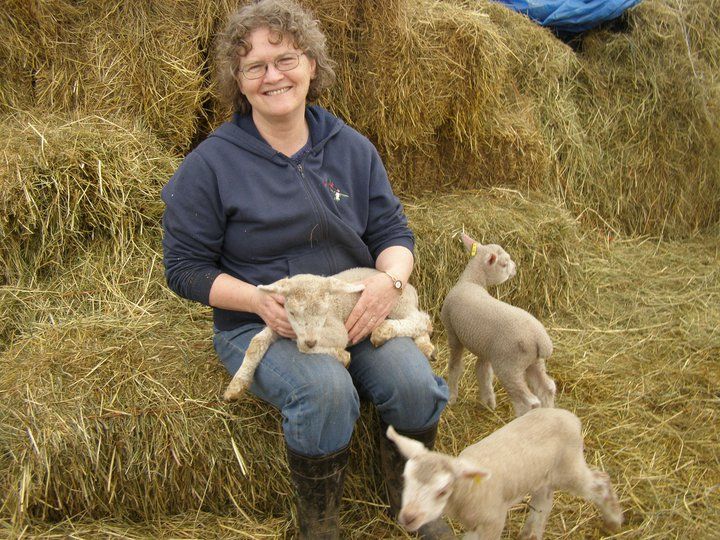
The Russel Farm: Susan and John have been raising sheep for fibre on Barnston Island since 1972 when ‘Sweater and Scarf’ came to live on their small farm. Located on the traditional territory of the Katzie people, the island is a central point for British Columbia’s Lower Mainland fibre-shed.
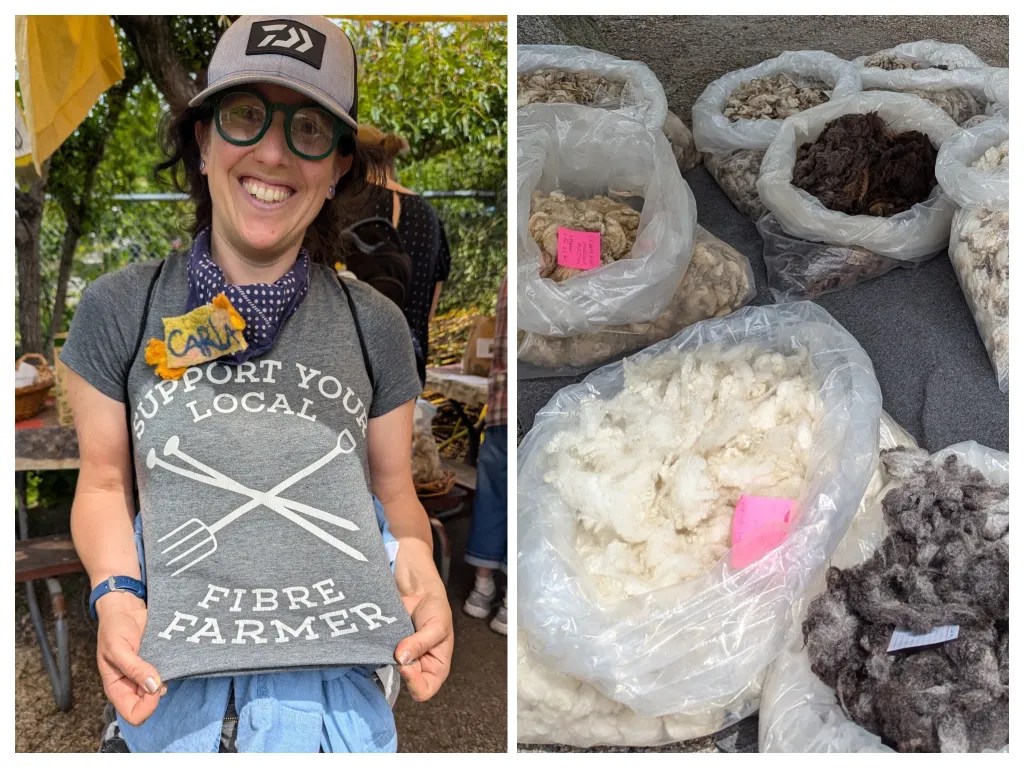
The Russel’s currently keep about 30 sheep bred specifically for wool suited to projects for spinning and felting. Most sheep are crosses of Gotland, Romney, California Variegated Mutant ( CVM) or Blue Faced Leicester (BFL). Their goal has varied over the decades- but always has been to farm and to preserve for future farming these almost 12 acres of deep, silty loam. Now they run a fibre farm, producing fleeces for artists, handspinners, knitters, felters, weavers, anyone who wants to play with wool, from our loveable Gotland and Gotland cross sheep
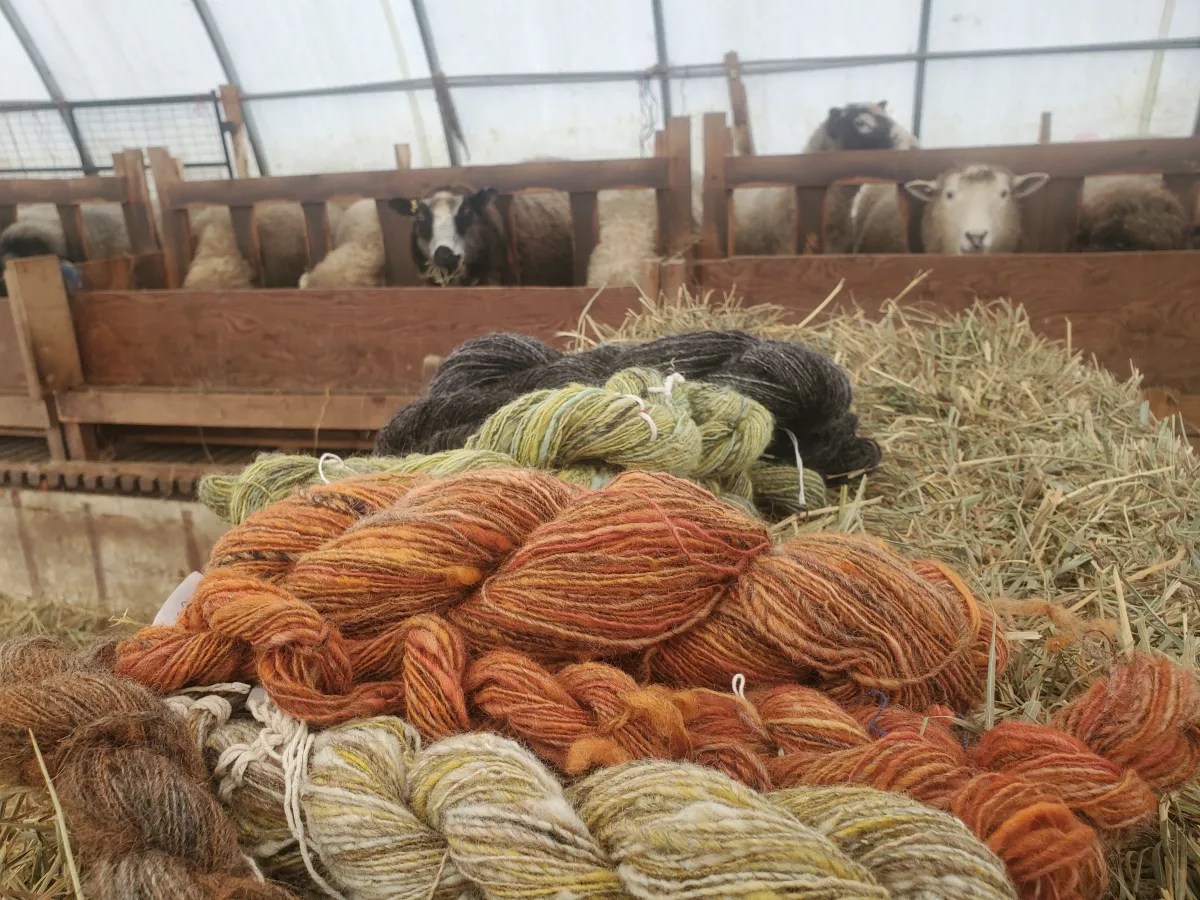
Barnston Island wool in used at EartHand in various workshops for a multitude of ways—spun woolen and worsted, dyed and felted.
About Russel Farm Practices:
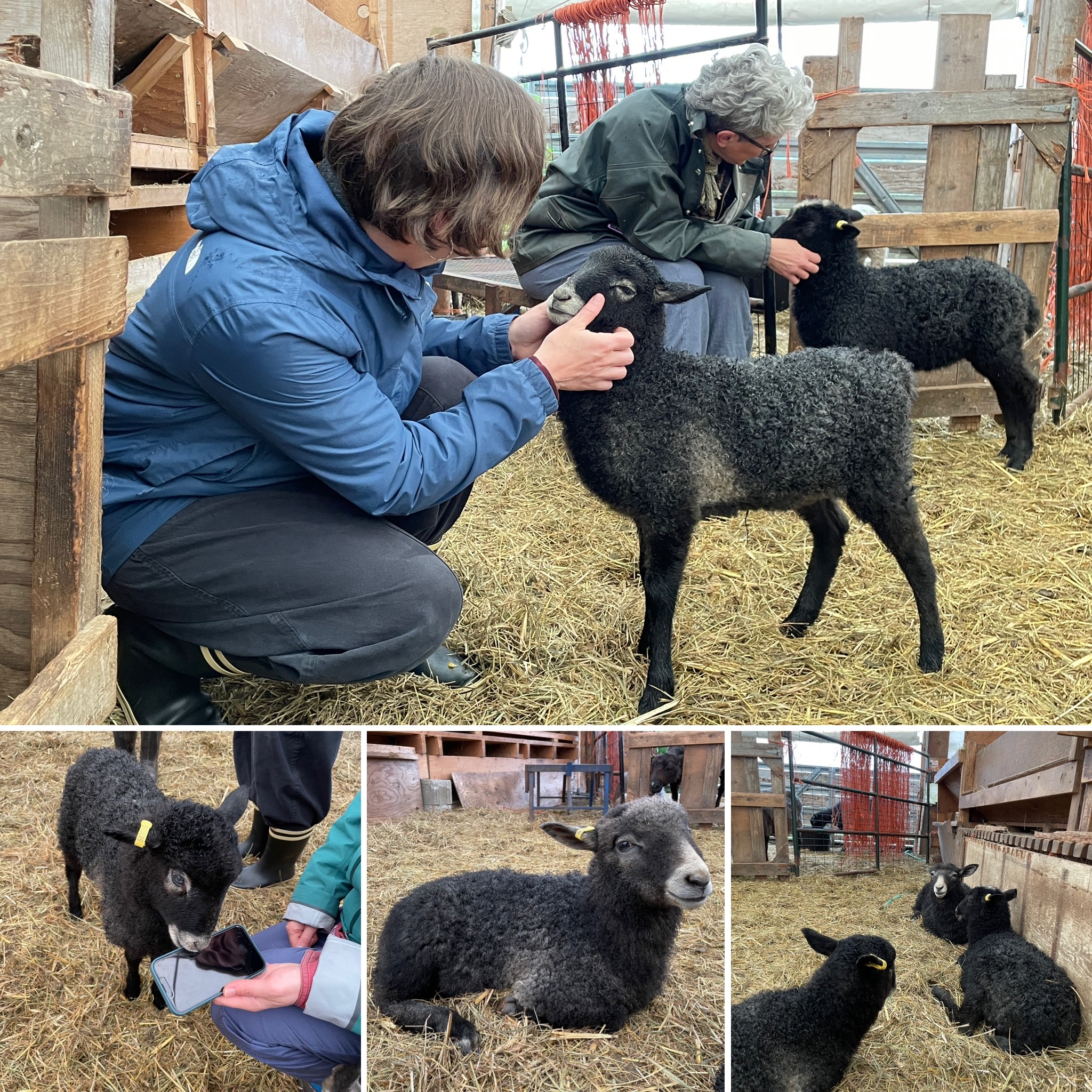
A major activity for the Russel’s and visitors to the farm is ‘communing’ with sheep. This involves sitting on the ground with them, letting them lean on you for hugs or gazing into their sheepy eyes fondly as they eat or chew their cuds. They all have names. They may not know these names but they know my voice, my face, each other’s faces and if you visit they will remember yours too.
We feed us and our sheep as much as we can from this piece of ground, to keep them and us happy and healthy. We’ve grown acres of kale, turnips, oats, winter wheat and a variety of grass mixes. Kale is their favourite. Hooves down.
During the winter the sheep usually eat 3rd cut hay grown on the island by our neighbours. Barnston Island grows hay crops like nobody’s business. The ewes are fed on a slatted floor, which keeps their fleeces clean. Because the long and lustrous Gotland fleeces can almost felt on them and certainly ‘cot’, they are shorn now with 8-10 months growth.
Two donkeys, Dorothy and Sparky, protect the flock from coyotes and dogs. The donkeys hate dogs and tolerate sheep. They love all other visitors. Crusher dust keeps their hooves dry and hard in the night paddock around the barn.
We have registered Gotlands, recordable Gotland (lower %age), Gotlands crossed with Romney cross, CVM cross Gotland x and some BFL cross Gotland ewes plus three older mostly Romney ewes: Pickles, Bella and Blacky. The wool is white, creamy, black, grey and brown or silvery grey.
Connecting with the Russel’s:
Contact Susan at smrussel(at)sfu.ca to find out what fleece are currently available. Are you making with our wool and posting on social media? Please Hashtag your work #barnstonwool so we can find what our fleeces become!
More about the KPU Flax Garden
EartHand has been working alongside the Kwantlen Polytechnic University Department of Sustainable Agriculture and Food Systems conducting local flax seed increase and variety trials, supporting student research projects resulting in the sharing of flax straw for linen fibre programs for community learning.
Dr Kathy Dunster began flax trials in 2020 with just 100 seeds each of 18 varieties provided by the Canadian Seed bank. By 2026 the seed varieties of Emeraude, Liral Crown, and Atlas have become favourites alongside the Linore X hybrid seeds grown at Alderley Grange Farm in Saanich.
Learn more here: https://www.kpu.ca/science/agriculture.

