Story & Mission
We are artists, makers, and educators who believe that bringing people together to share creative projects that connect us with the land helps our communities become strong, resilient and just.
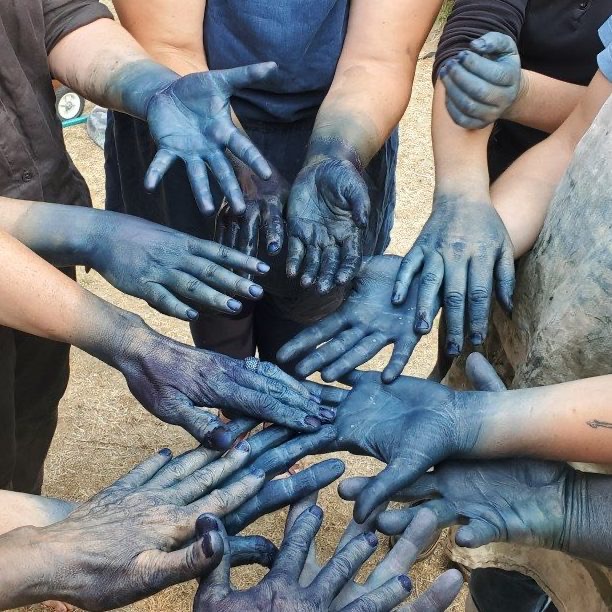
Founded as an arts-based non-profit in 2013, EartHand Gleaners Society connects makers with materials that come directly from the land around them; we model ‘How to be a Producer without first being a Consumer.’
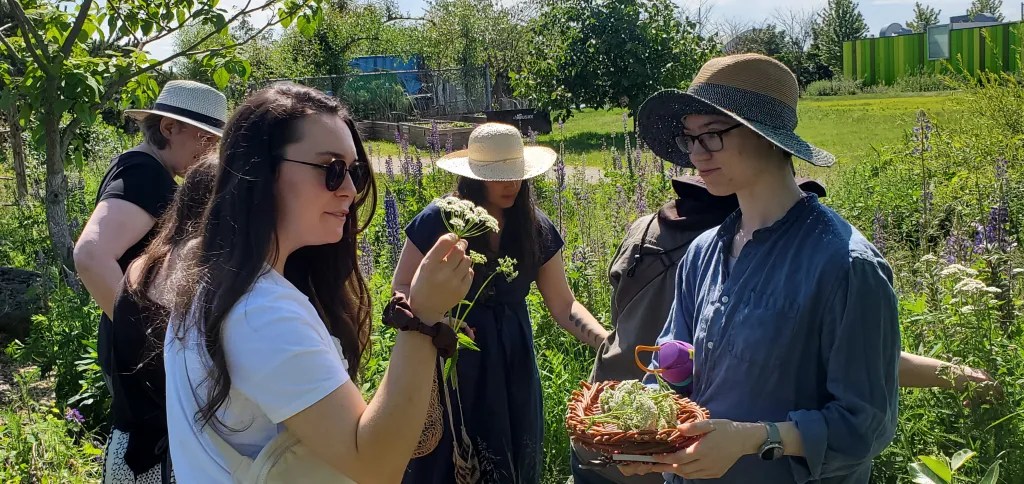
By working with the plants around us using ancestral skills common to all cultures, we inspire participants to discover cultural connections, learn new skills, and discover novel sources of raw materials for creative practices, including garden waste, invasive plants, and textile waste.
Respect is the core of EartHand’s practice. Our environmental art projects spring from collaborative research, skill development and skill sharing among community members and professionals in the fields of education, sciences and the arts.
We aim to strengthen intercultural connections and relationships to place, and find meaningful ways to acknowledge our Host Nations.
Our regular partners include the Vancouver Park Board, local schools, environmental stewardship non-profits, and our community arts organization peers.
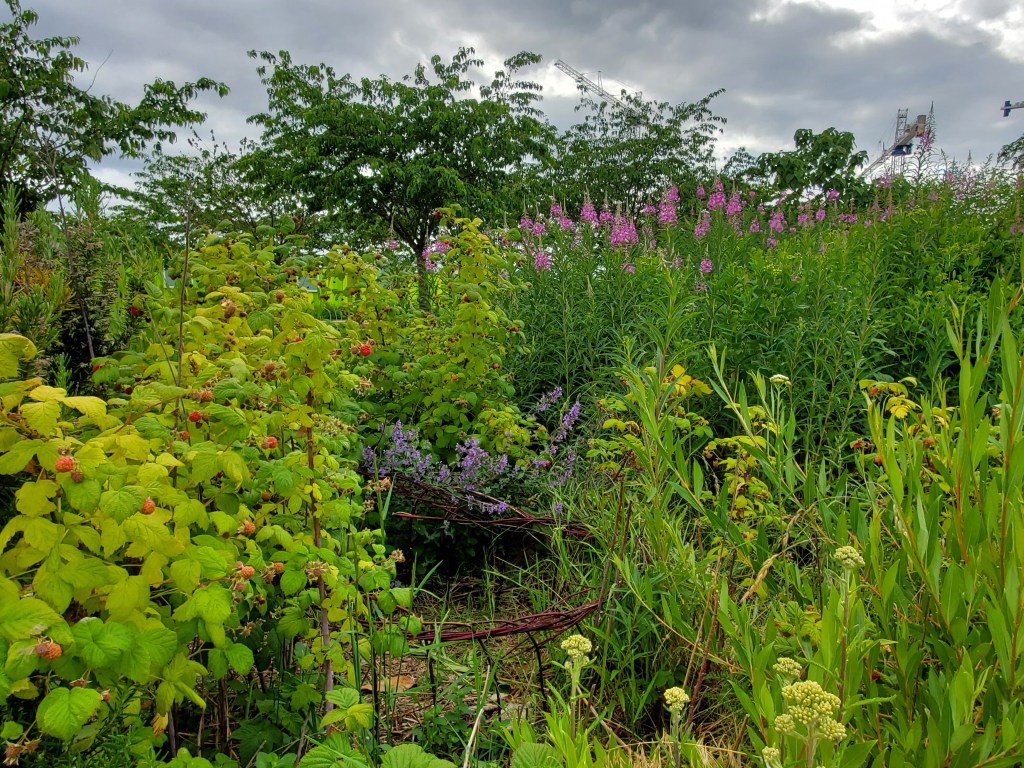
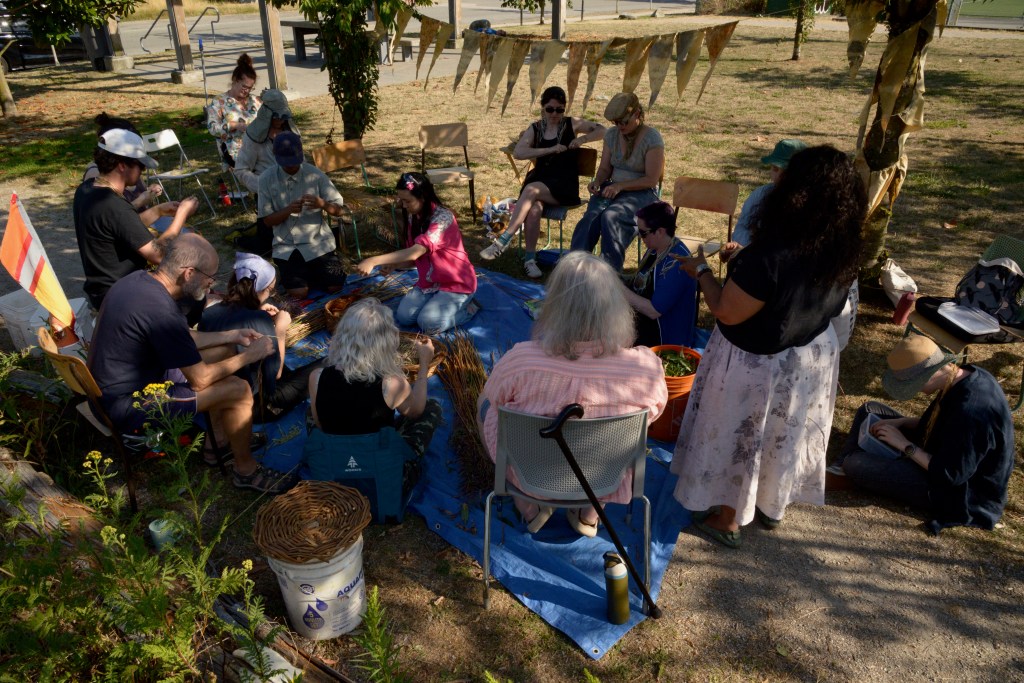
Since its founding in 2013, beyond a volunteer Board of Directors that supported the volunteer work of Sharon Kallis as founding executive director, EartHand has had stewardship at the centre of most community volunteering opportunities.
In 2025, we began cracking that open and finding new ways of creating spaces for meaningful participation. We are working to flatten our decision-making process and have ‘composted’ the role of the Executive Director, while opening up what our Board of Directors can look like within the constitutional limits of our non-profit.
In 2026, the Vancouver Fibreshed joined EartHand as a working group to spread the shared mission of strengthening local textile systems.
In thinking about programs, community activation, individual participation, and self-defined roles, we ask:
What if we collectively agree that just about anything could be a ‘pilot program’?
What can we learn from trying new models of gathering?
Let’s work our way into new networks that build up our social governance for collective learning and mutual support!
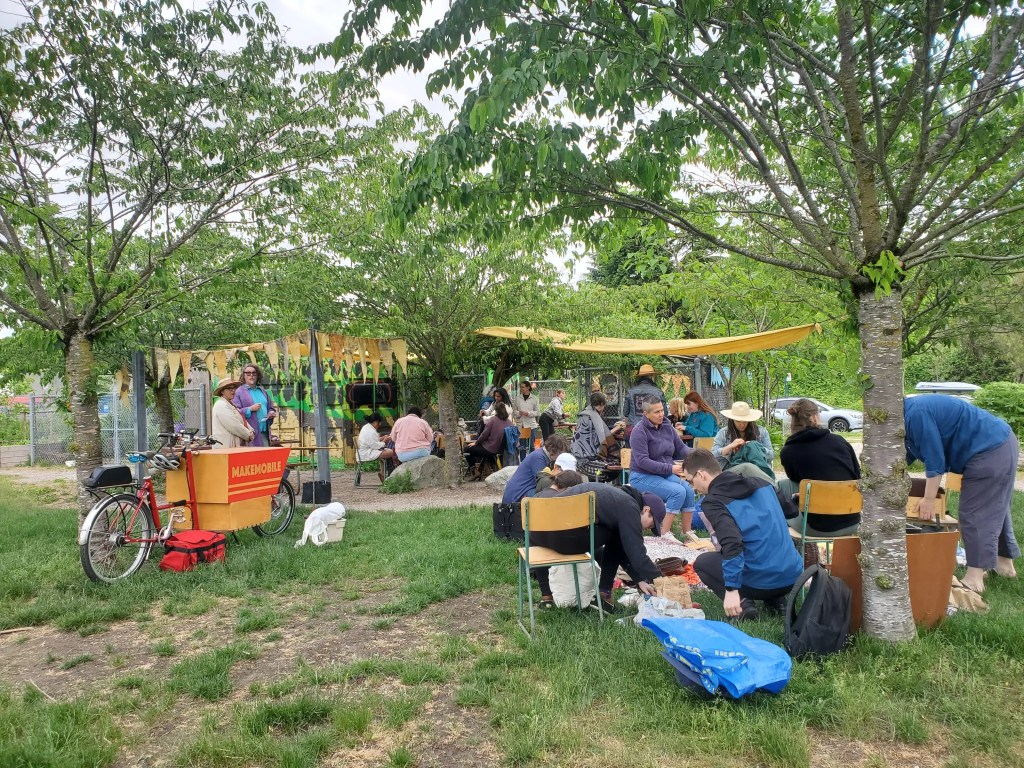
As the ecosystem for non-profit operating funding becomes more precarious and less sustainable, our primarily volunteer-based model for ‘getting things done’ makes even more sense.
Having more of us identify the strengths and abilities we can bring to the organization — and collectively, slowly, sorting out the communication and operational systems that hold us together in this shared network — feels like exciting, challenging, and perhaps most importantly in these times, hopeful work we can lean into together.

