




by Anna Heywood Jones
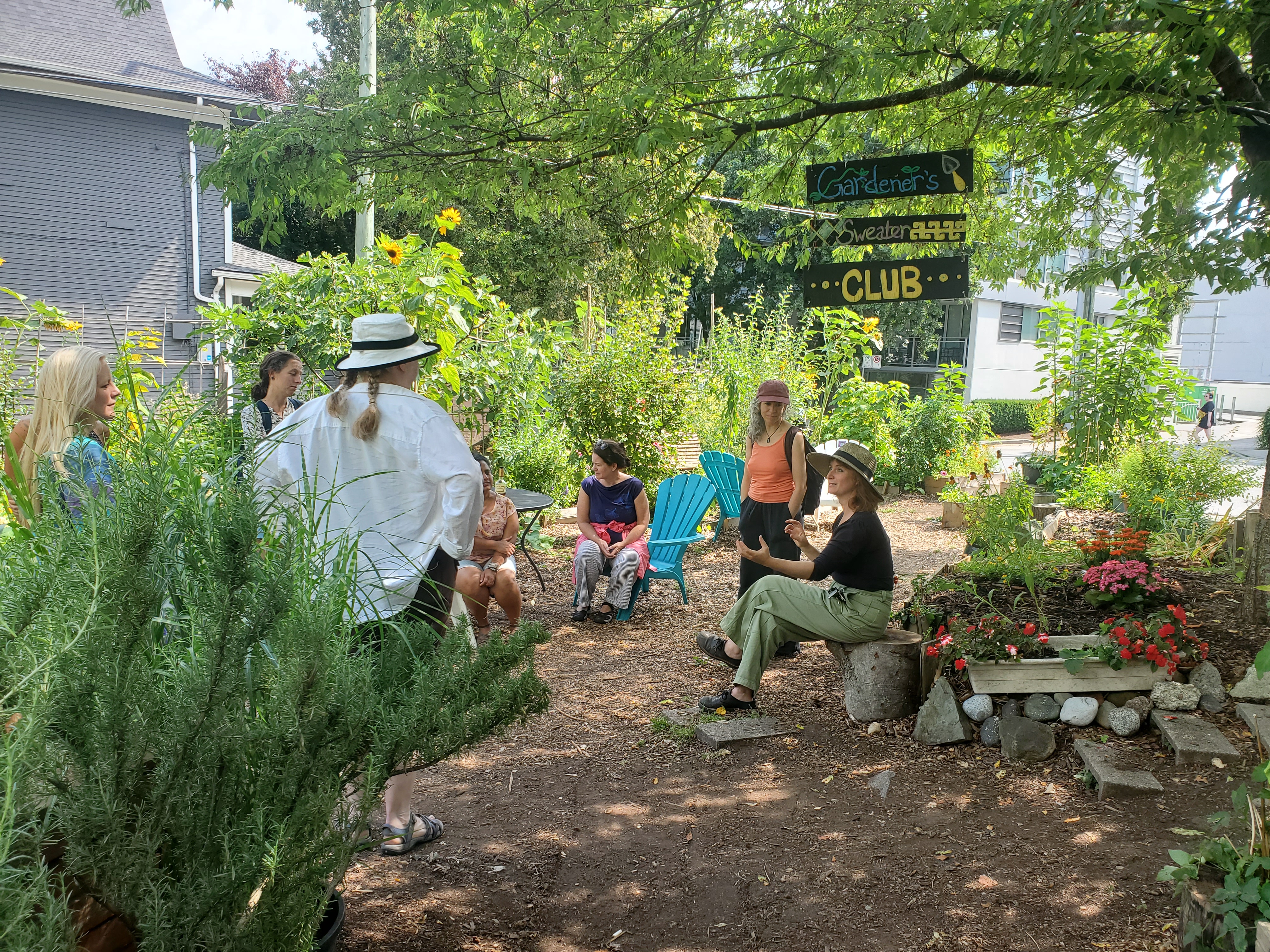
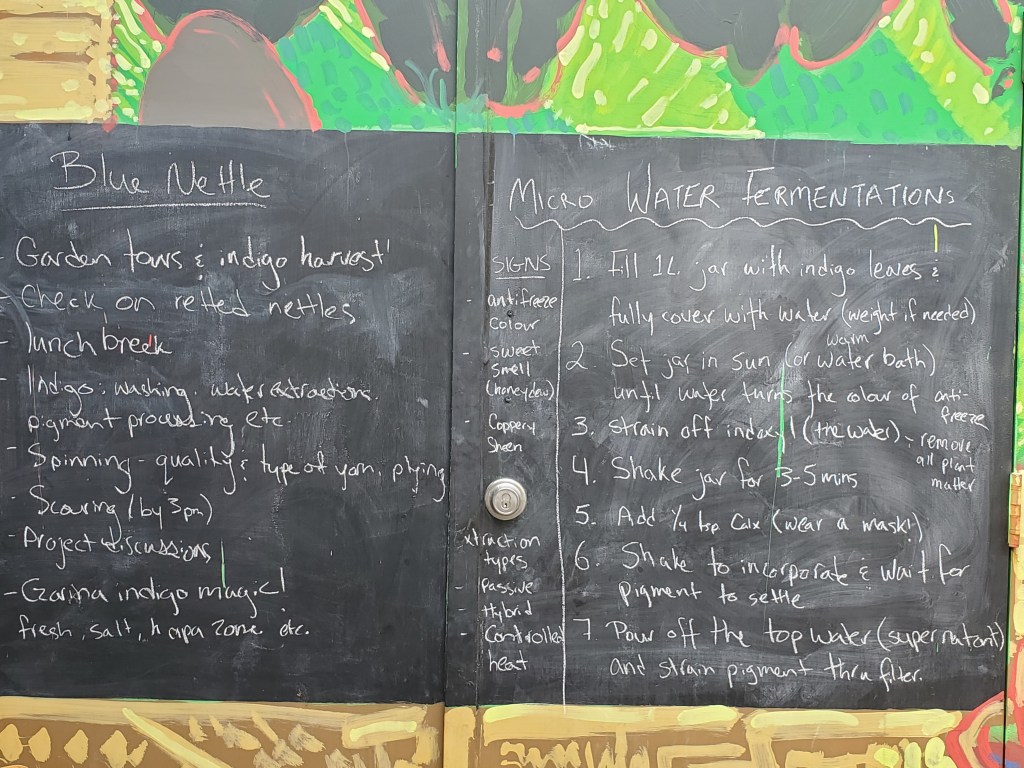
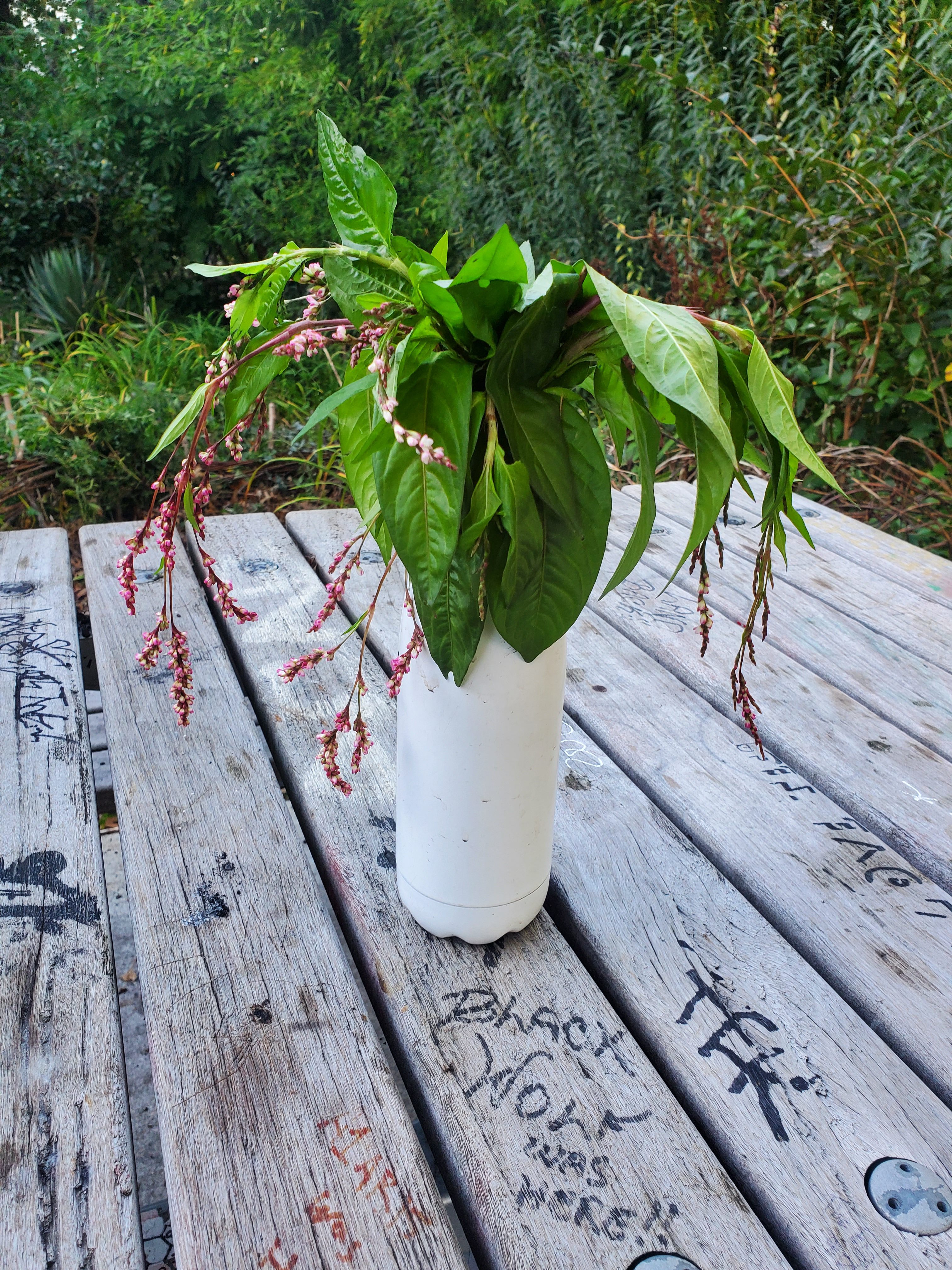
Much of my residency work last year revolved around nettle and indigo, as Sharon and I co-led Blue Nettle, a six-month program focused on working with each plant throughout its seasonal life cycle. Sharon shared her extensive knowledge of stinging nettle with the group, while I delved into researching and learning from Persicaria tinctoria, a plant known by many names, including Japanese indigo.
With the support of many garden stewards, we successfully grew indigo in three garden sites last summer. These included Trillium and Means of Production, as well as a plot of indigo at the coFood Collaborative Garden (Scotia and 4th). It was a valuable learning opportunity to observe the same plant growing in three different locations, each with varying soil quality, sun exposure, temperature variation and watering frequency.
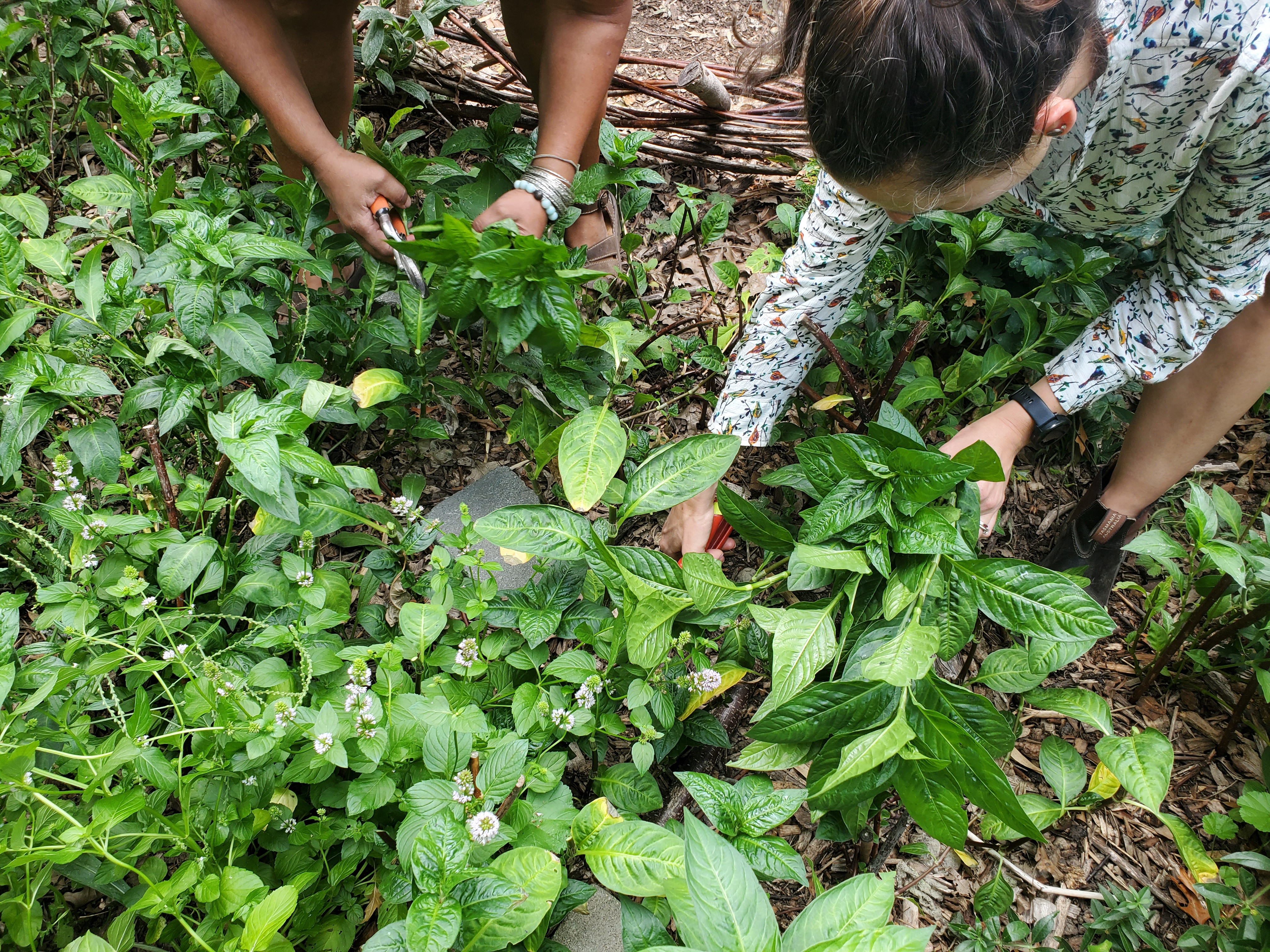
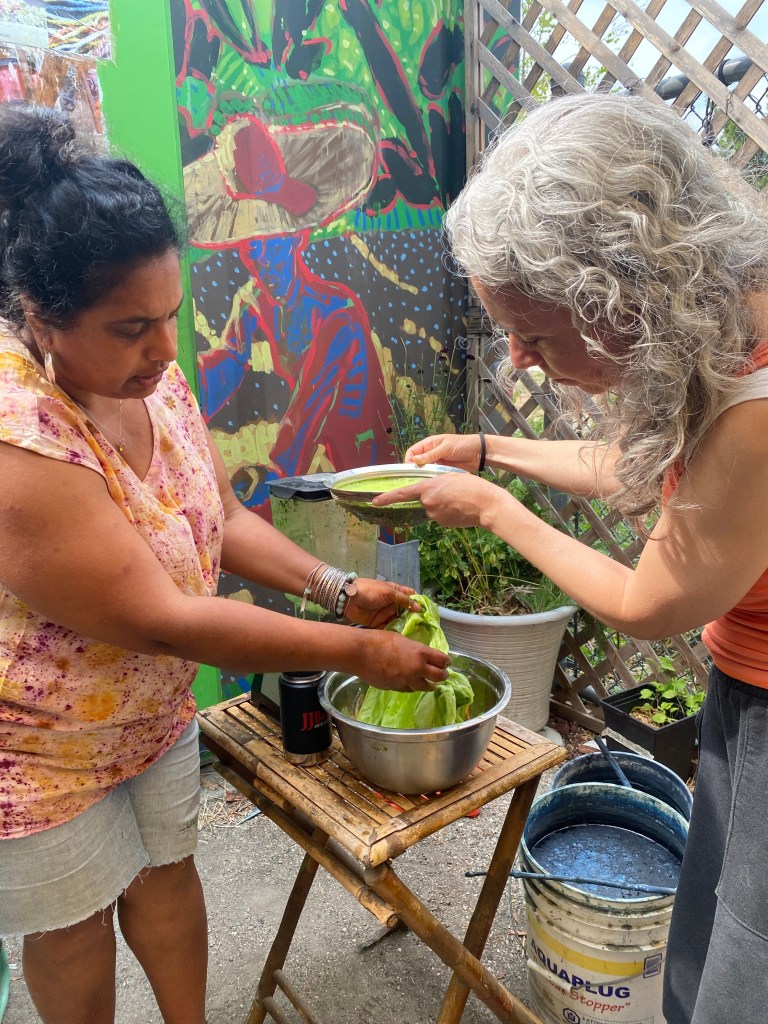
The process of gathering indigo pigment from this verdant plant is a challenging one, but through fermentation, oxidation, and the use of an alkali a seemingly alchemical transformation occurs. Those who have worked with indigo, either in pigment or leaf form, can attest to its difficult, highly addictive, and magical qualities. Last summer, during the peak of pigment gathering season, I reflected on these qualities: “This metamorphic plant has hijacked my brain. I feel a little possessed by it. I close my eyes and see swirling galaxies of blue pigment precipitating.” Despite nearly two decades of working with dye plants, I have never been quite so captivated by a single plant; such is the power of indigo.

This research was generously supported by Nicola Hodges, Britt Boles and, of course, Sharon. Fundamentally, none of this work would have been possible without the knowledge gathered, accumulated, and carried forward over innumerable generations of indigo cultivators and dyers in Vietnam, China, Japan, and Korea. I am deeply grateful to have had the opportunity to learn from this invaluable knowledgebase and from these remarkable riparian plants. I hope to carry on growing Persicaria tinctoria, and learning from it, this summer and in the years to come.
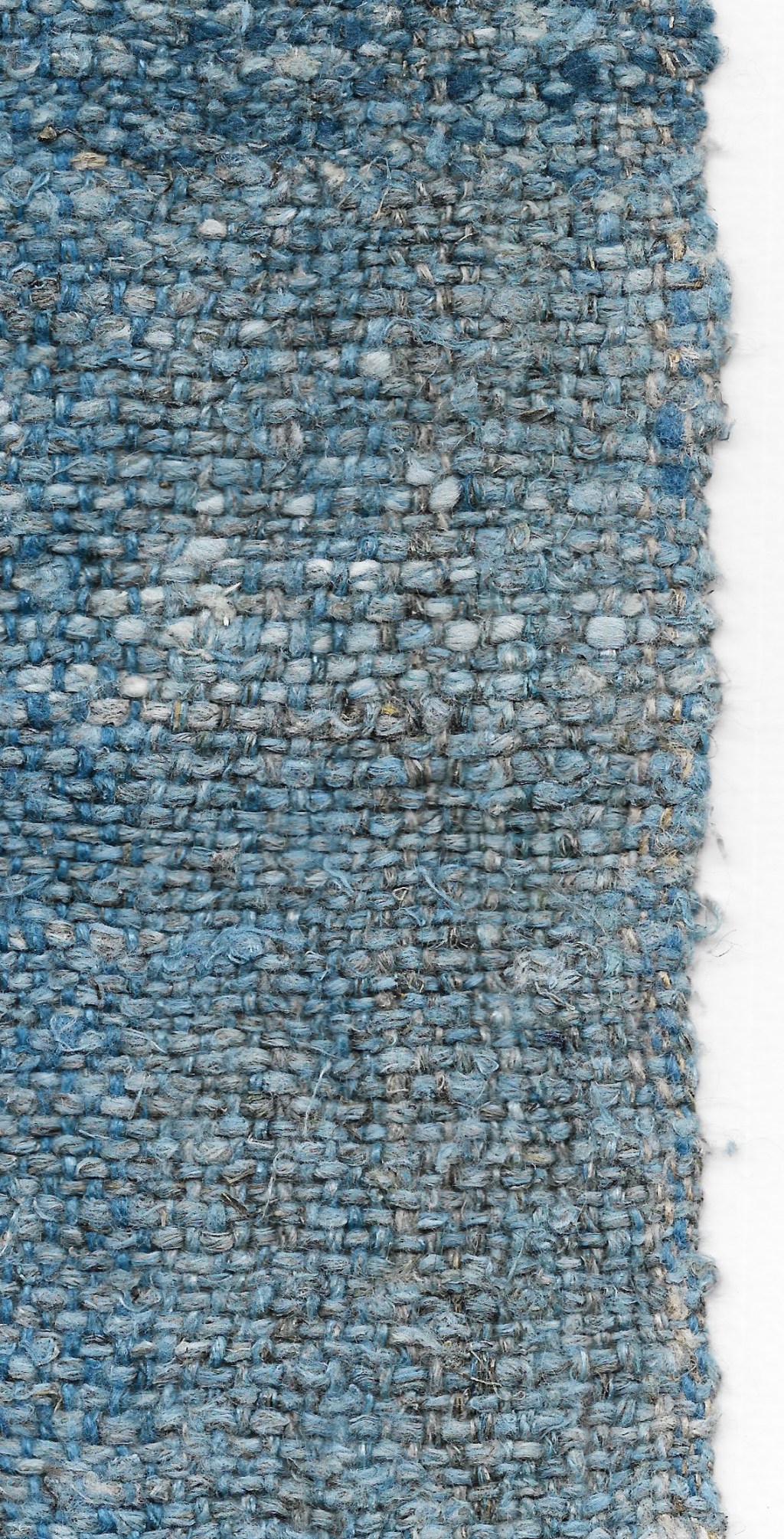
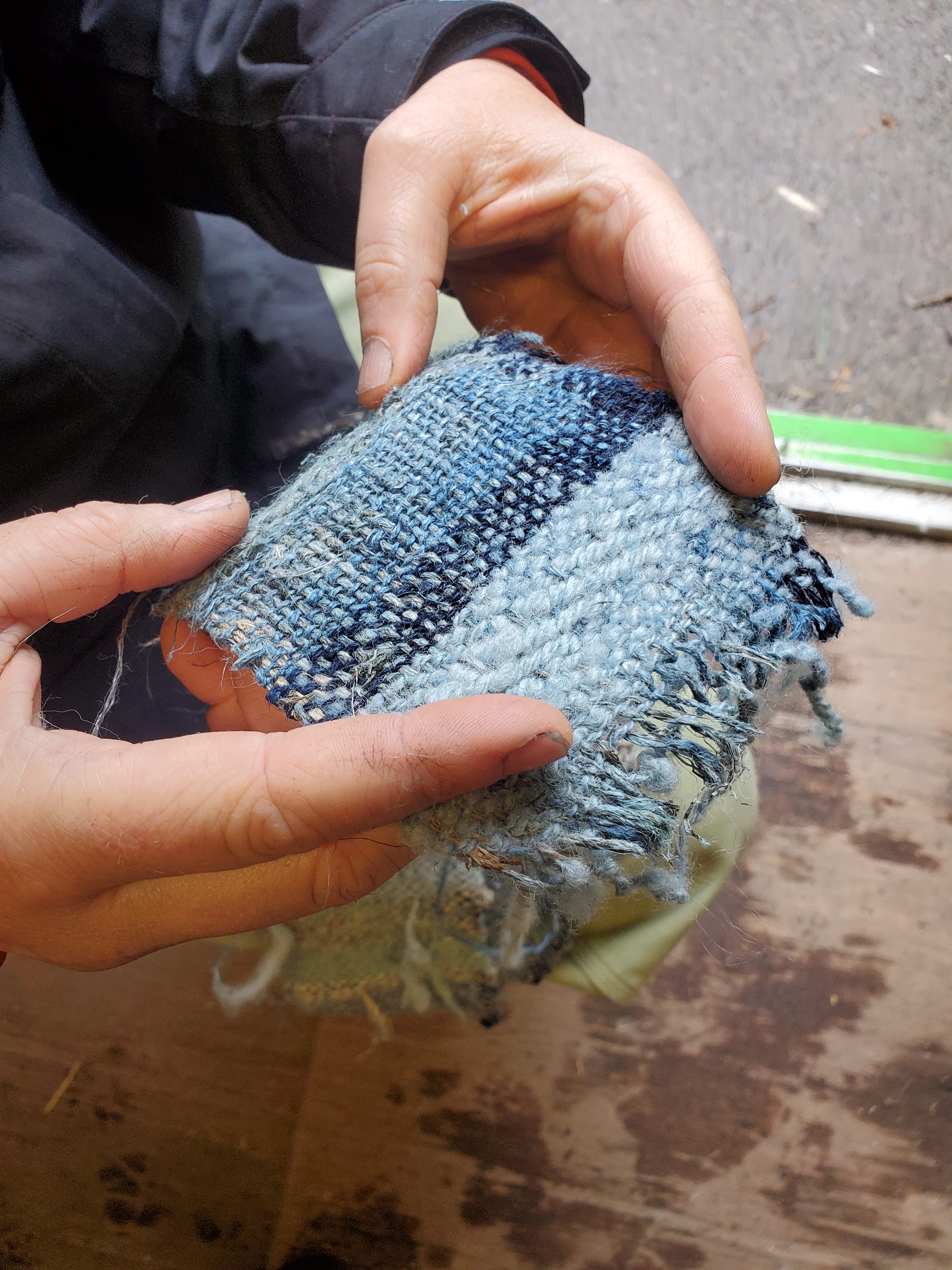
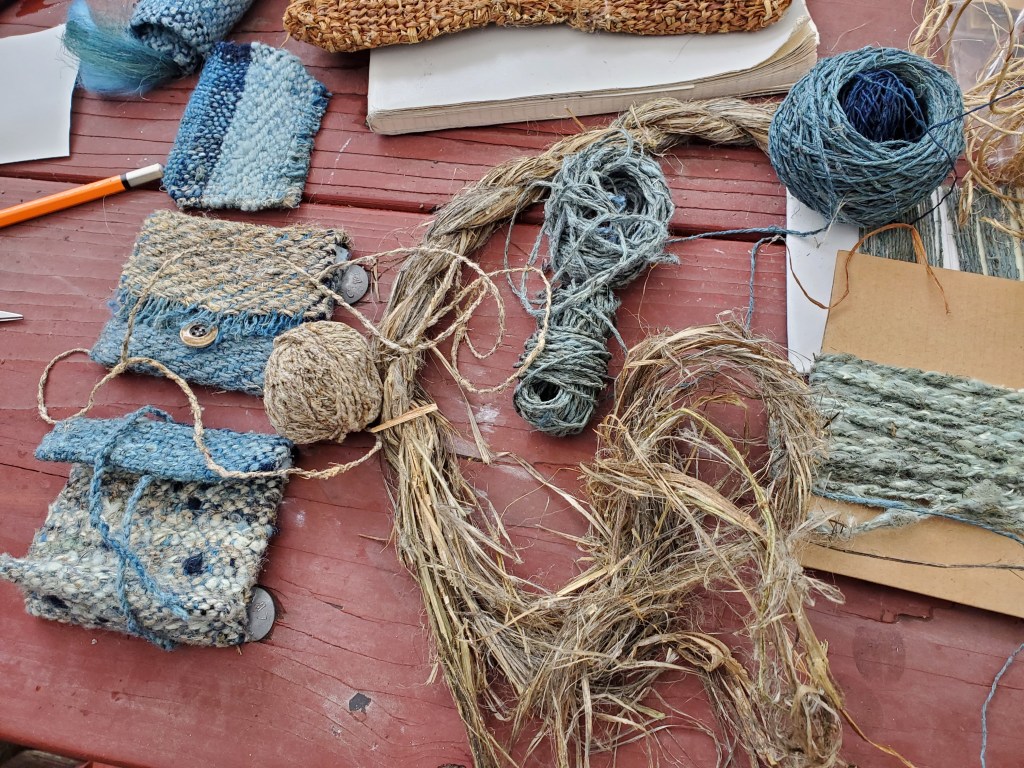
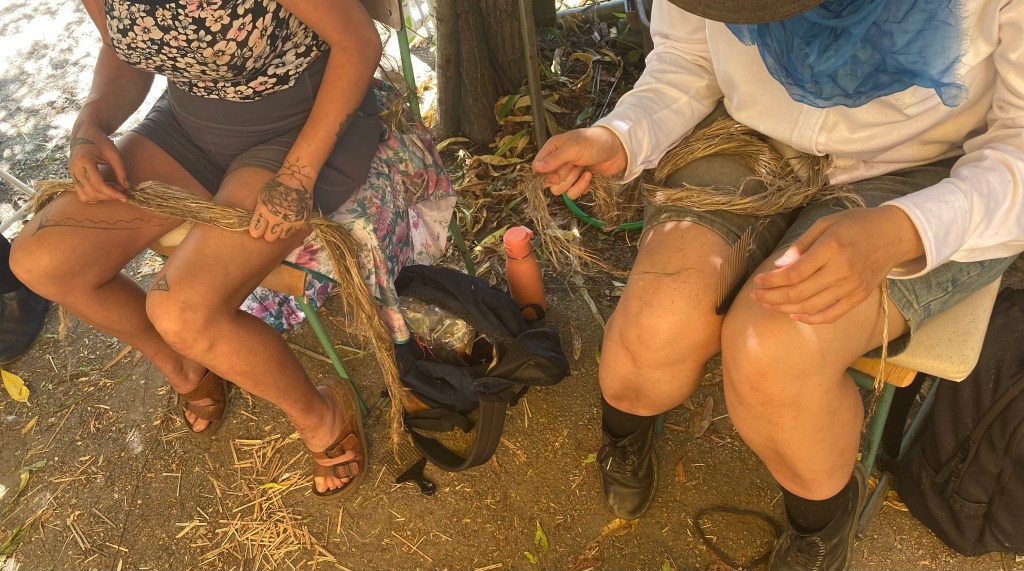
The textile work created by participants in Blue Nettle was experimental and diverse, ranging from woven cloth and 3D forms to studies in cordage. My project involved weaving indigo-dyed nettle fibres into cloth, which is being utilized in an ongoing body of work exploring making methodologies of grief and loss.







 EartHand Gleaners Society