As we enter sowing time for flax here on the West Coast, it seems a good moment to announce EartHand is a member of the North American Linen Association! This newly formed non-profit is a cross-border alliance that is helping connect us all for sharing resources, knowledge and support towards re-building a linen and related flax materials industry on this continent.
So far, we have greatly enjoyed the monthly membership meetings online; meeting ‘the movers and shakers’ on this continent, as well as meeting folks last month from Fibreshed Scotland working on their own seedbank project.
The importance of building our own systems has never been more clear then the fact that no seed will be leaving Europe this year due to the poor growing season last year.
We are so lucky to have Carol Hyland at Alderley Grange Farm in Saanich who is now selling linore seed she is growing in Canada sourced from the Fibrevolution project! When we first started growing flax in 2011, our seeds came all the way from Holland and were ordered from Pennsylvania, and one year they arrived 4 weeks after the best planting window. This year that would not even be an option but luckily, we ordered our seeds from Carol and Canada Post delivered them 2 days later.
So, a shout out of gratitude for the great work being done by Fibrevolution and all the folks that are connected now through NALA.
Are you interested in growing flax -even a little ‘curiosity plot’? Now is the time to plant.
Generally, look for soil about 8 degrees C, air temperatures in the 8 to 15 degree C range, nights not dipping below 3 degrees C, and some moist days in the forecast.
If you are looking for a book to help explain all the steps, you can’t do much better then this little gem, Homegrown Linen: transforming flax seed into fibre written by Raven Ranson, another artist on the West Coast of Canada.
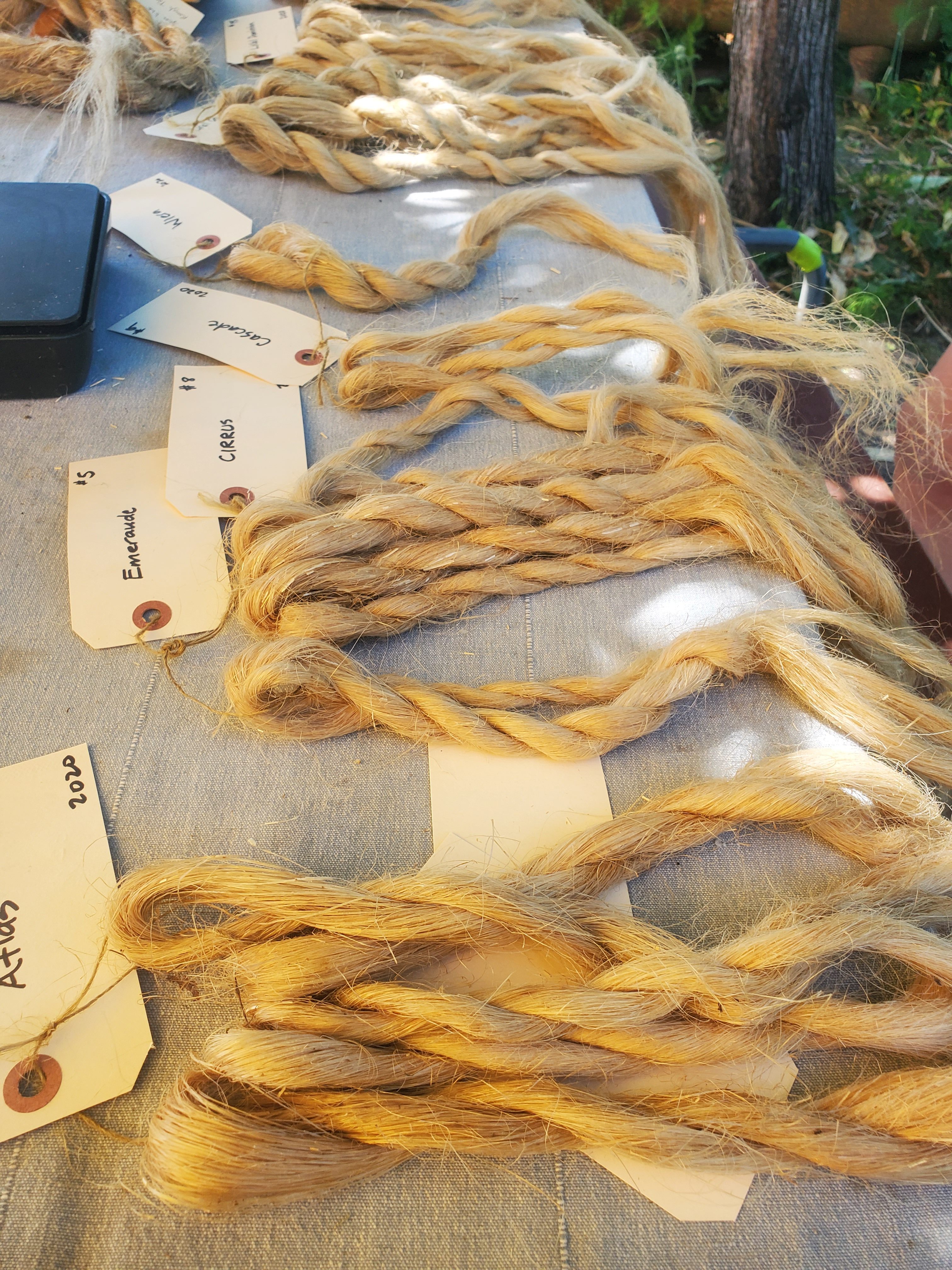
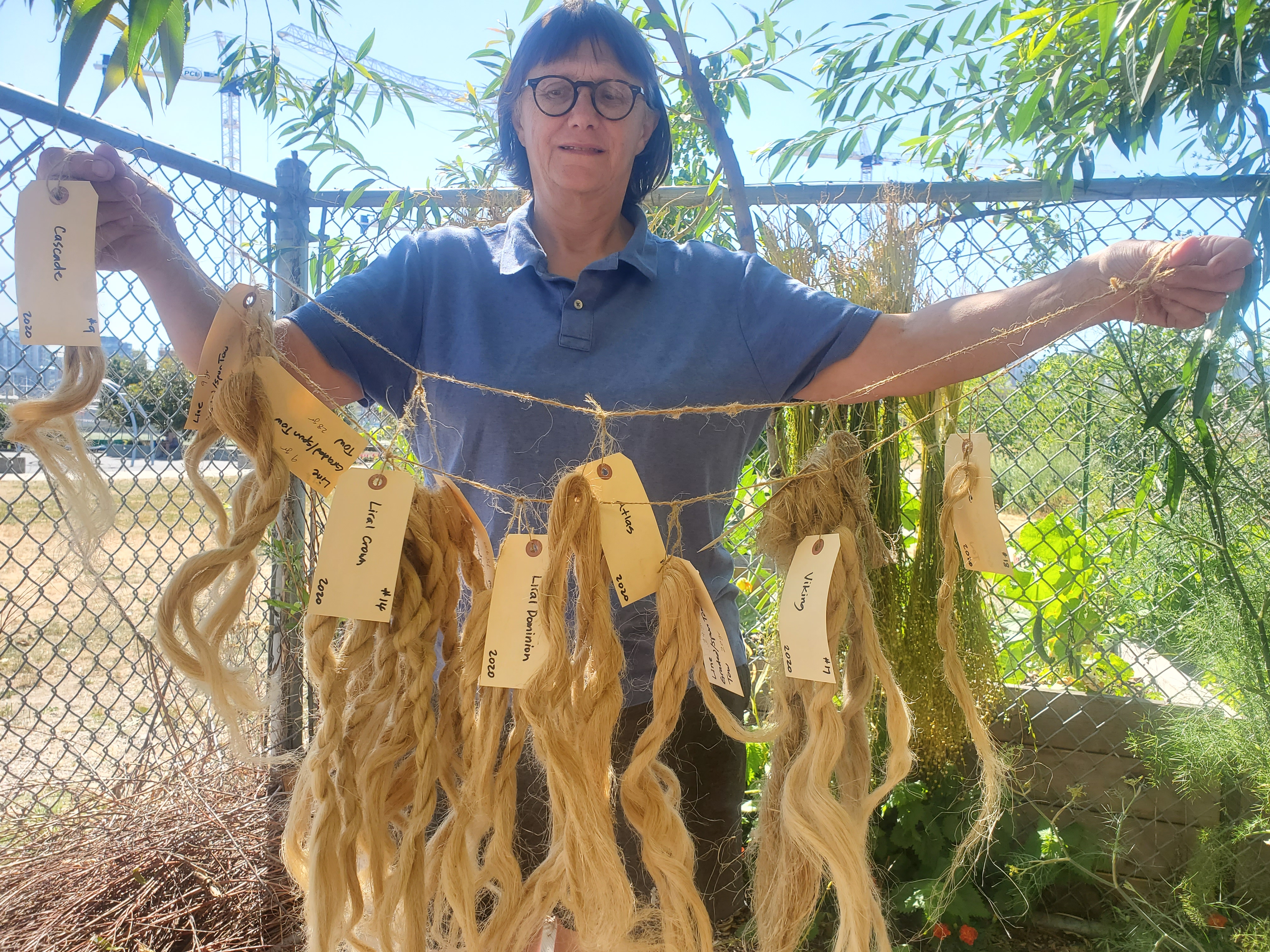
AND, if you are wanting to learn about the processing, keep your eye out for EartHand events over the summer celebrating flax- our first coming up is scheduled for April 20th– a public processing day to break the flax straw grown with Kwantlen Polytech University at the Richmond farm last year- we have 8 different varieties to process and investigate how last years strangely dry and hot month of May impacted the different seeds.
A full offering of programs is now open for registration!
We are very excited to have a wide range of learning and garden connection opportunities- some starting up very soon!
Spaces are limited, register early to avoid disappointment. And note we are using a registration request form now for longer term programs- this allows you to custom choose the amount you pay as well as customizing splitting payments to keep our programs as accessible as possible. All of our programs have varying degrees of stepping into community and land care with us- this continues to be an important part of how we learn together- through reciprocity with the land and each other.
Urban Woodland Care & Carvers Guild
5 Saturdays , half days March 9 & 16, April 13, May 25, & Oct 19 plus garden time sliding scale from $400-$450
with David Gowman. This is an excellent opportunity to learn about sustaining a small woodland for crafting purposes. Individuals get the rare ( in the city) experience of picking out branches and sticks for personal projects from trees, learn about harvesting from living trees sustainably and step into the seasonal cycle of the garden and related stewardship for woodcraft. Learn more and fill out the registration request form here
Relational Clothing: Growing a Soil to Skin Garment
11 Saturdays 10am-4.30pm Trillium Park
April 6. May 4, June 1, July 6 & 20, Aug 3, Sept 7,Oct 5, Nov 9 2024 and Feb 1, Mar 2 2025
and Online 10am-12noon Dec 7, Jan 11 2025 – virtual check in and work session
sliding scale from $500-$725
with Sharon Kallis. This is a special opportunity to be a part of a small cohort of fibre folk for extended, collective learning and making towards personal garments made from the land.
Botanical Printing, Dyeing & Stitchwork: From Salvage to Future Heirloom
6 Sundays in person 11am- 4pm Trillium Park April 7, May 5 , July 7 & 21, Sept 8, Oct 6
4 Sundays Online 10am-11.30 Oct 20, Nov 17, Dec 8, Jan 12 sliding scale from $420-$520
with CZarina Lobo. We are very excited to have beautiful, good quality, post-consumer linen bedding in a range of white and soft colours to offer for this program!
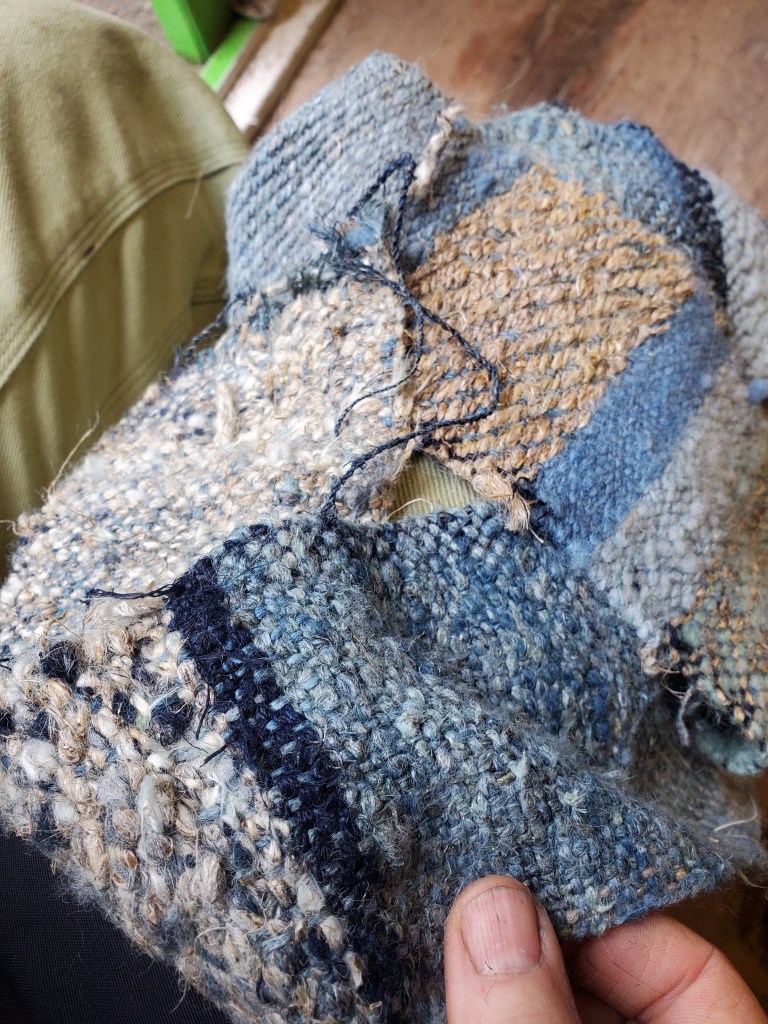
Starting from linen squares and rectangles, this small cohort over many months will mordant, print, dye and stitch personal textile projects that we think just might be worthy of becoming family heirlooms… Learn more and fill out the registration request here.
Land & Body: TeaCare Cohort
4 Sundays 10am-12noonMay 5 & 19, June 9, July 14 Sliding scale from $55 to $85
with Rebecca Wang. A chance to step into the gardens and ‘steep in learning’: tending and harvesting from the plants that make for excellent cups of herbal tea that grow in both of EartHand’s learning gardens.
Growing our own food in the city can be both a big challenge as well as a big commitment for time. Growing, tending and harvesting plants for personal herbal tea however, can be a simpler way to step into thinking about relational and local ways to fuel our bodies. Learn more and register here.
Indigo Sessions with Anna Heywood-Jones
4 Saturdays 12 noon-4pm May 11, July 13, July 27, September 14 Sliding scale, $220-$280
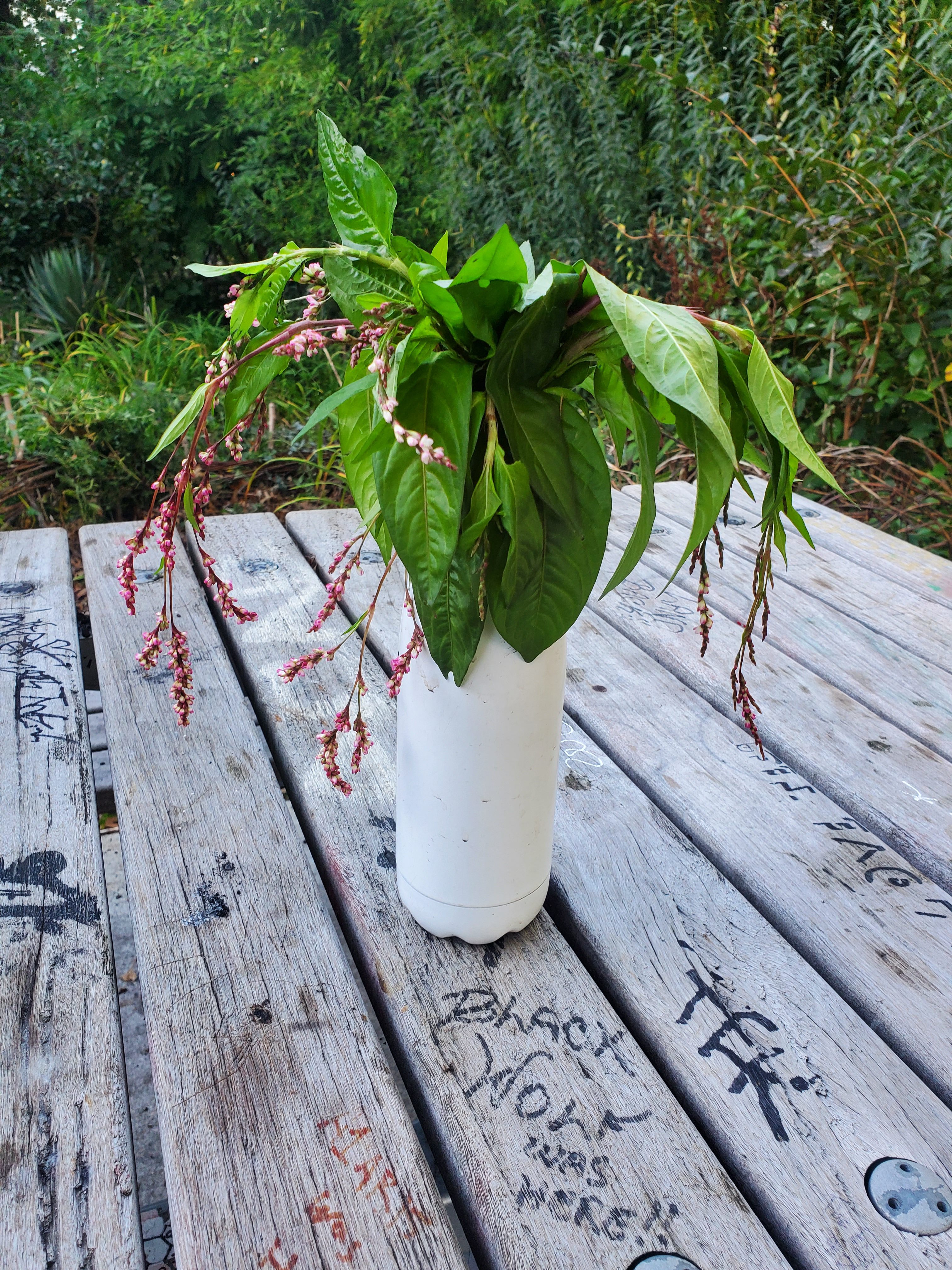
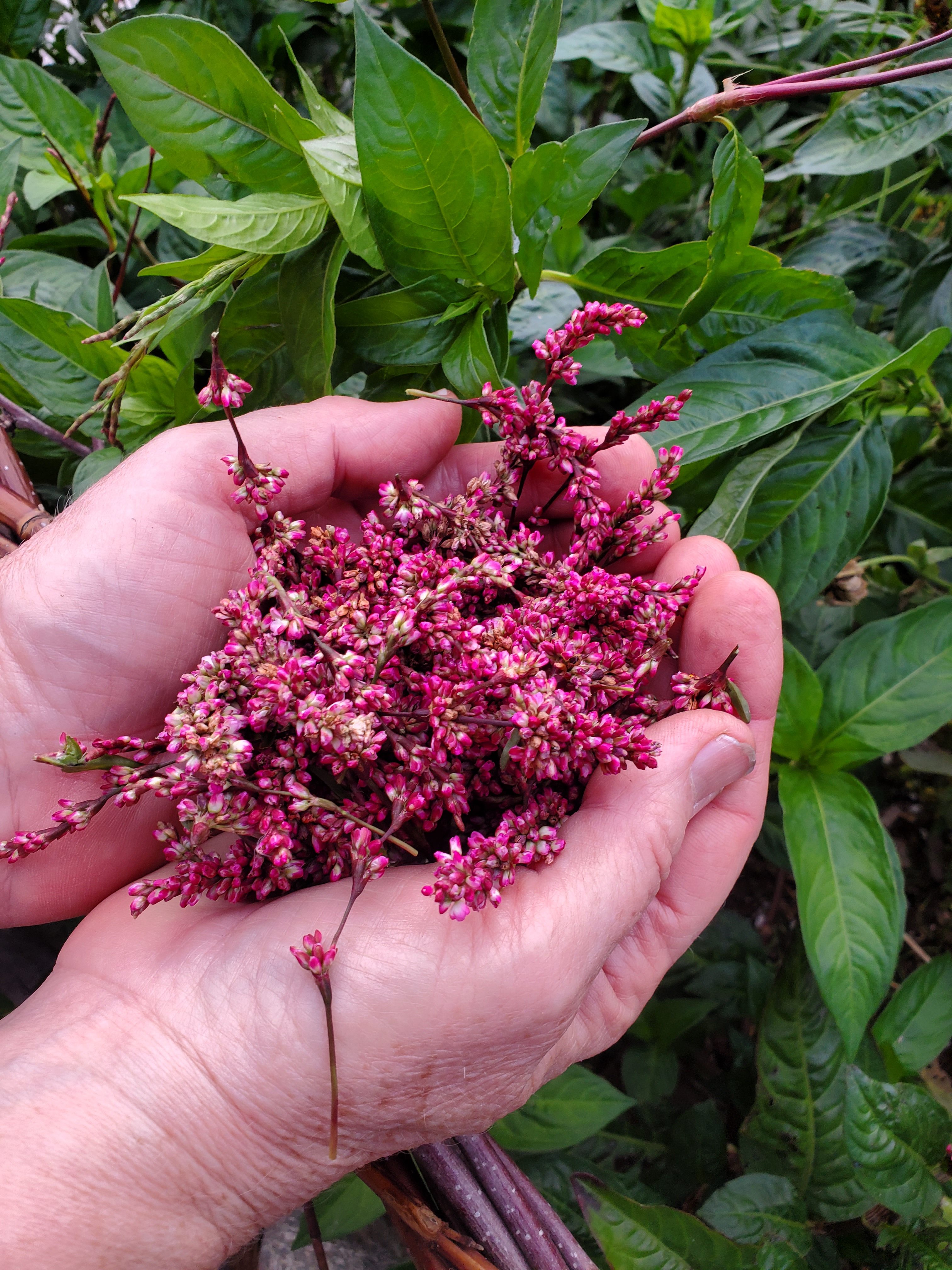
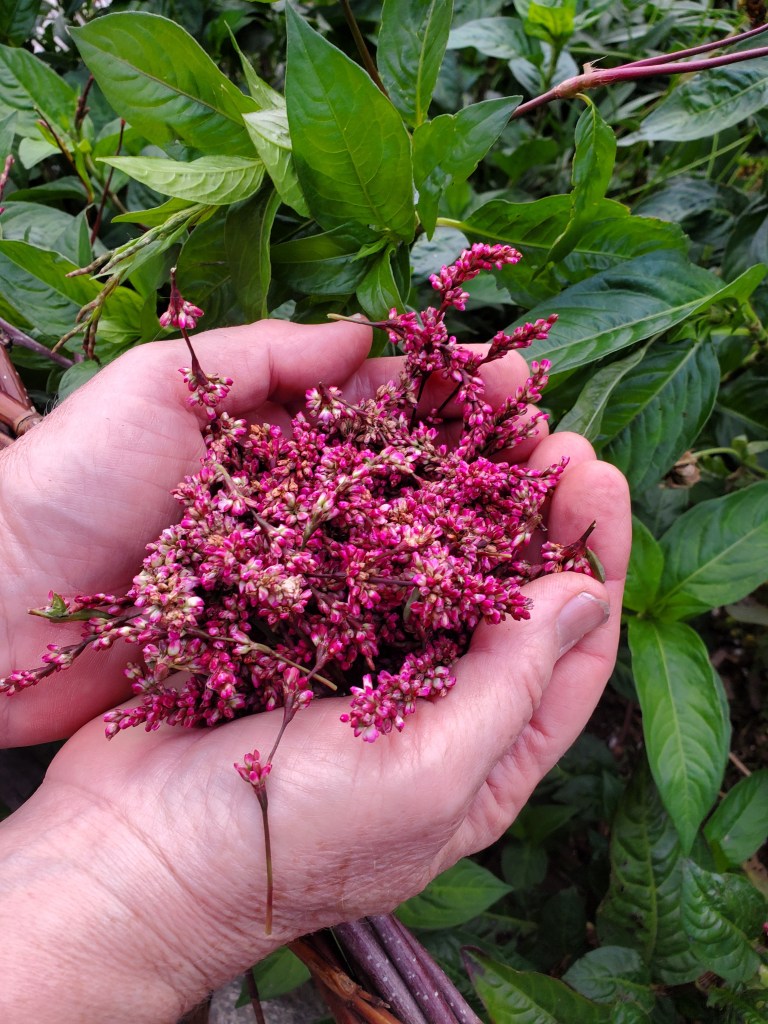
Sharing learnings from last year’s Blue Nettle program, Anna Heywood-Jones will guide us through the process of growing and working with Persicaria tinctoria (an indigo bearing plant known by many names, including Japanese indigo). Diving into the plant’s life cycle and many magical properties, Indigo Sessions will offer participants the opportunity to collaboratively learn from these special plants. Learn more and fill out the registration request here.
And of course, we have a few studio related programs as well as stewardship sessions still in the works, so keep an eye on the events listing here for fresh programs that sneak in after this post has been published.
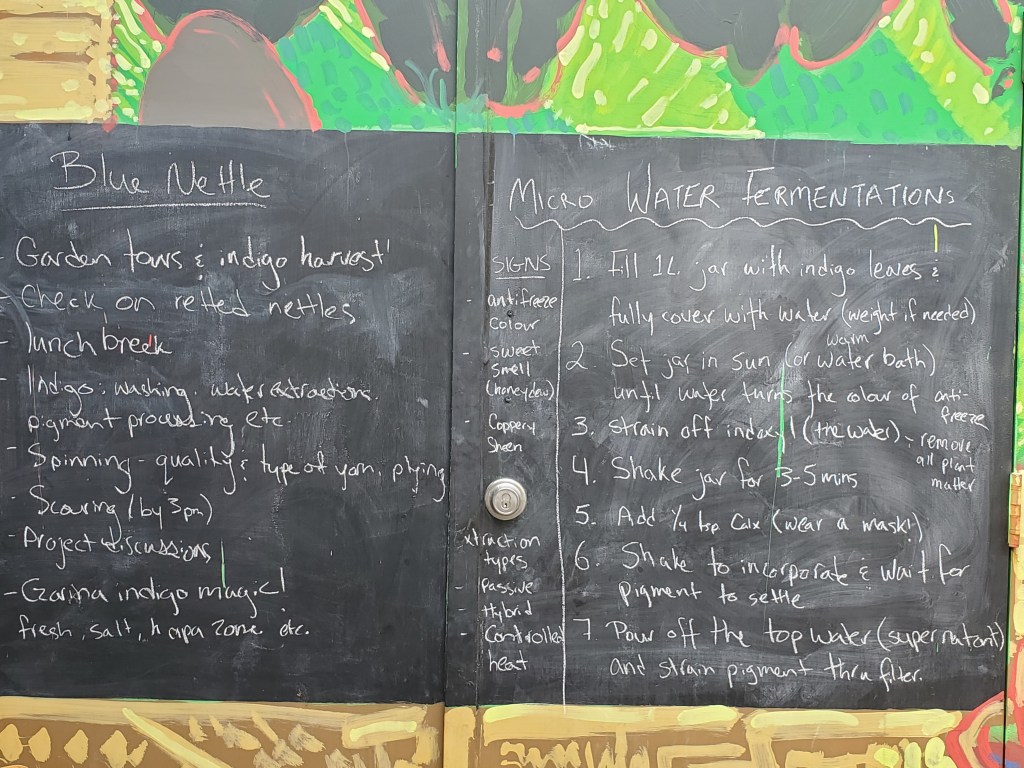
Much of my residency work last year revolved around nettle and indigo, as Sharon and I co-led Blue Nettle, a six-month program focused on working with each plant throughout its seasonal life cycle. Sharon shared her extensive knowledge of stinging nettle with the group, while I delved into researching and learning from Persicaria tinctoria, a plant known by many names, including Japanese indigo.
With the support of many garden stewards, we successfully grew indigo in three garden sites last summer. These included Trillium and Means of Production, as well as a plot of indigo at the coFood Collaborative Garden (Scotia and 4th). It was a valuable learning opportunity to observe the same plant growing in three different locations, each with varying soil quality, sun exposure, temperature variation and watering frequency.
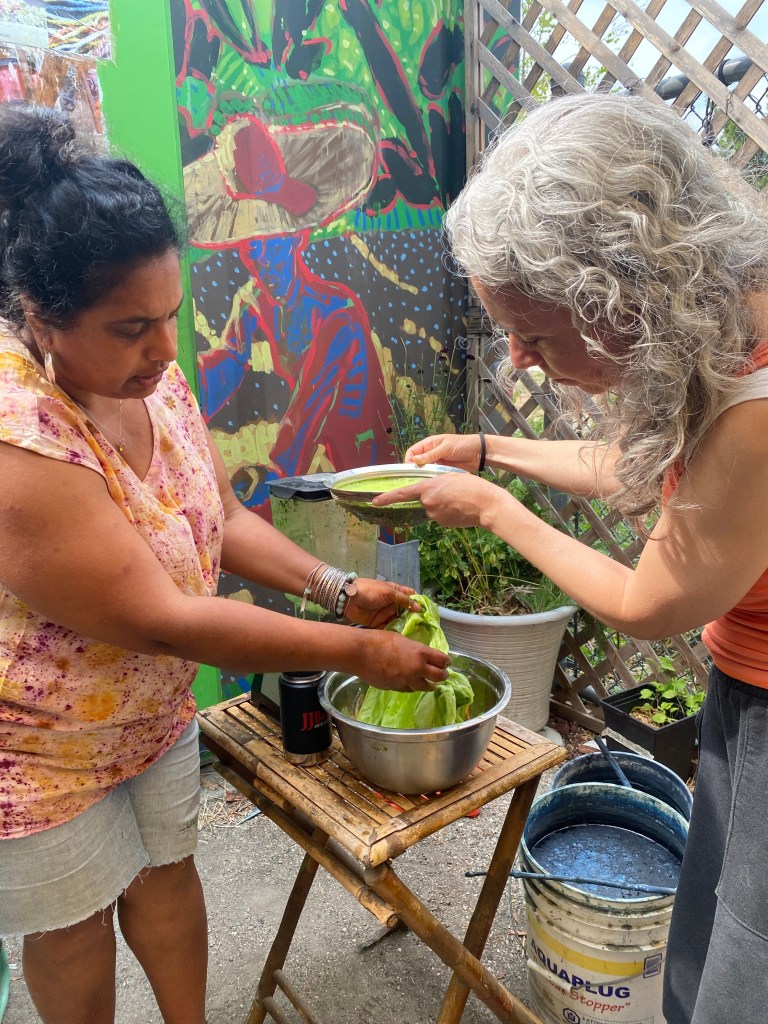
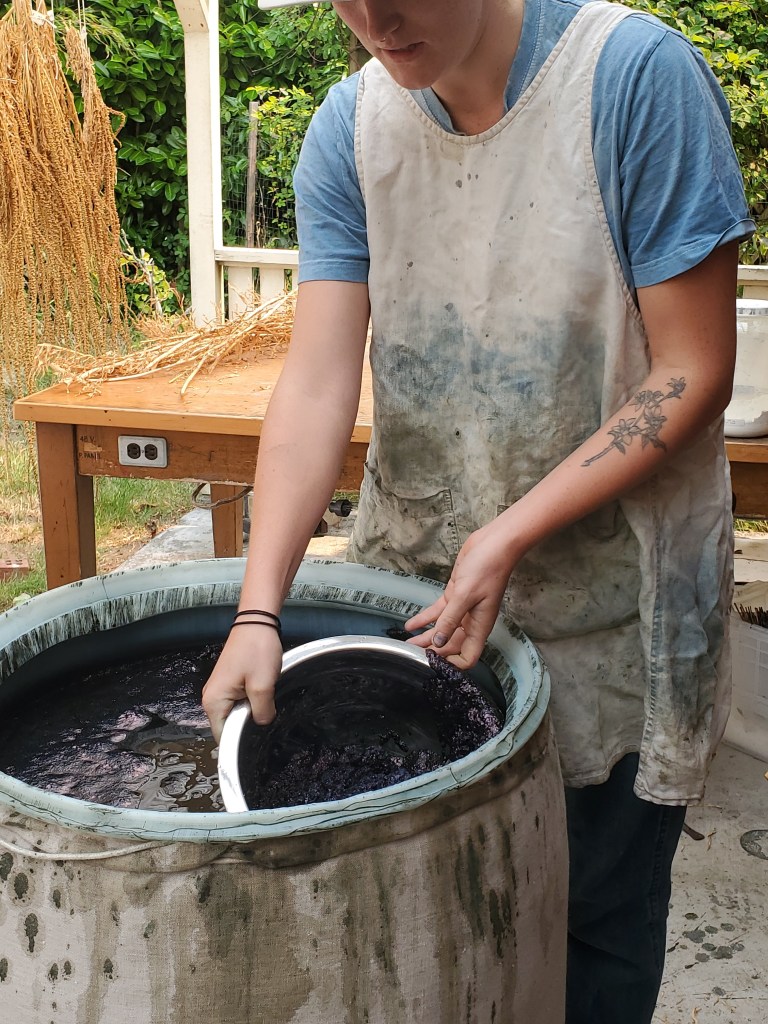
The process of gathering indigo pigment from this verdant plant is a challenging one, but through fermentation, oxidation, and the use of an alkali a seemingly alchemical transformation occurs. Those who have worked with indigo, either in pigment or leaf form, can attest to its difficult, highly addictive, and magical qualities. Last summer, during the peak of pigment gathering season, I reflected on these qualities: “This metamorphic plant has hijacked my brain. I feel a little possessed by it. I close my eyes and see swirling galaxies of blue pigment precipitating.” Despite nearly two decades of working with dye plants, I have never been quite so captivated by a single plant; such is the power of indigo.
This research was generously supported by Nicola Hodges, Britt Boles and, of course, Sharon. Fundamentally, none of this work would have been possible without the knowledge gathered, accumulated, and carried forward over innumerable generations of indigo cultivators and dyers in Vietnam, China, Japan, and Korea. I am deeply grateful to have had the opportunity to learn from this invaluable knowledgebase and from these remarkable riparian plants. I hope to carry on growing Persicaria tinctoria, and learning from it, this summer and in the years to come.
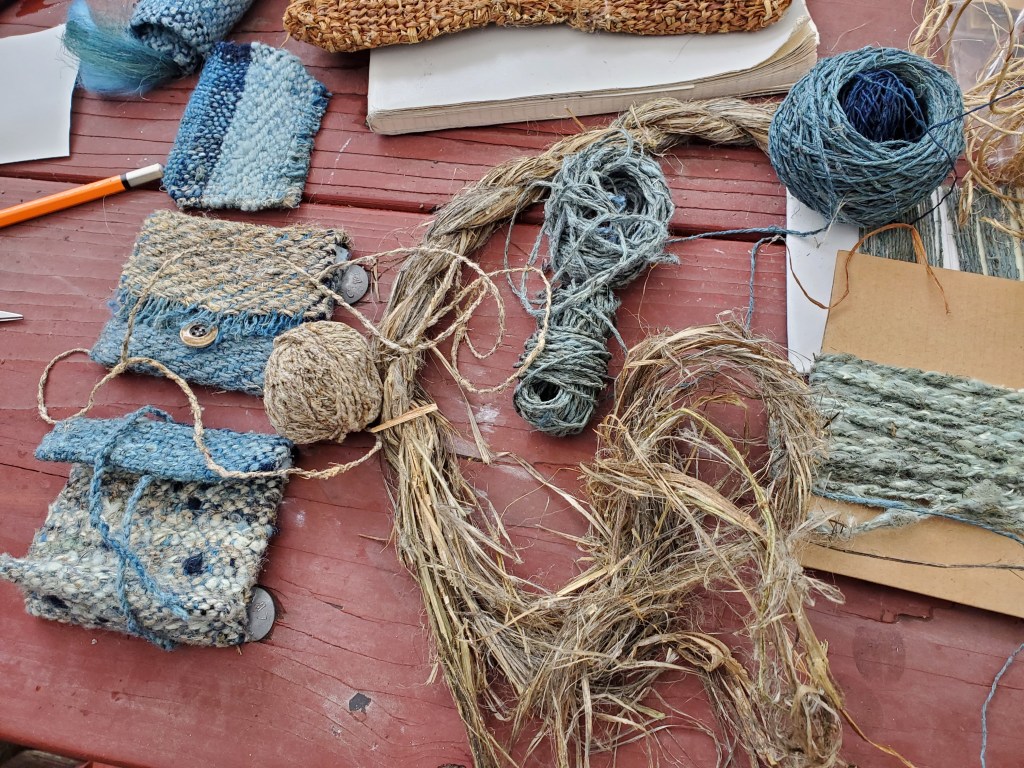
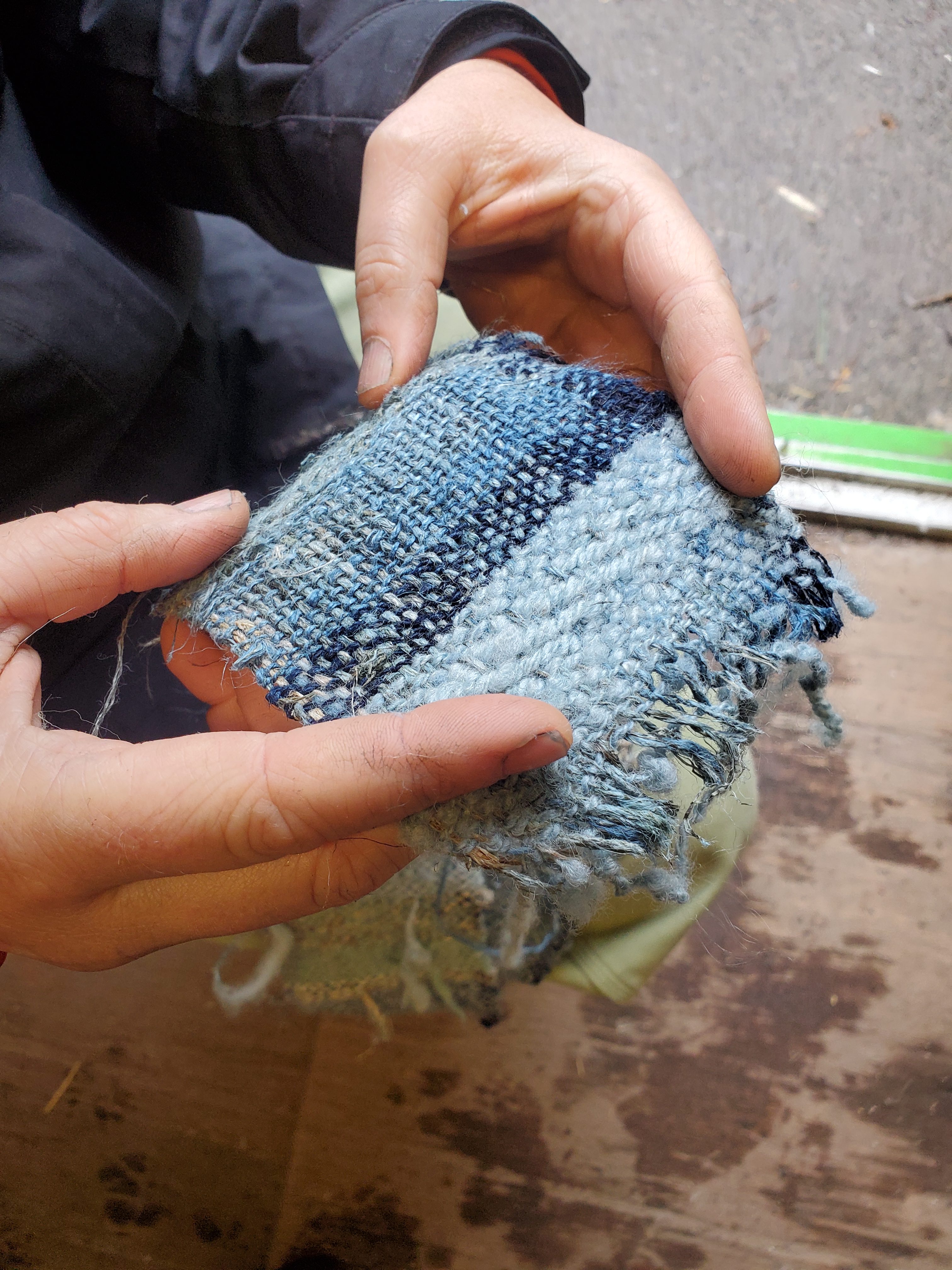
The textile work created by participants in Blue Nettle was experimental and diverse, ranging from woven cloth and 3D forms to studies in cordage. My project involved weaving indigo-dyed nettle fibres into cloth, which is being utilized in an ongoing body of work exploring making methodologies of grief and loss.
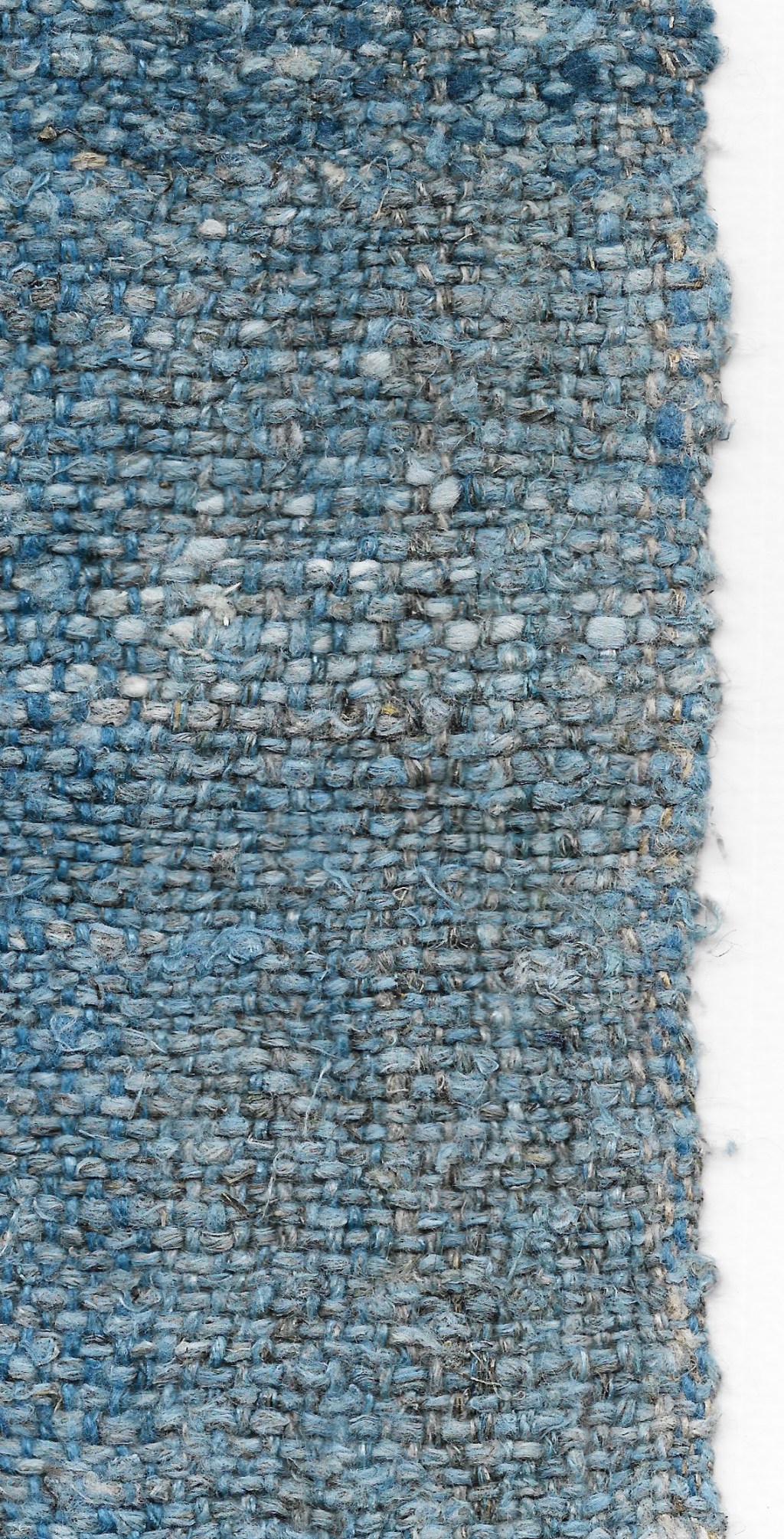
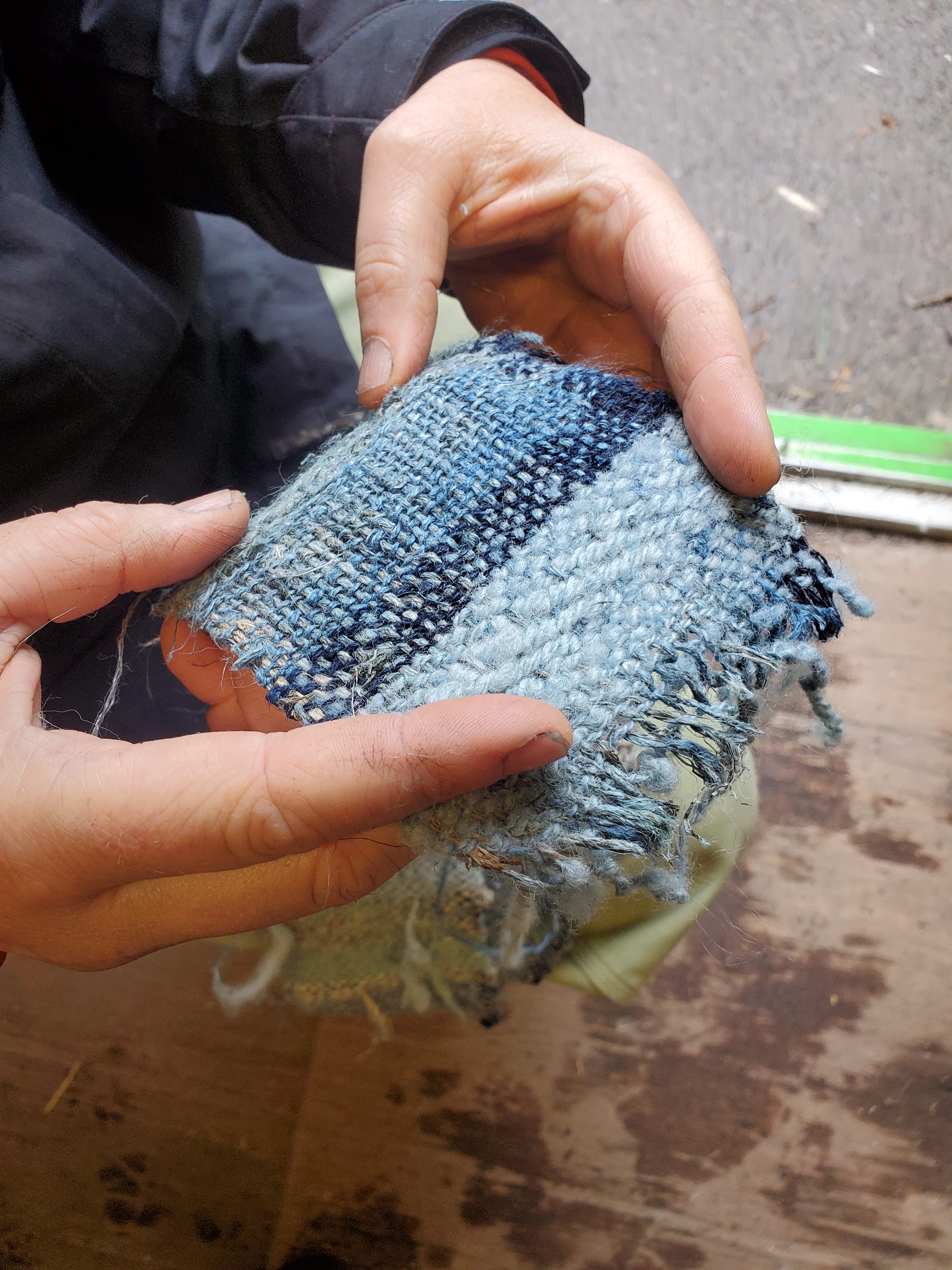
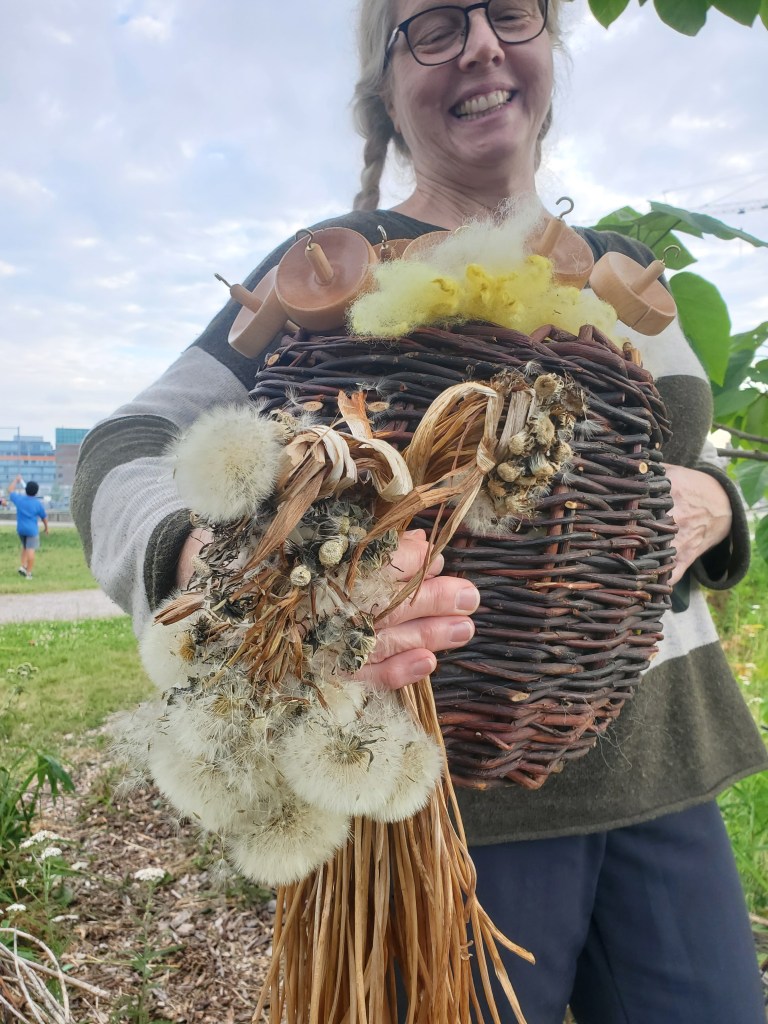
dandelions for weavinggarden work at Means of Production!flower harvesting for dye potsindigo seed harvestA sample swatch of Anna’s- local fleece and nettles dyed in our local indigo
Collaborative Land Care
For 2024, EartHand is putting our Artist in Residency program on hold and investing our time and resources into learning about different types of collaborative land care modalities.
Currently, our two learning gardens are run by volunteer labour for both garden work and program coordination, including connecting with artists for materials access and designing our free and paid programs connected to the plantings in the gardens. We pay a small monthly stipend for a volunteer coordinator managing some of the stewardship planning and communication, and funds raised through our paid programs are funneled back into the modest artist research fees paid to our annual artist(s) in residence which helps spark new ideas, shifting our areas of focus in the gardens whole supporting the creative growth of artists to embrace notions of locally grown into their practice.
All of this work has built up an incredible resource of the seasonal time-llne of both material availability and physical labour; of what it takes to be a maker without first being a consumer.
Yet, this system is still overly reliant on one or two individuals doing the majority of the work, making most of the decisions, holding most of the knowledge of garden plans, as well as being “gate-keepers” to materials access.
We are curious as to what alternative systems might be possible; and discovering what other ways of sharing both the labour and bounty exist.
A few of the questions we are posing include:
How do we draw in new volunteers in a sustaining way in a city so challenging for most to have anytime for volunteering after meeting personal household needs?
How do we acknowledge the complexity as lead stewards of tending unceded lands when our ancestors come from elsewhere?
How do move beyond the concept of the tragedy of the commons and create a collective, functional community agreement for the Care and Share connected to seasonal work?
We are excited to start off this year of inquiry deep-diving into all things Collaborative Land Care with Young Agrarians in their How to Start a Coop program focused on farming collectives.
A cohort of EartHand board members, artists and land-care practitioners will take this 9 week course to help us collectively define roles we already intuitively have adapted, identify places where we can daylight process, and form policy for participation, and take this, and other research into the Commons and beyond. The individuals in our cohort are: Nicola Hodges, Chantelle Chan, Carla Frenkel, Camila Szefler, Daniel Mendoza and Sharon Kallis
Though we are based in the urban area of Vancouver, we have a large network that stretches far into rural parts of the province and we continue to act as a conduit for building up the British Columbia web of both formalized and unofficial Fibresheds wherever we can.
We are excited to see how what we can learn and synthesize might become adaptable to the gardens under our stewardship as well as other collaborative land care collectives focused on building a local textile economy tied to place and committed to restorative land care/ community-share models.
Program Now Full! Read on to be added to the waitlist in case of registration shifts.
Want to make a commitment to yourself ( and your closet) while creating a locally grown garment and growing your community?
This program takes a leap from our extended Blue Nettle program of 2023, having learned the great value of committing to gathering monthly, and also that making things through our relationships to the land and plants take time!
So for a garment- we are going the distance and blocking time out all the way into Spring 2025.
Join Sharon Kallis for this long-distance marathon of a Soil to Skin journey.
9 Saturdays 10am-4.30pm Trillium Park
April 6. May 4, June 1, July 6 & 20, Sept 7, Oct 5, Nov 16 2024 and Feb 1, Mar 2, 2025
and Online 10am-12noon Dec 7, Jan 11 2025 –2 virtual check in and work sessions
This is a special opportunity to be a part of a small cohort of fibre folk for extended, collective learning and making towards personal garments made from the land. What will you make?
Over 12 months we will share in the local fibre bounty and encourage each other in our processing and making.
Beyond our studio days, participating individuals share in the labour of stewarding the textile gardens and share skills at our community events.
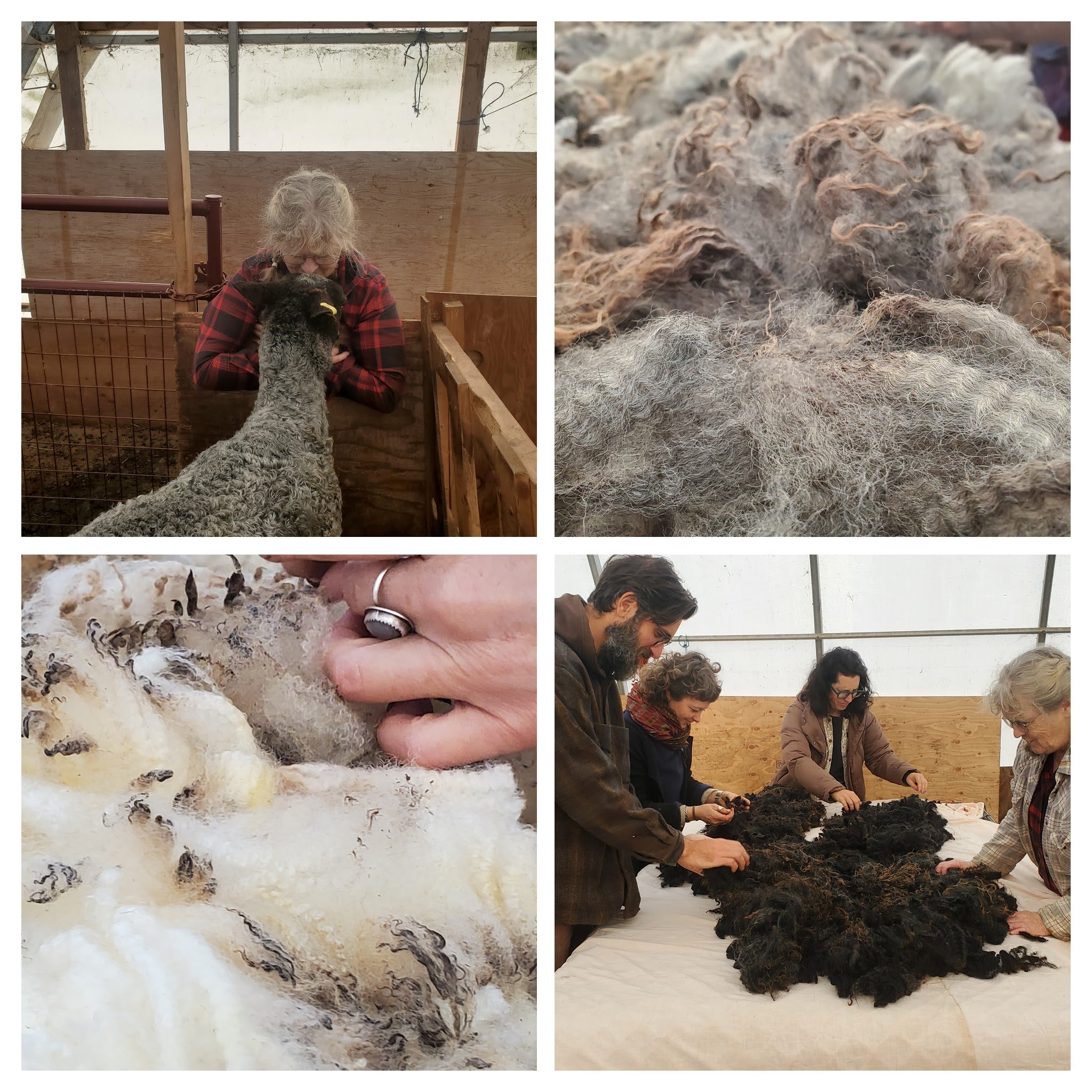
We will start off grading and washing fleeces from the Barnston Island flock for distribution, have access to drum carders and hand carders during group times and have access to a good amount of local flax straw grown in Richmond in 2023 for processing with EartHand equipment and personal spinning.
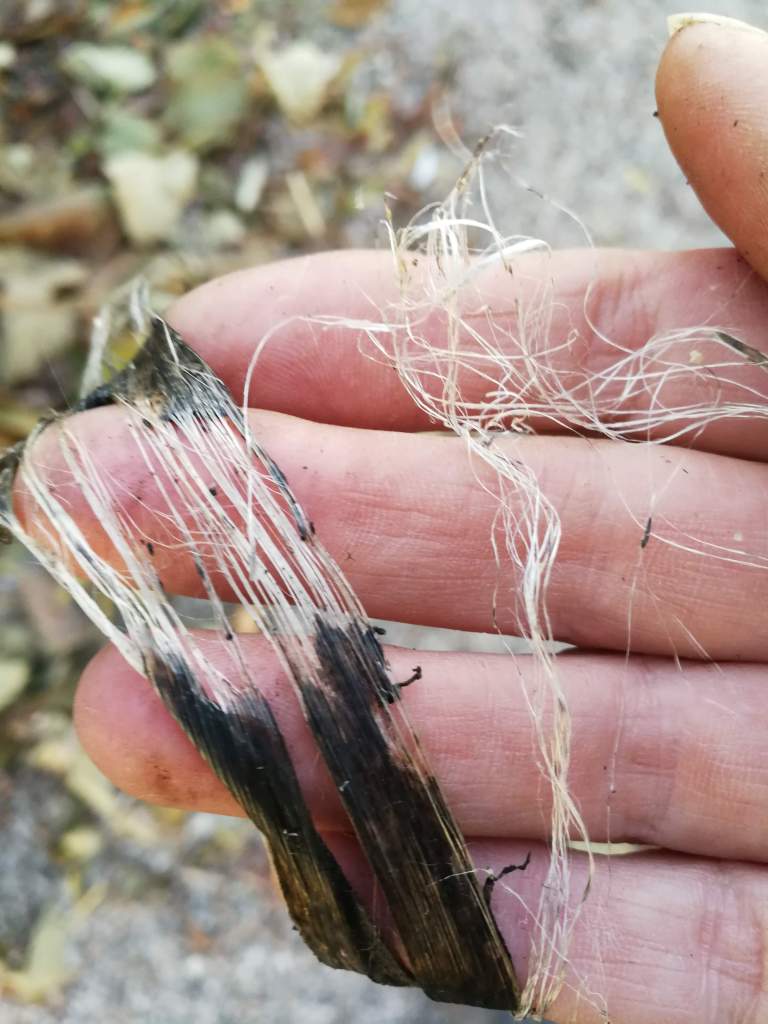
Seasonally, expect moments for flax sowing, harvesting and retting, exploring local wild fibre tangents of fireweed and milkweed fluff as well as fireweed and nettle fibres for processing and spinning. Dye plants will include coreopsis, scabiosa, madder, weld and so much more! Our 3 beautiful fleece from the Barnston island flock total 18+ pounds of raw wool.
white fleece from Daisy, CVM
grey fleece from Popcorn, Gotland x (CVM x Gotland)
black fleece from Mocha Rose, Gotland x BFL
Dye sessions will allow the group to collectively mordant and dye personal wool and linen fibres bringing gorgeous local colour into our fibre palette.
Studio sessions will include
time for processing flax in preparation for personal spinning,
washing, mordanting and dying fleece,
use of earthand drum carders and other processing equipment for personal wool and flax processing
drop spindling refreshers- note this is not a spinning class, we will go over basics but if you have never spun before you may wish to seek other instruction outside of studio sessions to build this skill
exploration of simple frame weaving options
technical, creative and emotional support for planning your project and seeing it through to completion!
Beyond spinning tutorials, there will be lots of time for collective sharing of ideas. Peer support for techniques of weaving, crocheting or knitting will be encouraged as individuals plan their own projects and share skills within the group. Expect copious amounts of herbal tea from the garden, bring your own lunch.
Our Community Contract
Recognizing that slow clothing is about being in relationship with the land, plants, animals and others that support our clothing self-sufficiency in various ways, the goals of this program include not just learning for ourselves, but taking care of the places that are connected to the EartHand fibreshed, and helping pass along the skills we are ourselves developing.
Stewardship:
Beyond our shared studio sessions at the Trillium outdoor workspace, individuals also agree to participate in the work of tending the gardens by attending a minimum of 12 garden stewardship sessions over the year (from April to October these happen on Tuesday evenings at Trillium, or Wednesday evenings at MOP) .
There are other stewarding sessions that take place and all members will have access to the slack communication channel where garden sessions are announced.
With a wide variety of jobs always to be done Sharon will work with participants to address any accessibility or participation considerations or concerns. Note the Means of Production site is a terraced steep hill but the dye plants grow on the top beds just off the sidewalk.
Sliding scale range from $500 to $725 read on for description of options and for registration- please fill in this form and you will be contacted to complete your registration- note cohort space is limited to 12.
Skill Share
Help us spread the love for all things local fibre!
In addition to garden sessions, we ask that you commit to volunteering at between 1 to 5 public events depending on the sliding scale ticket you choose.
Events dates confirmed so far include:
May Day Mend ( Wed May 1 4 to 8 pm at Renfrew Ravine) in collaboration with Still Moon Arts Society
Trillium Open Studio Sessions 5.30-8.30pm, May 6, June 3, July 8
Heart of the City Festival Mending Threads ( Sat Nov 2 12 noon-3pm at Trillium)
Space in this program allows a maximum of 12 individuals
Space in this program allows a maximum of 12 individuals
Sliding Scale Share Purchase:
$725 assist with 12 garden sessions and 5 hours of event skill share support
$650 assist with 12 garden sessions and 10 hours of event skill share support
$575 assist with 12 garden sessions and 15 hours of event skill share support
$ 500 assist with 12 garden sessions and 20 hours of event skill share support
For registration- please fill in this form and you will be contacted to complete your registration- note cohort space is limited to 12.
Staggered Payment Options and Refund Policy:
We know this is a steep cost relative to our shorter term programs, so to ease the financial crunch of registering we are offering that payments can be split into a max of 3 monthly payments, fees must be paid in full by April 2 and are non refundable once the program begins.
If life-shifts require you drop out early in the program before fibres are divided up, we can help publicize you have a share for sale for someone to take your place.
We spend so long writing about upcoming events, and rarely take a moment to share on our website some of our highlights that you might have missed- So here is a brief overview of just a few or our gatherings this past year.
Flax to Linen– over 30 individuals signed up to participate in our BC Flax Network – we have been meeting online once a month, sharing stories and expertise, asking and answering questions and moving through all the steps of growing flax and processing it to linen. Our group was a wonderfully diverse group of folks from those who have never grown before to those with vast experience, some with urban small plots or using planters, to farmers with much larger flax crops planted. Though many didn’t make it online with us through the full season, a wonderfully supportive group has formed that continues to meet regularly months after the official program ended!
Our harvest event in Richmond was a beautiful, hot summer night and gave us reason to pull together the fibre samples from what Kathy Dunster has been growing in seed trials in her work with Kwantlen Polytechnic University. Our seed stalk has grown again thanks to the plot we were able to grow at the Kwantlen Richmond farm- and expect future weaving research using unbroken flax and other fibre work to come from this straw! If you are looking for your own BC seed source- we recommend reaching out to Carole Hyland at Alderley Grange Farm on Vancouver Island
Blue Nettles and the 2023 Artist in Residence Program
Anna Heywood Jones has likely got indigo running in her veins as well as staining her nails at this point with all the work she has done on various pigment extraction and dye methods!
Sharon declared it has been a pure delight to spend a second year with Anna as the artists in residence with EartHand, and having the Blue Nettle research group become the monthly focus point and group to share the work and exploration with was a format worth returning to in the future!
Anna harvesting indigo at Means of Production
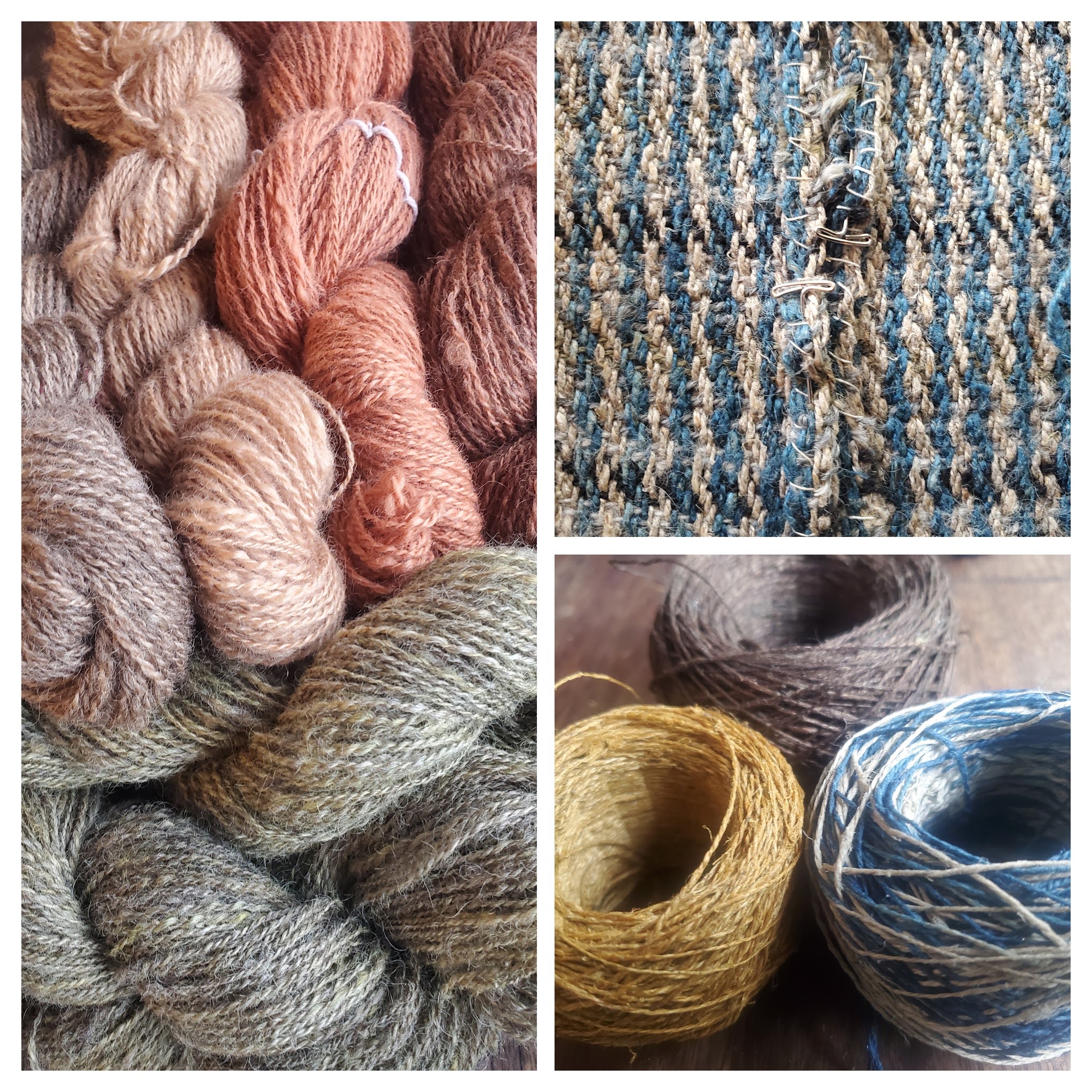
a sample of various nettle and indigo threads
Anna’s weaving sample of Blue Nettle
Blue Nettle participants Gretchen’s fibre samples
A sample swatch of Anna’s- local fleece and nettles dyed in our local indigo
indigo seed harvest
Nicola removes indigo flower from aa sukumo vat
local fibres and weaving in progress: daylily, indigo dye nettles, including fibre blended sample with milkweed fluff
An artists field trip to the Sunshine coast to visit the sukumo vats
blue nettle!
Quiet Collaborations
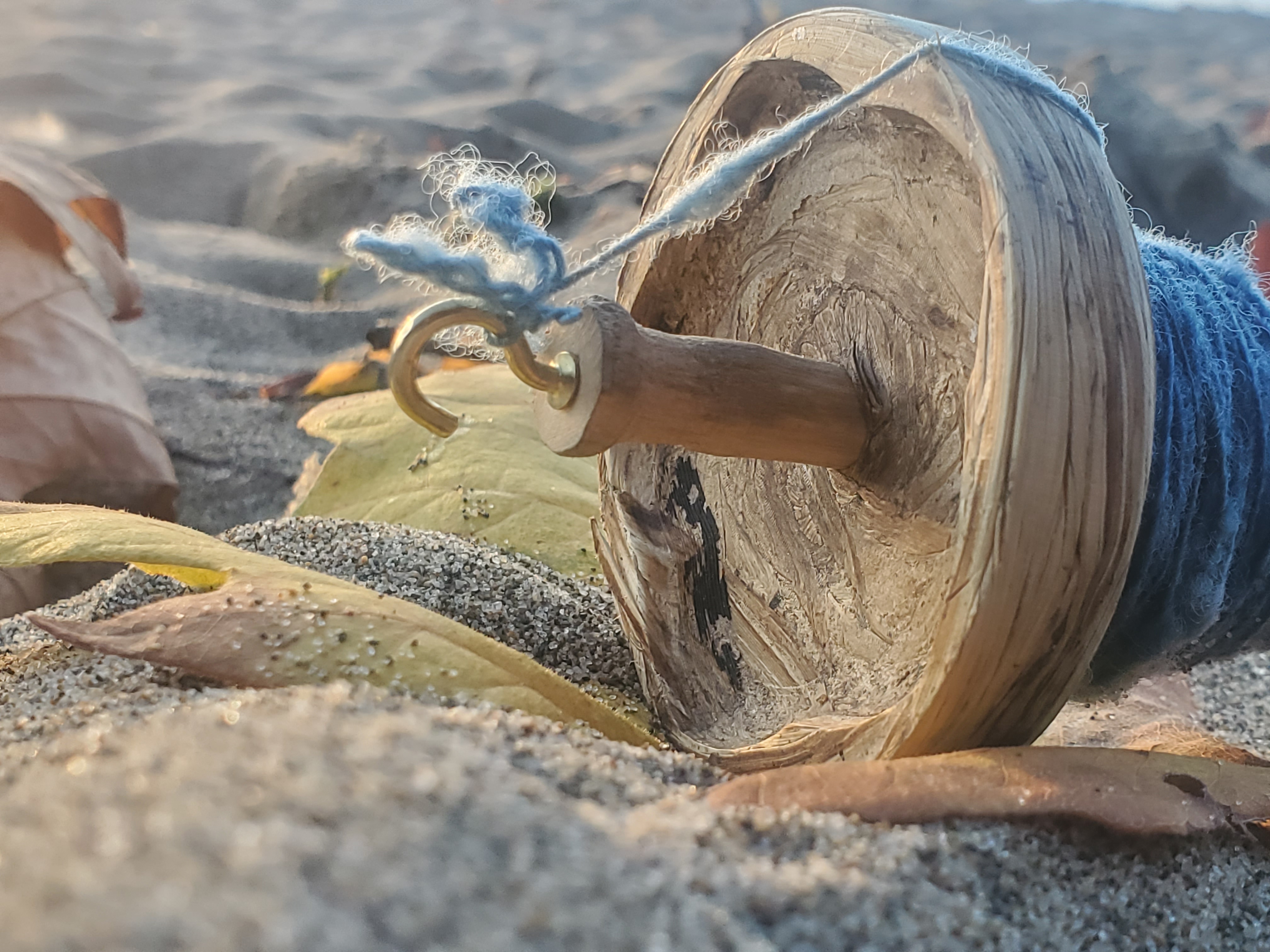
There are many behind the scenes conversations that take place; investigating ways we can collaborate and build our local skill and fibre network. One of the exciting conversations going on has been working with Sam Alder from Salder Design, looking at how the invasive Himalayan blackberry they are are harvesting as a part of ongoing removal efforts can be further honoured through repurposing into drop spindles! we are very grateful to the Vancouver Park Board neighbourhood matching fund which has supported this innovative collaboration.
Below shows an early prototype- follow Sam on instagram (at)salderdesign to follow the process.
Fireweed Invitational Gatherings
With support from the BC Arts Council, local indigenous skill holders Cease Wyss, Chrystal Sparrow, Rosemary Georgeson, Leah Munier, Cheryl Arnouse and Lilly Teare Cunningham, gathered with EartHand board members Nicole Preissl, Tiffany Muñoz, Lex Battle and lead artist Sharon Kallis for 3 sessions of harvesting fireweed for fibre. Spending time in good conversation, while busy hands gathered fibres from plants grown in the Trillium gardens.
Lex created a beautiful film short from some of our time you can watch here and Tiffany had this to say about her time in our fireweed circle
“The fireweed gatherings held over summer 2023 helped enrich a deeper understanding and identification of plants in our urban environment and spoke to the connection of resilience within ourselves and the important versatility and perseverance of plants like fireweed, especially in relation to these fraught times. These basic foraging techniques open up so many skill possibilities for culinary arts, visual arts practices, arts and crafts, medicinal use, etc and overall provide a wonderful introduction to local sustainability – plus also a realization of the abundance that surrounds us. I find accessible gatherings like these help foster an ease of sharing knowledge, storytelling and resources between community participants, while contributing to a better connection and relationship to the lands we reside on of which I am grateful and privileged to engage in.
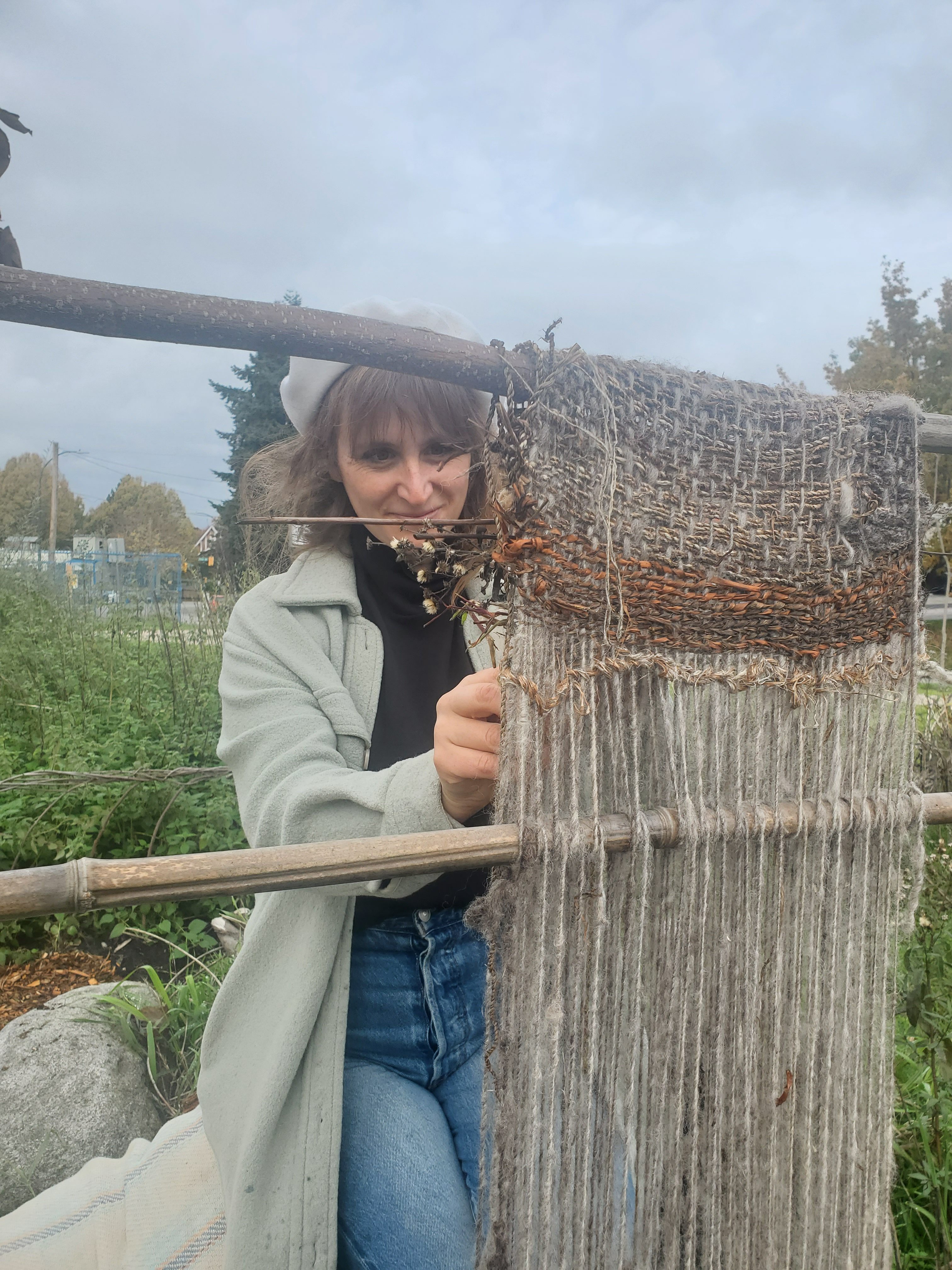
The Trillium Land Loom had a few beautiful pieces created on it by both stewards and community members working collaboratively, the loom was warped on summer solstice by our stewardship group and reactivated to finish the season at the Heart of the City festival in November.
Autumn weavingdaylily and wool
So many other lovely community events for gathering took place, either as a part of a larger community partnership, or as a solo event.
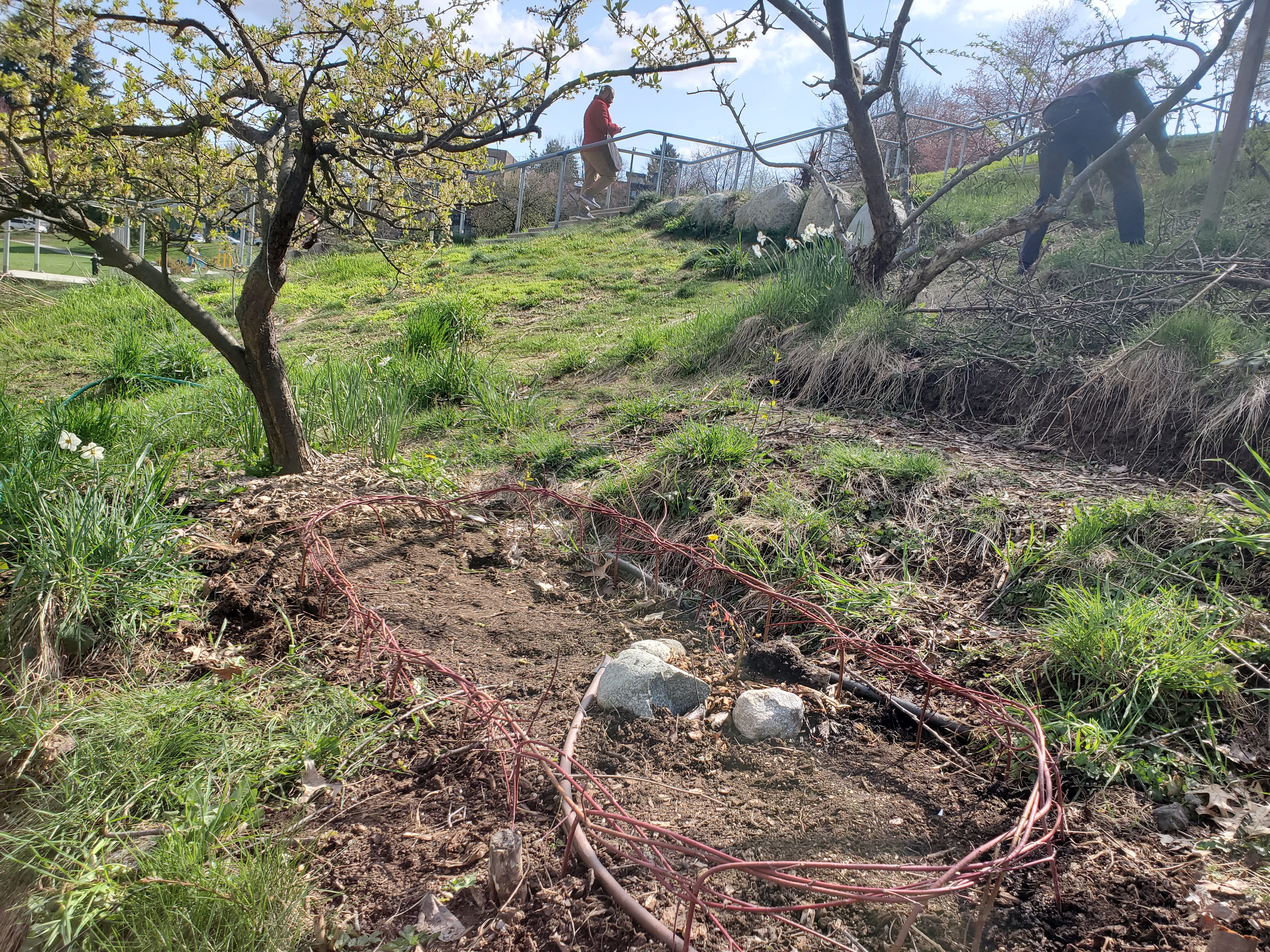
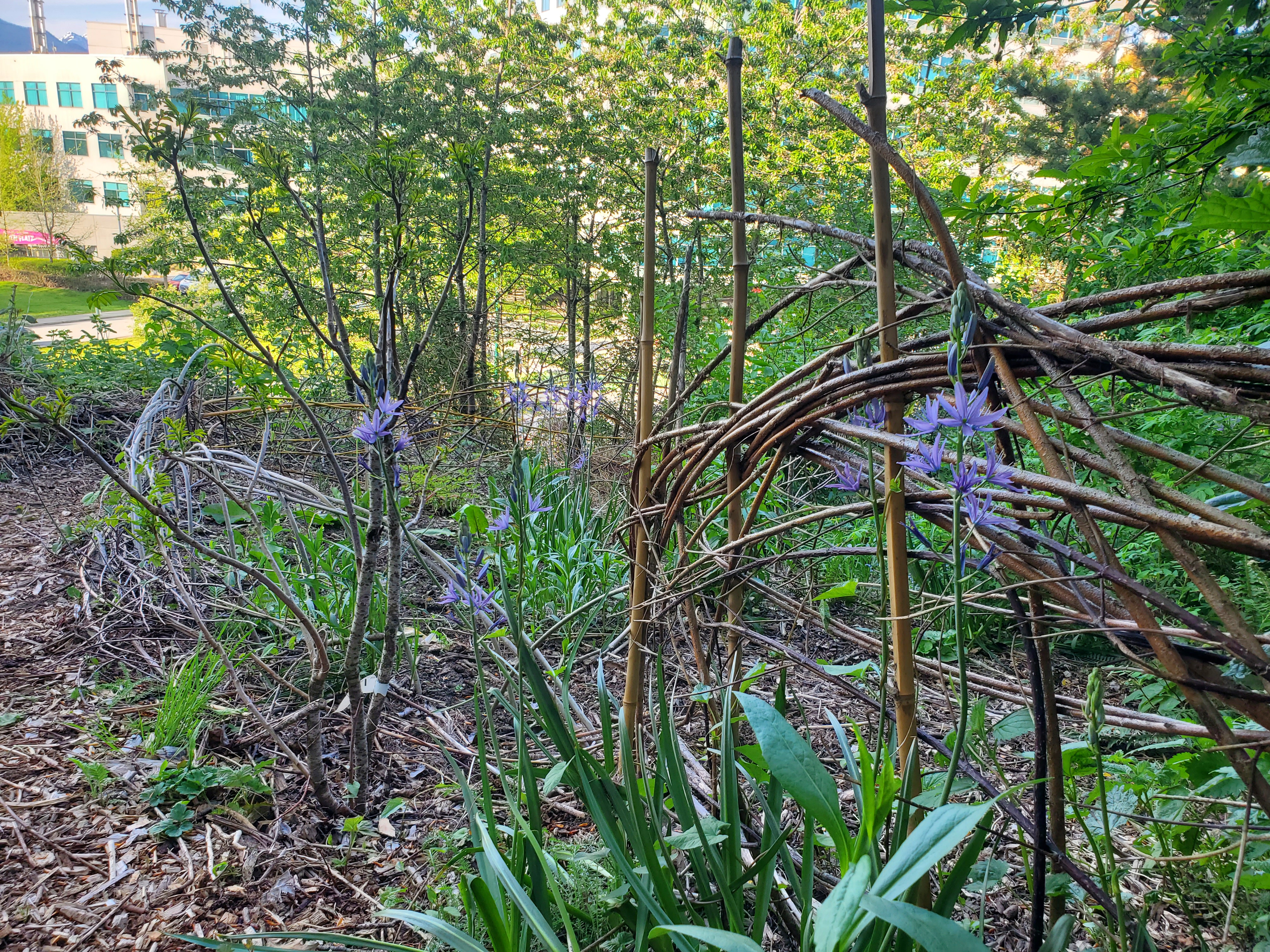
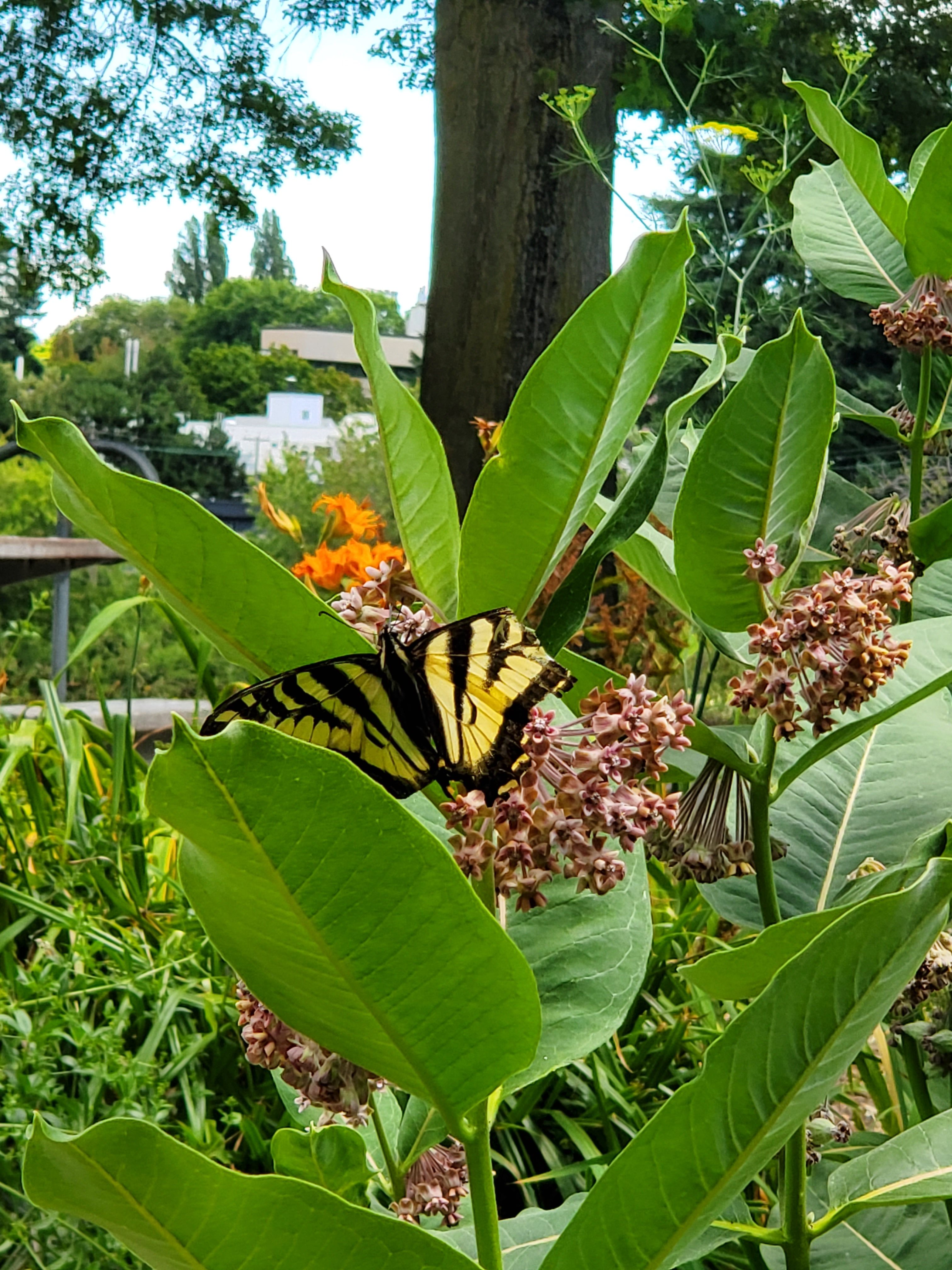
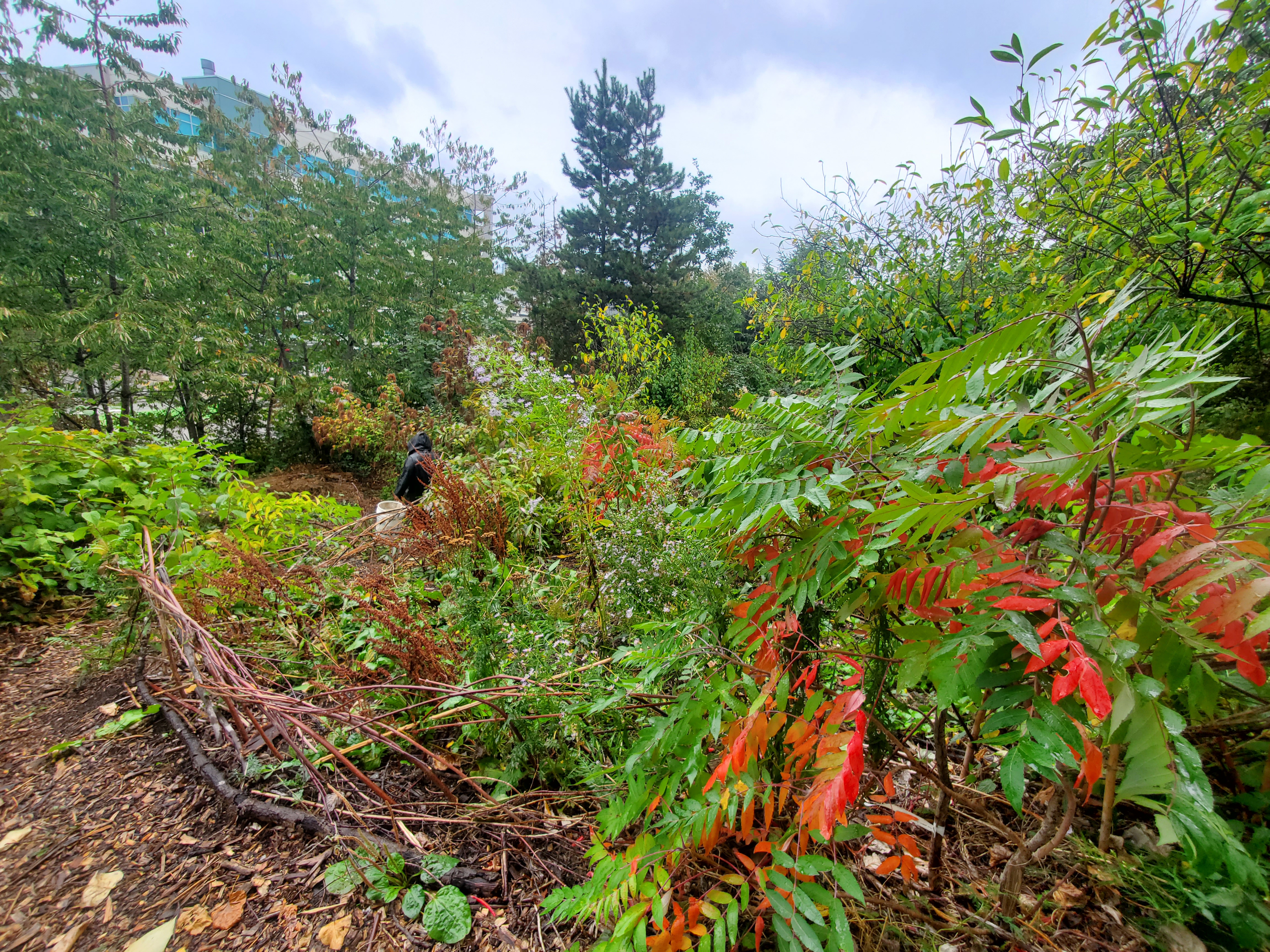
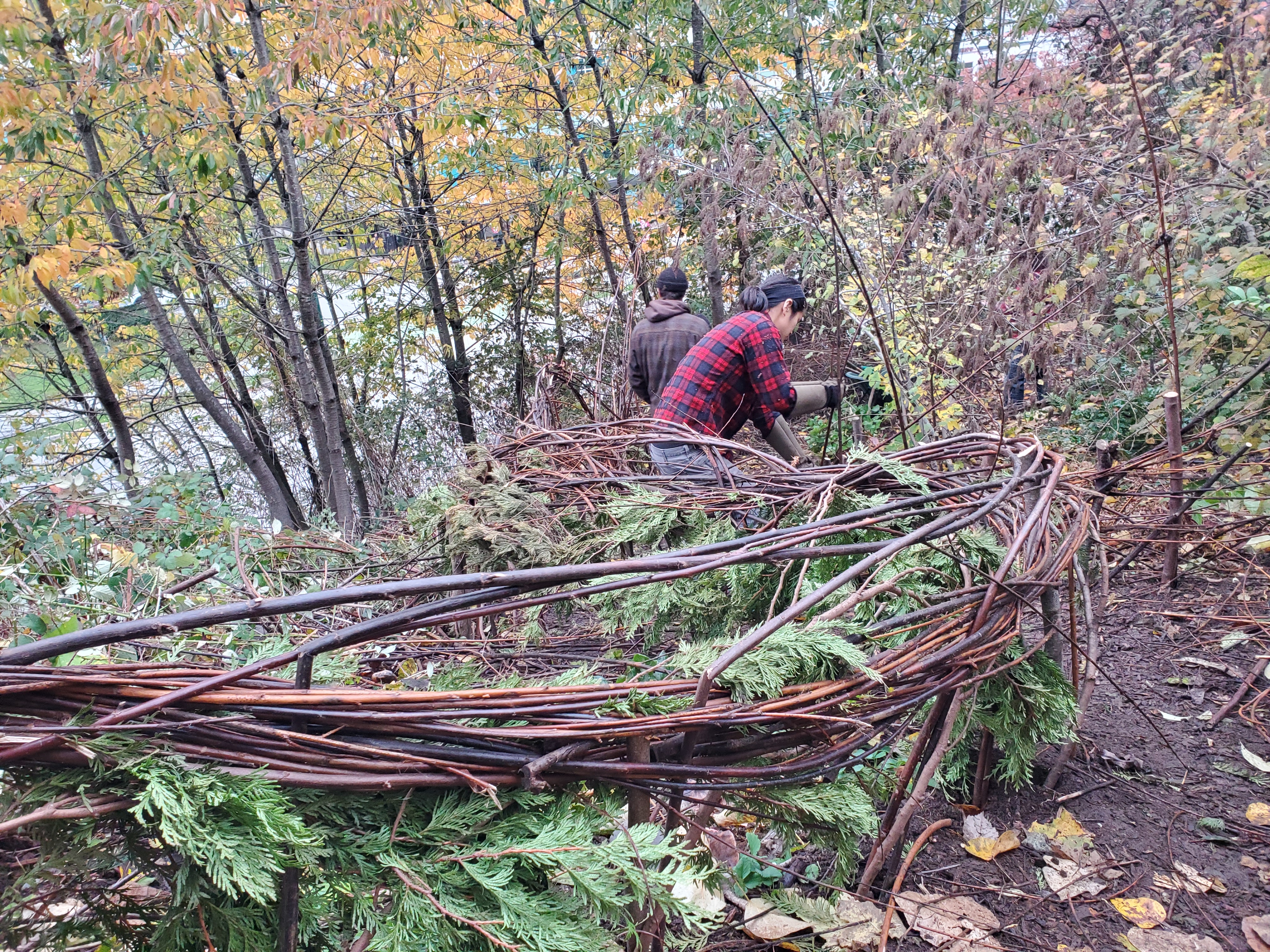
At the Means of Production garden, our weekly stewardship team did a fantastic job of opening up areas in the food forest orchard- removing non fruiting trees and planting more blueberries, the camas bloomed on the western hill we have been replanting from blackberry removal, and we got a new switchback trail terraformed, with a fence woven, fireweed seeded, and more blackberry removed! We will be keeping a ‘trained area” of the blackberries at neighbours request for the seniors that have a hard time making it down the hill. On the far East side, more planting has happened to establish our drought tolerant fibre hill, and in the top area, the milkweed is thriving and our resident raccoon seems happy too.
A mix up of some of the wonderful gatherings, skill holders and groups we worked with over 2023, what a year!
dance felting party with Amy Walker!
new seat cushions from our felting and weaving sessions
Spin in Public Day at the Surrey Museum
climate and plant walks
harvesting dye plants
summer weaving event- making seat cushions
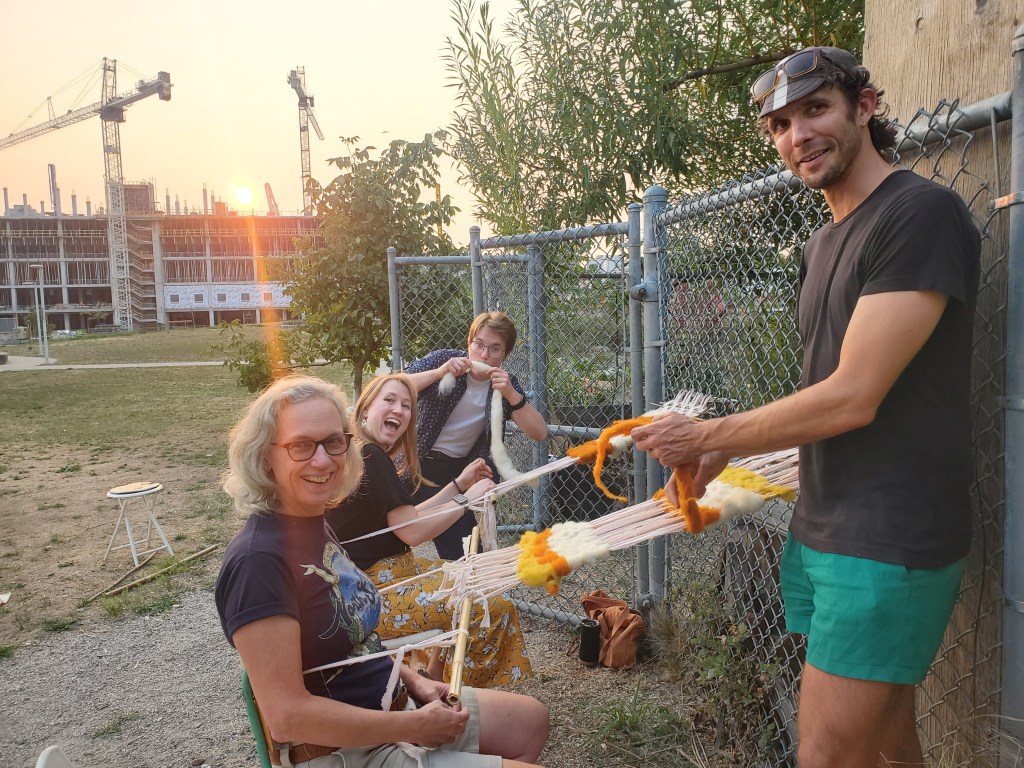
weaving off the fence at trillium
summer weaving times
seat covers taking shape
garden work at Means of Production!
dandelions for weaving
the land loom at Summer Solstice
And as the year closed, here was the view of the new St Paul’s hospital that is being built beside the Trillium Gardens- already taller at the time of posting this from when the photo was taken.
We have just reached the point of the noise from this construction site becoming quieter as most work will now be indoors vs outside, alas the 3 buildings just to the north east have come down and we expect another few years of pile driving and big noise for the building of 2 towers will impact what its like to gather at Trillium – we will stay adaptable to how we gather and what we do for the coming year!
Our Weaving Art & Impact project launched with a great turn out for our summer walks, and the September walks are fast approaching- both take place on September 23rd with space in the middle to enjoy a lunch somewhere local in-between.
Looking at the initial data from our climate monitoring stations, it is easy to see that is common to have a 6 to 15 degree temperature difference in our day time highs between the two sites of Means of Production garden (MOP) and Trillium park- Trillium being a full sun zone with lots of reflective surfaces and concrete nearby compared to MOP’s shady woodland that edges on to the sunny zone where our monitoring station is located.
One surprise, it would seem that MOP has more stable temperatures- less dramatic dips at night.
According to our thermometers- Trillium saw several days in the high 30’s and MOP usually hovered around the mid-20’s with only a couple of notes of high’s over 30 degrees.
a couple of other observations- our trillium station is facing closer to true south while the MOP station is facing east- this likely accounts for the summer heat extremes- but we hope it doesn’t impact our cold temperature too much for the autumn season ahead- this is where all data will truly help reveal some mysteries on the seasonal timeline for plant fibre harvests.
We also observed from our stats that the trillium site is more inclined to ‘community f?:*ery’ with occasions of outlandish temperature entries that would speak to the controls being tweaked- this also fits in with our general site observations about how people use the two parks!
September and October will reveal much for both temperatures and rainfall differences as we gear up to the harvests that we time in response to the plants slow decay.
milkweed fibre as the plant decays
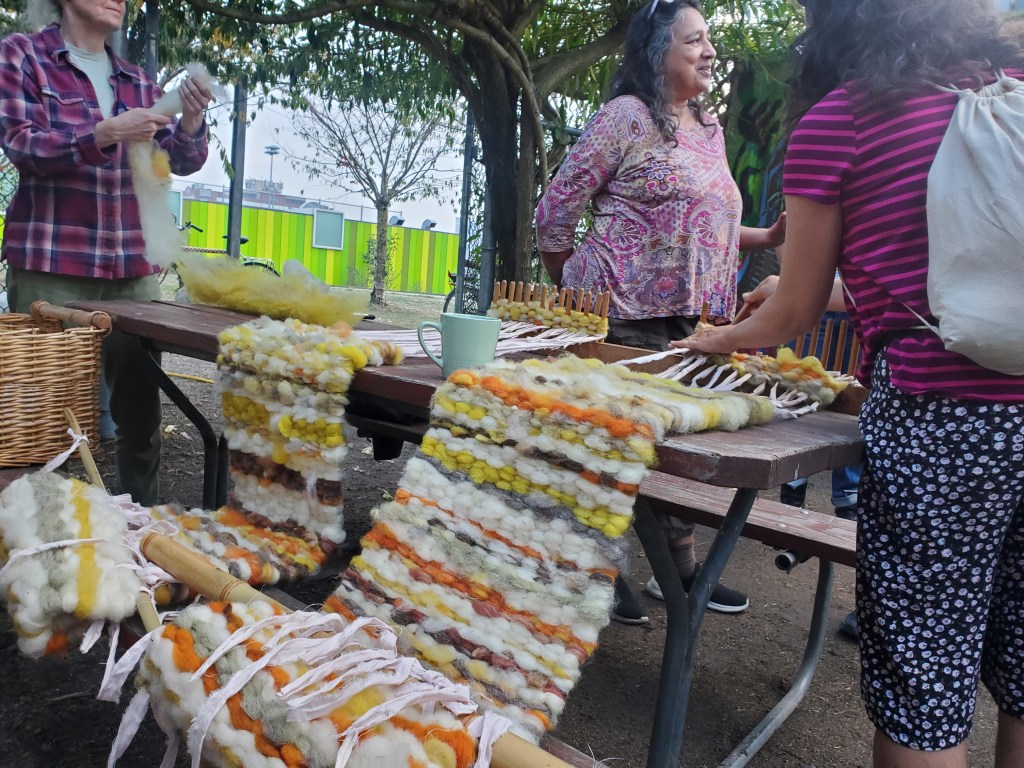
As a part of our Weaving Art and Impact project, we are also weaving woolen seat covers to keep us cozy for future outdoor events at the garden outdoor studio!
The colours of our gardens and the beauty of local fleeces shines through these simple woven mats made on a peg loom or by tying up to a fence. Our fleeces are from Barnston Island, Galiano and Mayne Islands.
Thank you to the Vancouver Park Board Neighbourhood Matching Fund for making the walks and other soon to be announced programming free to the public through financial support.
The Neighbourhood Matching Fund supports local residents to lead creative art and environmental improvement projects with neighbours in their community.
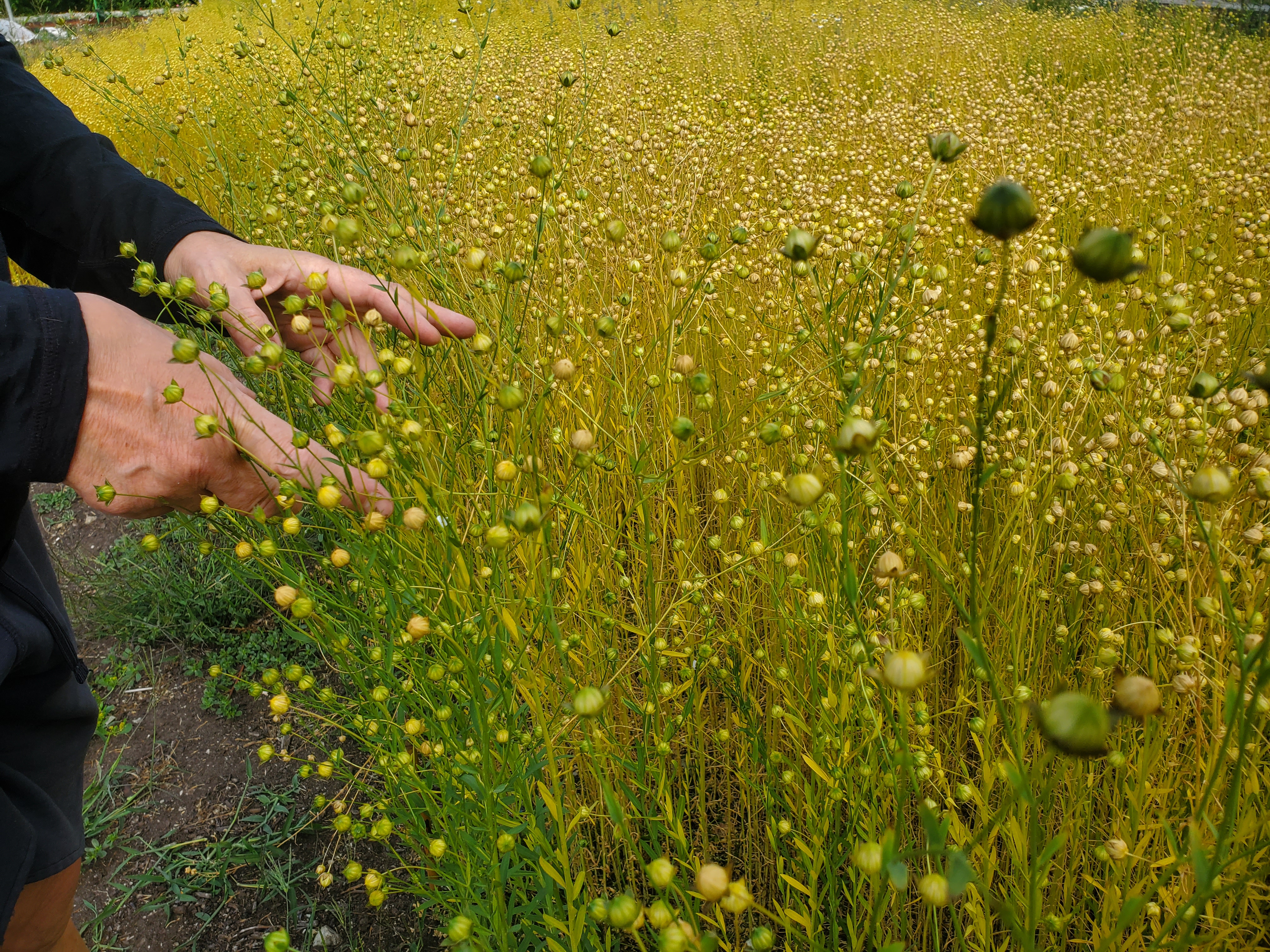
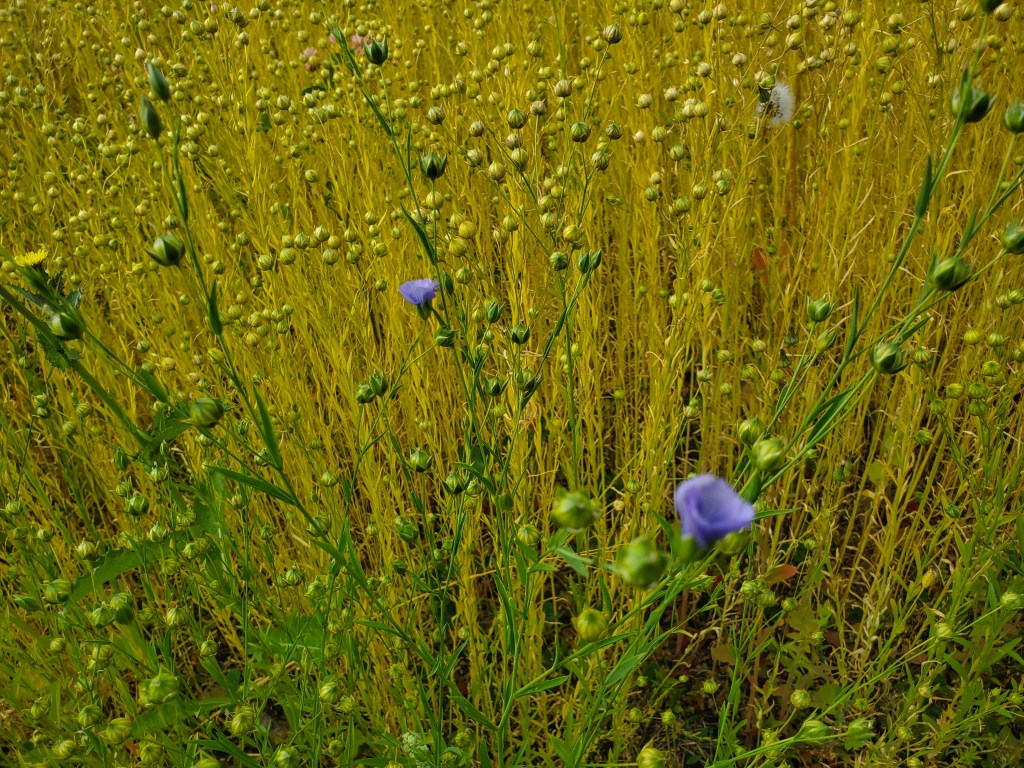
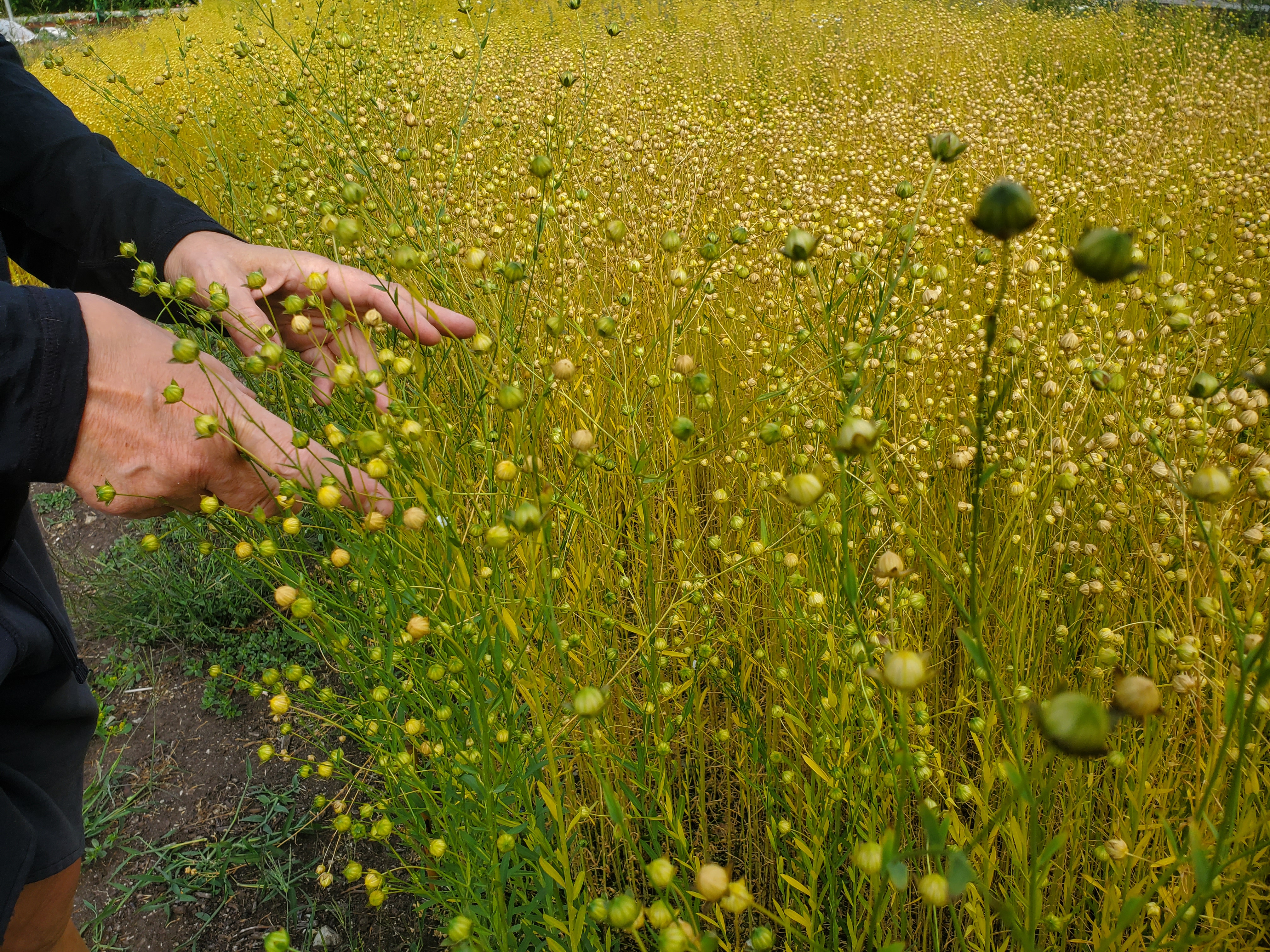
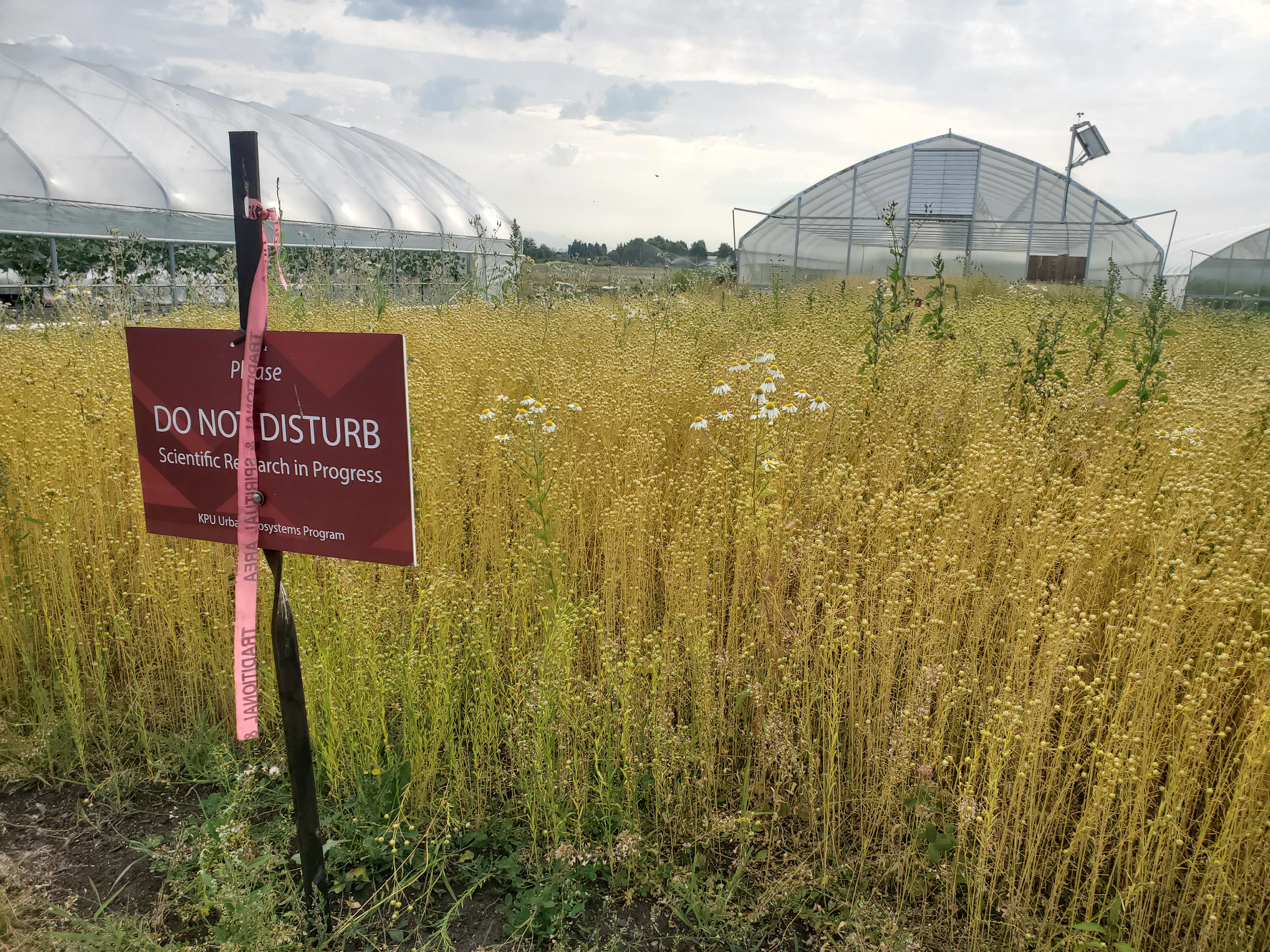
It has been nearly 100 days since we sowed our flax seeds at the Kwantlen Polytechnic University (KPU) Farm School in Richmond – and we have begun to harvest!
Like many places, it has been an odd spring for growing here on the West coast, and those of us growing flax are looking forward to our continued time in online conversation with some of our flax growing peers in the 2023 British Columbia Flax Network that EartHand is hosting.
Here is short video of Kathy Dunster in the flax crop July 7 before our early harvest.
AND! we are participating the International Year on the Field project which this year is focused on Flax.
Read the post Kathy wrote about our project here, and visit the main page for the project here to find other entries from folks growing flax in other parts of the world.
Our Flax harvest party is happening July 14th 6.30-8.30 pm- register here for a free ticket and come help us out and have a chance to handle the flax samples of our different varieties!
The Flax Network
With over 30 members spread across the province we have many different bio-regions represented and its been fantastic having a chance to hear about each others’ experiences and learn collectively as we gather virtually each month.
Here is a little snap shot from our growers survey showing the variety of locations represented.
The three areas we have the most participants represented are 27% Vancouver, 21% Kootenay Area and 15% in Central Vancouver Island.
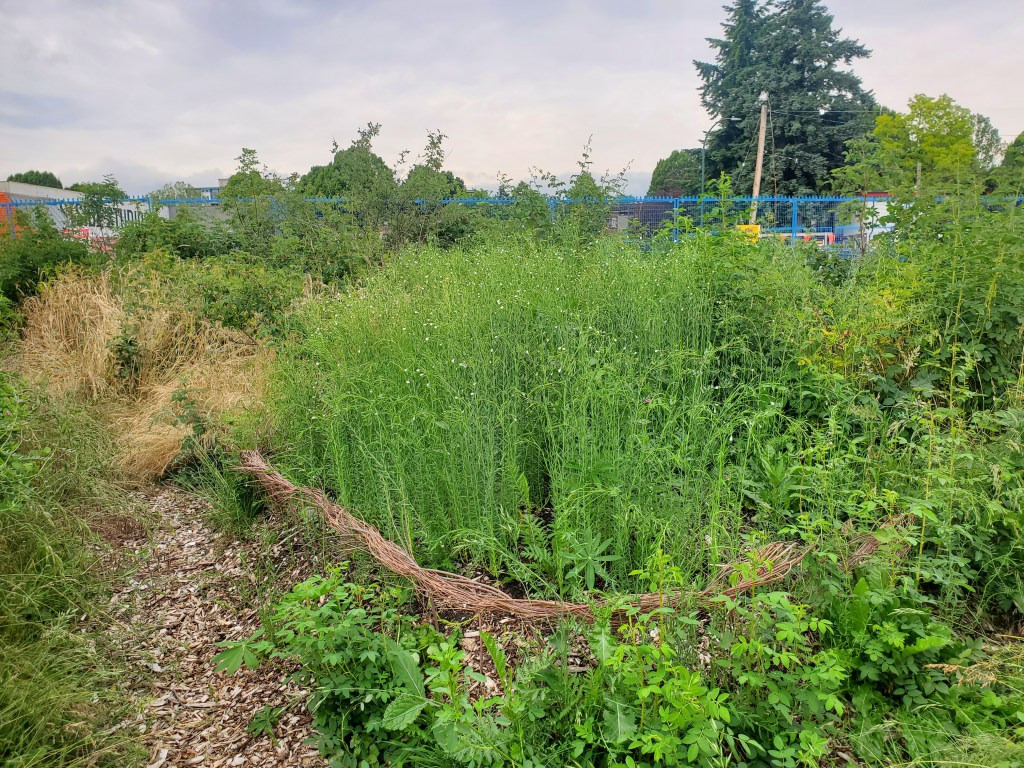
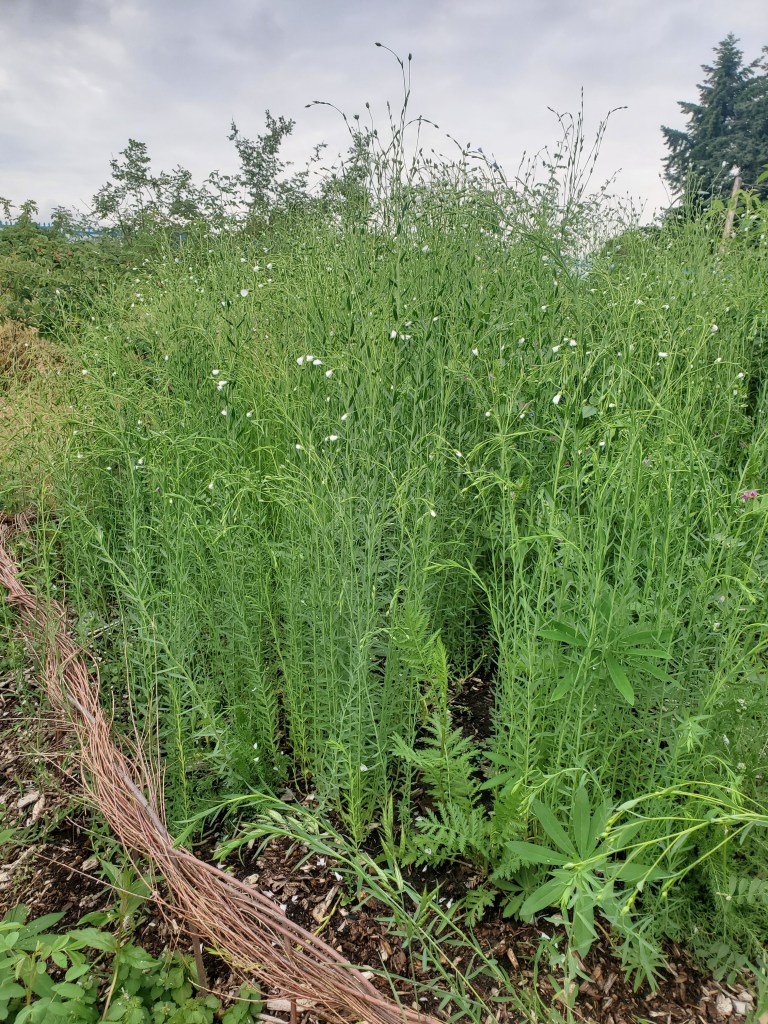
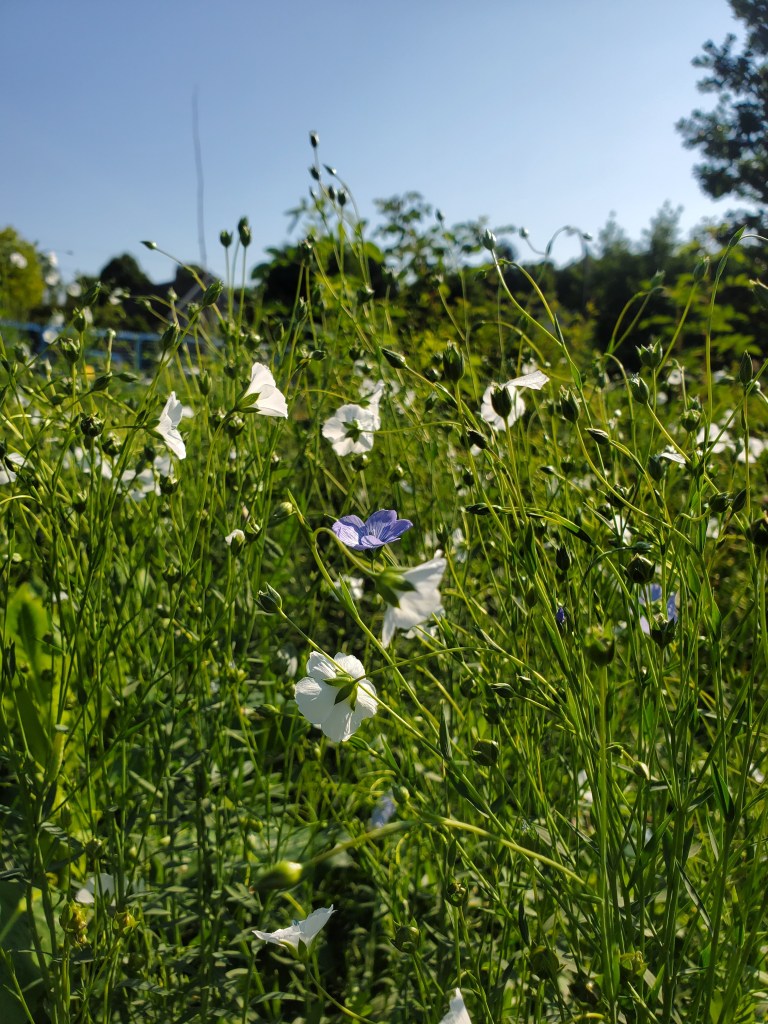
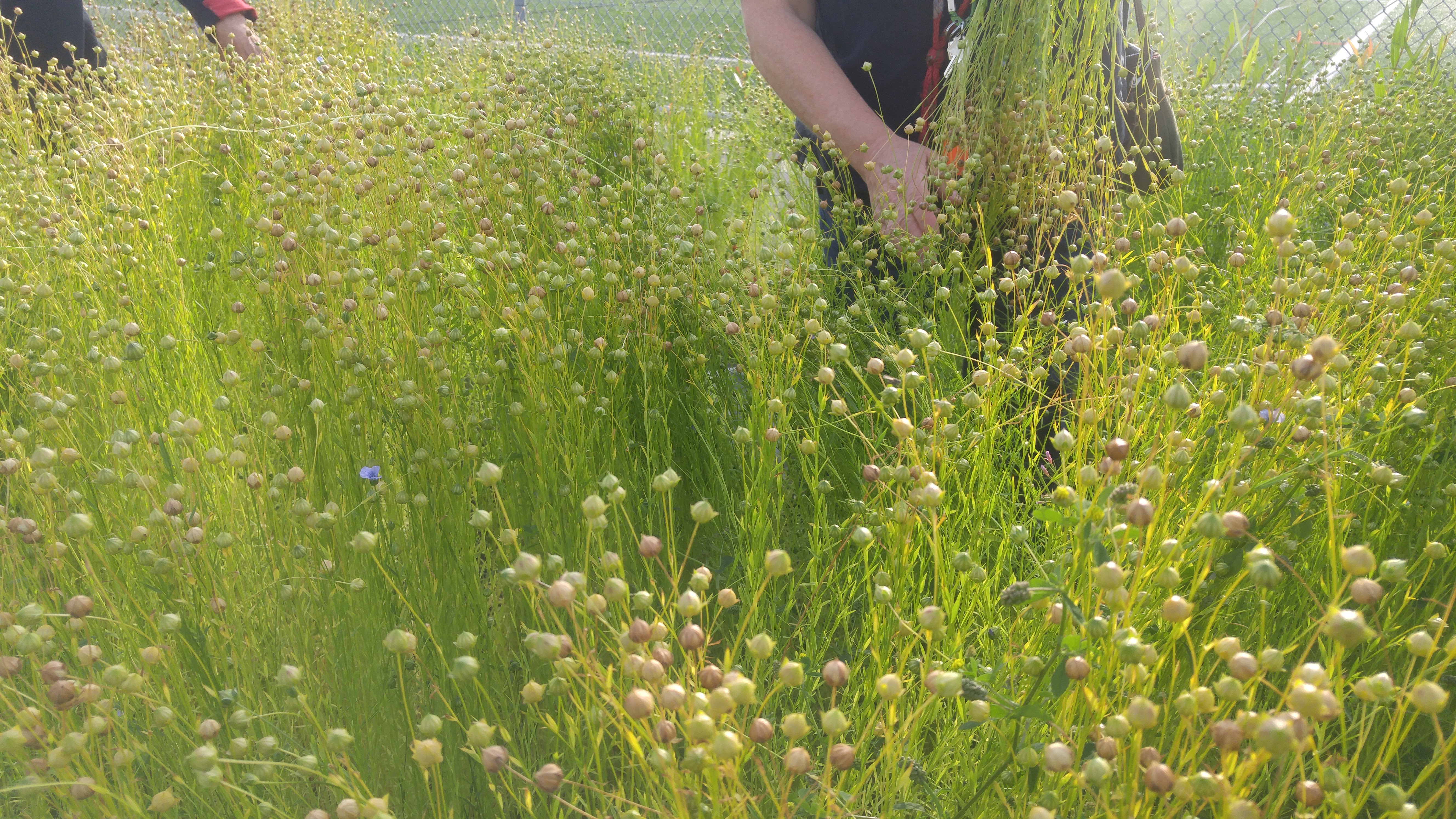
Meanwhile, the little demonstration crops we have tucked in our environmental learning gardens at both Trillium and MOP appear to be great examples of just how much we can get away with when it comes to ‘benign neglect’, showing how little work is required to grow flax for linen! ( note- the hard work happens after harvest)
The Trillium crop had almost no additional water through the hot dry month of May, and the seeds sown at MOP garden in a slightly shaded area overwhelmed by sunchokes the last several years both managed to grow fairly decent looking crops!
If you have grown flax and are about to harvest, we recommend small bundles being tied that you can take through each of the subsequent steps. As we pull ours, we lay it down strategically so the seed bolls don’t get tangled up on each other, but are easy to still pick up for tying. Do be sure and keep your root ends and seed heads separated and not interchange directions in any bundles.
Some folks ripple -or remove seed heads -right away, we usually let ours dry first.
Generally for growing the finest, high-quality linen, harvesting is done earlier- when the plants still have some green showing on the stalks. This is about 100 days after planting. For seed production, the plants are left an additional month. There is linen of course still in these stalks, but it will be of a much courser quality.
Some of the research we are doing this year includes cutting some of the linen instead of hand-pulling to see what might be possible for linen flax as a no till crop in future plantings.
As well, we harvested a portion of several varieties a week earlier then our planned harvest party- the plants are ready early this year- and we are curious to observe any tactile difference in the hand of the processed fibres harvested one week apart.
If you are curious about more information and the history of flax for linen, some excellent books we recommend are:
On the East Coast of Canada, TapRoot Farm &Fibre Lab and Jennifer Green’s Flax Mobile are leading the way of what is possible for community building and local textiles.
EartHand is thrilled to announce this new project launching Summer 2023!
This project brings seasonal fibre harvesting knowledge and hand skills together with citizen science opportunities for observing climate change impacts on the land and plants.
Connected stewardship activities will also assist us to revitalize previously inaccessible spaces in the Means of Production Garden and community maker- opportunities include creating community weavings, making drop spindles and processing our locally grown plant fibres for future weaving projects.
The learning gardens tended by EartHand hug the north and south shorelines of Skwácháy̓s (hole in bottom in Sḵwx̱wú7mesh sníchim)
In previous seasons, people have noticed that a single species planted at Means of Production (MOP) and Trillium will be ready for harvest at different times.
The hypothesis is that the elevation difference of 27m and related temperature difference of a few degrees, as well as rain fall variations within a 2 km range, impacts plant growth, decay and subsequent harvest timelines.
Multiple entry points to the project include: 3 observational climate & fibre walks in each garden, community maker-focused celebrations, seasonal material-focused workshops and regular stewardship sessions.
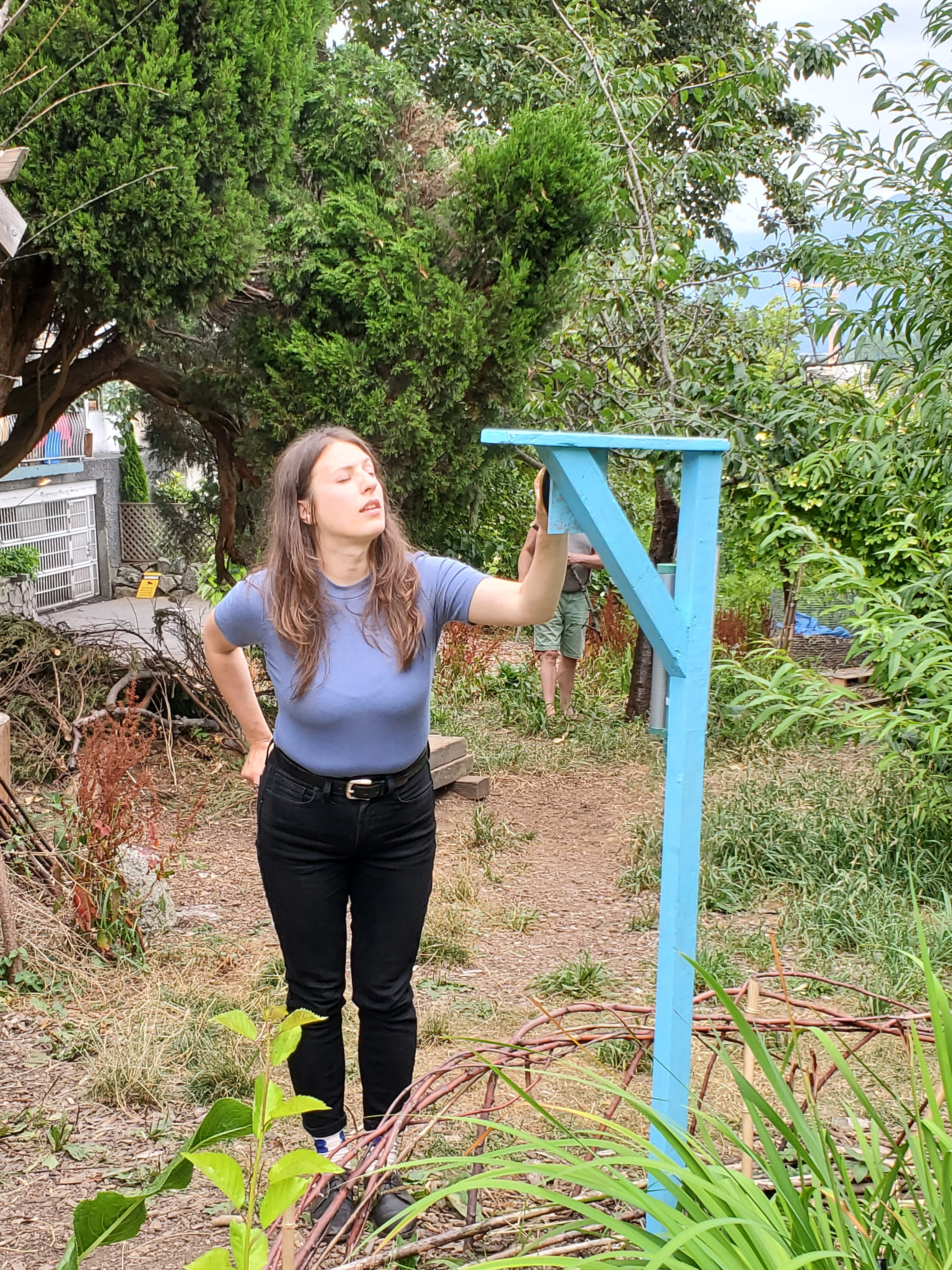
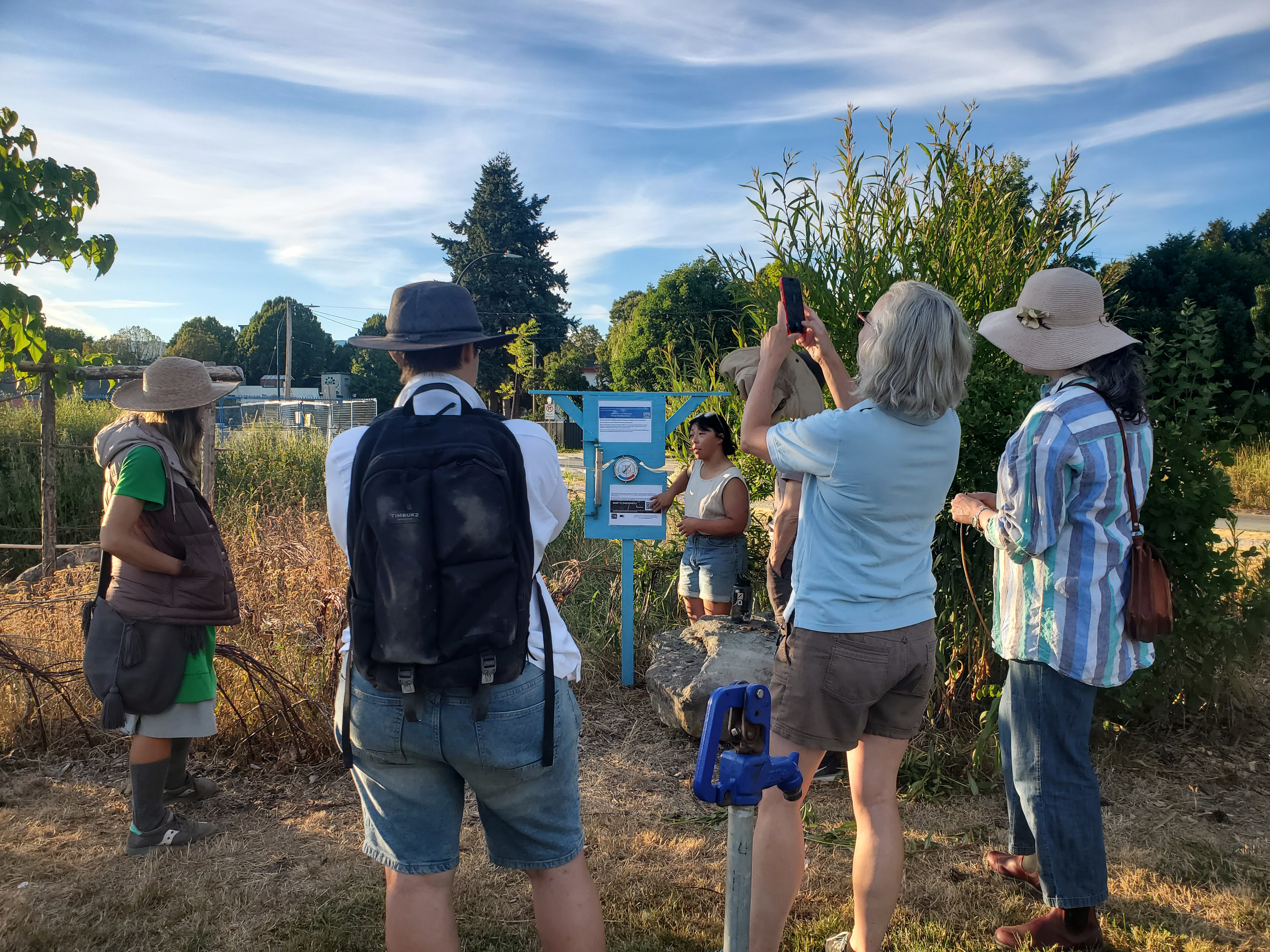
Local residents and garden stewards are invited to assist in monitoring and recording the data from rainfall and temperature through gauges installed at both sites. The information gathered will be used for future land stewardship considerations; increasing climate resiliency of both sites while aiding our understanding of the plants.
Look for the data gathering and entry locations in both gardens by mid July 2023.
QR codes at each station will allow quick access to the data entry form to record data by any community member wishing to participate with access to a cell phone and data.
Two online conversations in early 2024 will be opportunities to share garden observations and synthesize learning into actionable plans for the gardens
Climate and Fibre Plant Observation Walks:
Each seasonal walk provides a different focus for our collective lens of observation and discussion at each site. Returning to the same plants each walk we will develop an ongoing awareness of what we are observing in the plant cycles of growth and decay, and the harvesting and stewarding schedule that is layered onto our work with these plants. Comparing tactile and visual observations of the same plants growing at the different locations will connect with data gathered through the climate recording stations located at each site, while looking to other plants we can observe at each site as seasonal indicators.
Walks are planned rain or shine (within reason), and are free events- please register so we can stay in touch should our schedule need to shift due to weather extremes.
Also, due to site limitation for taking folks through the gardens and being able to have conversations, registration is limited- Please do show up for walks that you sign up for, or cancel 24 hours before to allow us to release your ticket to someone else. Thank you!
Tickets registration opens 4 weeks prior to each event.
Walk facilitators:
Chantelle Chan and Sharon Kallis
July Walks:
Focusing on water, thinking about rainfall and discussing where and how irrigation can and can’t mitigate or offset drought conditions. Checking in one where plants are at in their annual life cycle and noting how they are fairing with the weather we are experiencing- and comparing the same plants at both sites.
Individuals are welcome to sign up for one, or both of these free walks.
Focused on soil quality, observing leaf mulch availability at each site and plant check in regarding end of life cycle for harvesting fibres. General review of weather data gathered from both sites.
Focused on extreme weather events, and plant check in regarding end of life cycle for harvesting fibres. General review of weather data gathered from both sites.
Saturday November 18, click on date/location links below for tickets!
Chantelle Chan (she/they) is a flower farmer, florist and small business owner at Suelo & Faa, recovering from the corporate retail world, and recently publicly embracing the writer and artist tags. She is also deeply curious and concerned about the impacts of climate change on community green spaces and the people who have forged relationships with plants. Chantelle holds a BSc. Natural Resources Conservation and recently dove into a micro-certificate, Climate Vulnerability and Adaptation through UBC Forestry. With this series of walking discussions, she aims to empower people to ease away from an apathetic state of climate anxiety and towards developing a sense of empowerment.
Sharon Kallis (she/they) is the founding director of EartHand, and the primary volunteer steward / current witness to the plantings in the two urban learning gardens managed by EartHand. Sharon moved to the west coast 30 years ago from her childhood home on the lands of Anishinaabek, Haudenosaunee, Lūnaapéewak and Chonnonton Peoples, continuing a seven generation tradition of a youngest child picking up thin roots and moving far away. With ancestral lines tied to Scotland, Wales, Ireland and Germany; textile traditions with flax, nettles and fireweed connect her back to those distant places while teaching her about where she now stands. Plants guide her seasonal activities and she unpacks the process of constant discovery through workshops, conversations, and theme-based inquiry usually hosted with other skill and knowledge holders.
Weavers’ Nights!
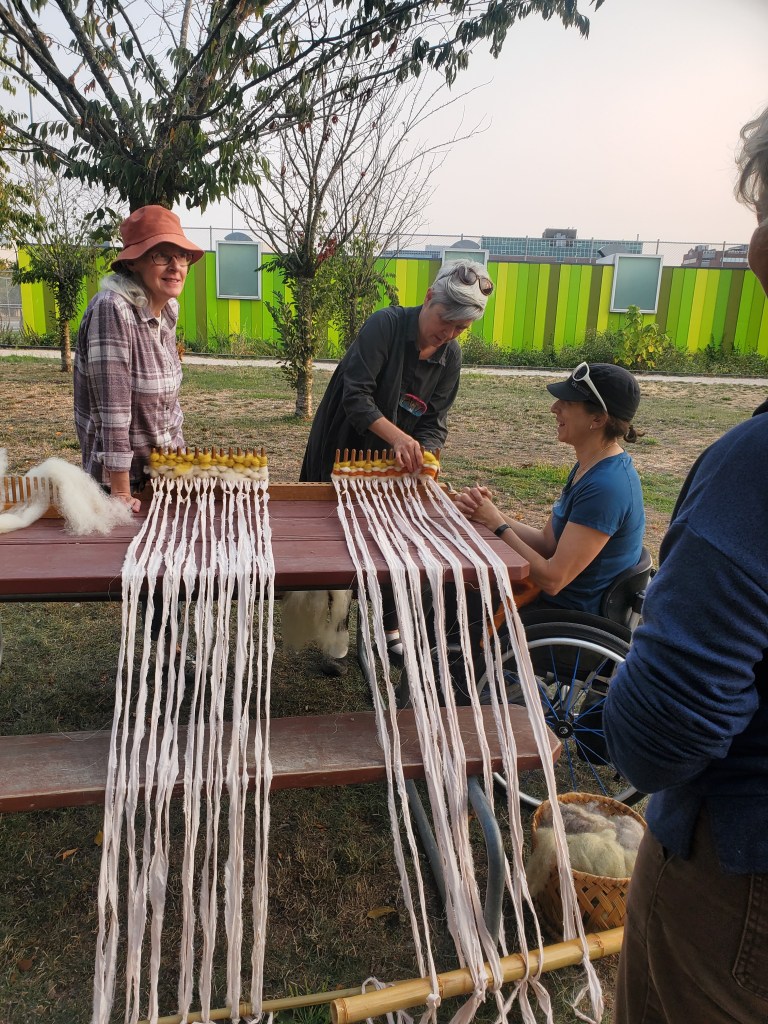
Amy Walker and Sharon Kallis for the third year are offering weaving nights at the end of Summer. This year, we are inviting folks to learn using the bounty from our gardens on various loom styles while assisting in making woven mats for use in the gardens and at our picnic tables.
We will have a few different weaver stations on the go, with wool and plant fibres needing processing, spinning or ready for weaving. Loom styles we expect to work with include the warp weighted loom, the land loom using the Coast Salish warping method, a peg loom and more!
Thank you to the Vancouver Park Board Neighbourhood Matching Fund for making the walks and soon to be announced programming free to the public through financial support.
The Neighbourhood Matching Fund supports local residents to lead creative art and environmental improvement projects with neighbours in their community.
As fresh leaves unfurl, so do our program offerings for the Summer!
Opportunities to stretch into new skills, practice connecting to place and the bounty of the season.
Spring-Fling and Wardrobe-Refresh
May 22nd
May is the perfect time for some wardrobe TLC; mend those sweaters you are about to tuck away, and taking a fresh look at the summer clothes you are about to start wearing.
Bring down something holey, needing a patch or a mend, or those tired but loved garments you would love to extend to another life in your closet…. keep reading and register here
Registration for the following programs opens May 5th.
The Walker’s Studio
May 29, Aug 7, Oct 23- virtual
How can we move our bodies and be outside while our hands are busy? What are we making, what are our materials, where and how do we move during our maker practice, and how do seasonal-based activities impact our maker-time?
From ropemaking, braiding, spinning, drawing, and beyond; the intention of making while on the move can expand our practice to experimental forms of making, and help set us up for longer periods of sedentary studio time…keep reading and register here
Knitting Circle: cabled hat using a Japanese pattern
June 12, July 17
Spend two summer nights in a circle with other knitters discovering the joy of reading visual graphs that Japanese patterns offer, as well as learning the ins and outs (or fronts and backs) of cabling!
Vancouver artist, Eri Ishii, is known as a painter but has also been knitting since she was five years old. Eri is a big fan of how Japanese patterns are written as a visual key to a pattern vs the North American general pattern. .. keep reading and register here
Salve Making for Tender Times- Plant-walks, salves and zine-making
June 21, July 26, August 30
From observational walks to salve making and collective zine creation, let’s spend 3 evenings together observing and learning from those beings close to the soil.
Beginning at Summer Solstice we will meet the plants around us, deepening our understanding of where they come from, how they got here, and how we might engage with them in thoughtful & respectful ways. .. keep reading and register here
Richmond Flax Harvest Party!
July 14
Join us on a Friday evening to help bring in the flax crop!
Musical accompaniment from the Legion of Flying Monkeys Horn Orchestra and some bounty shared from the local gardens will fuel us as we spend a few hours together in this seasonal task that humans have been doing for thousands of years… keeping reading and register here
… We have programs in the works still so do keep an eye on our Events Listings Page for new announcements.















































 EartHand Gleaners Society