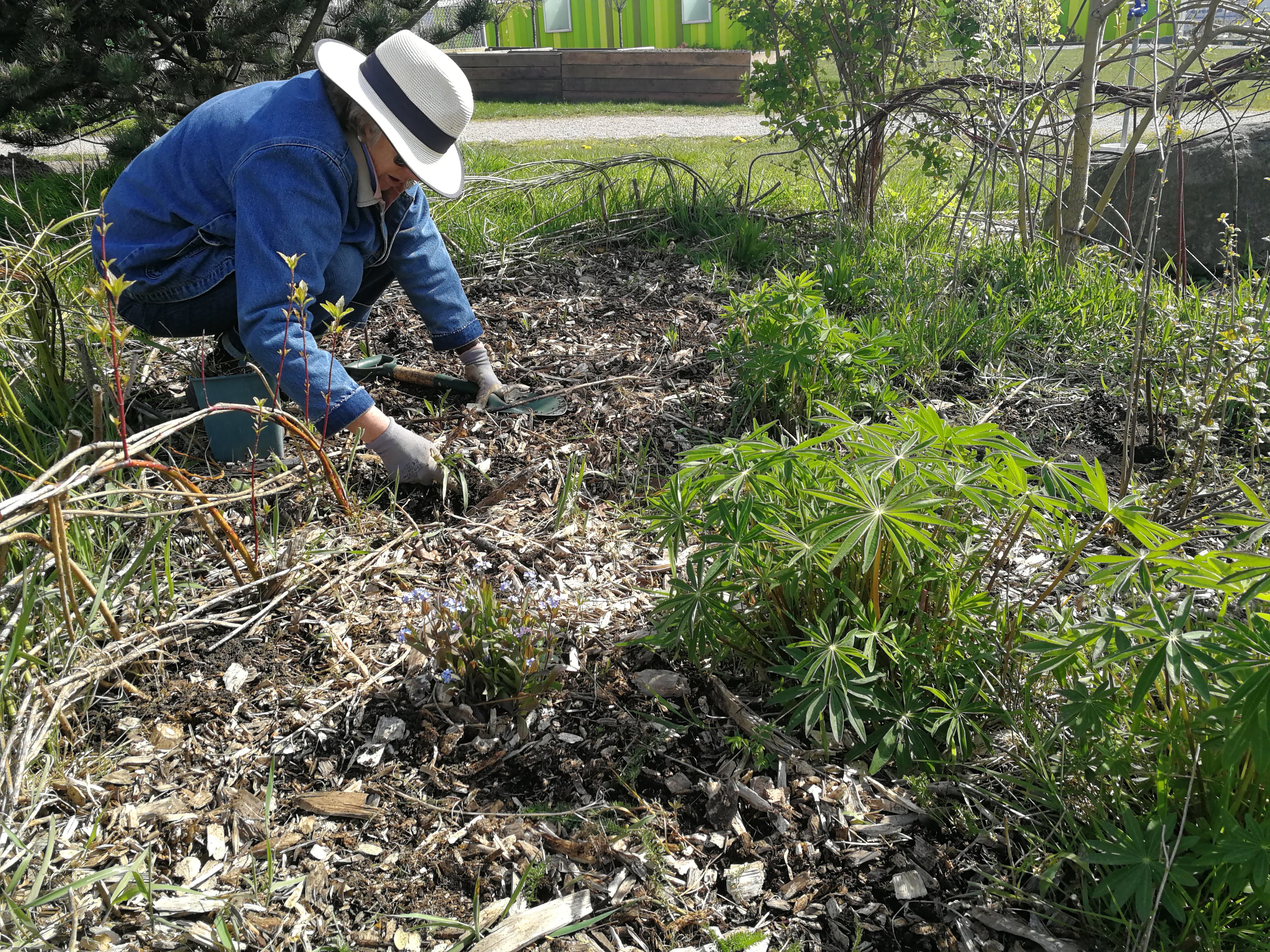
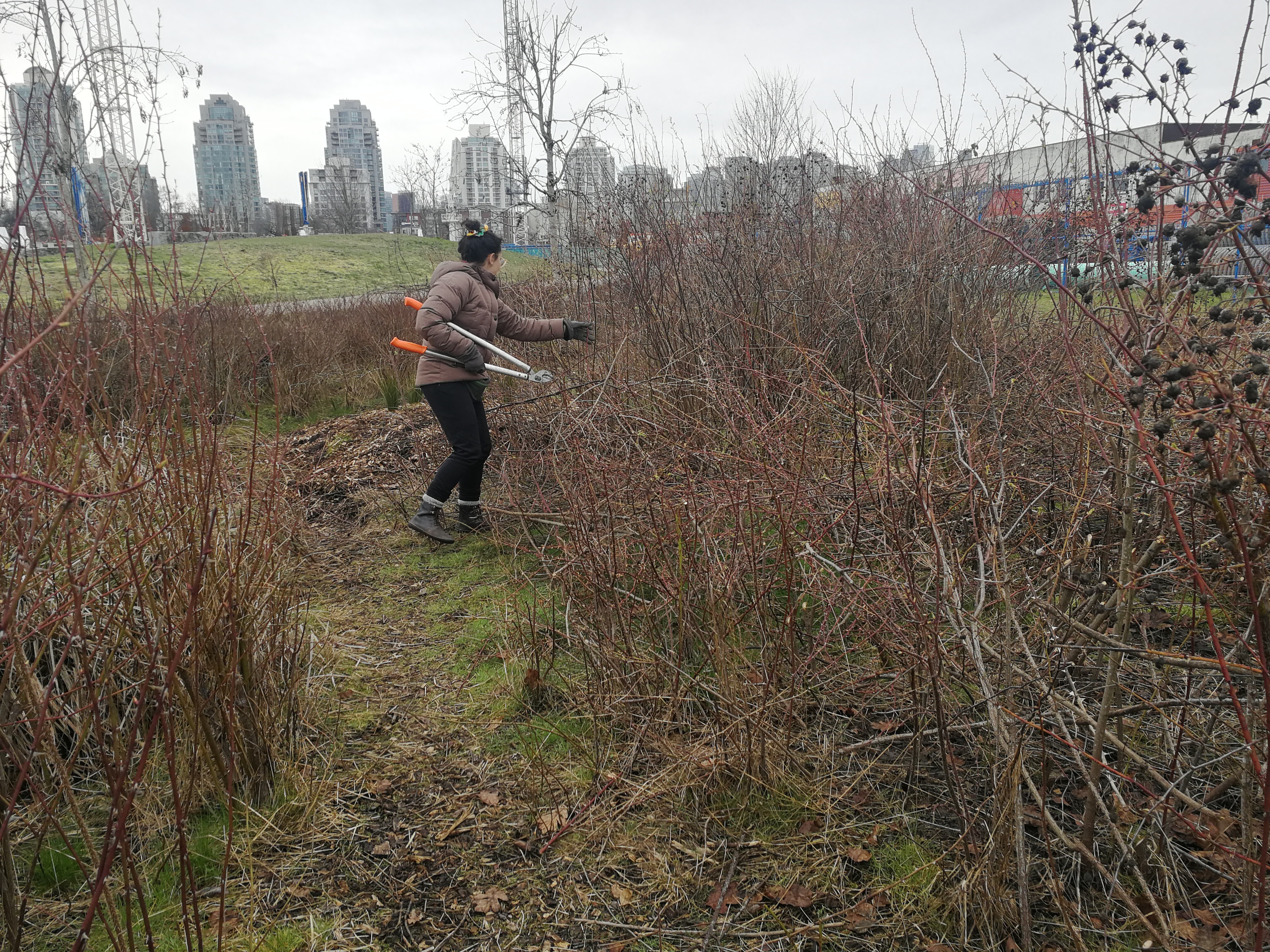
Spring is a great time to get involved in the gardens. Familiarize yourself with the plantings help define the pathways and participate in a multitude of seasonal garden tasks! If you are unfamiliar with the gardens EartHand tends, visit Means of Production here or Trillium here, Or take a look at Our Fibreshed page on the top of our website for more information and locations for both gardens.
The sessions listed here are the opportunities for new gardeners to join our stewardship group, once familiar with the workings of the garden, individuals are invited to the Slack group where we stay connected online for other ongoing work sessions.
Note that times shift as our days lengthen and the weather gets warmer!
Means of Production spring dates: visit the link on each date for a ticket to confirm your attendance
Many Canadians buy local food, but have you ever thought about local clothing?
The local textile movement strives to keep all parts of textile production — from field to fashion — in one region. The movement includes farmers, ranchers, mill operators, dyers, artisans and community crafters, and fashion professionals. They hope to reduce the environmental impact of textiles and the fashion industry, and to strengthen local, often rural, economies.
Join us for a lively panel discussion featuring members of the Canadian movement, representing regions throughout the country as well as different parts of the textile production system.
Join the conversation! Share your thoughts using the hashtag: #FoodForThought
Jennifer Green resides in Halifax, Nova Scotia, where she is an Associate Professor of Textiles/Fashion at NSCAD University. Her research practice is cross-disciplinary and collaborative. In April 2022, she launched the Flaxmobile Project, working with local farms to revitalize a flax fibre industry in Nova Scotia. Jennifer graduated from London’s Royal College of Art with a specialism in woven textile design. She has designed for mills in Britain and Japan and collaborated on projects relating to fashion, vehicle design, footwear, and accessories.
ANNA HUNTER
Anna Hunter is a first-generation sheep farmer and wool mill owner in Eastern Manitoba, Treaty One Territory. Anna, her husband Luke, and their two sons moved to Manitoba from Vancouver, B.C. in 2015. She started Long Way Homestead, a small sheep farm, raising Shetland sheep for their beautiful wool. In 2018, they established a small-scale wool-processing mill the only one of its kind in Manitoba. They process wool and fibre for themselves and other farmers. Anna is passionate about building community and connecting rural fibre farmers with urban consumers, fibre artists, and crafters. She believes that regenerative agriculture and climate-beneficial food and clothing is integral to moving forward as farmers, fibre artists, and Manitobans.
SHARON KALLIS
Sharon Kallis is a community-engaged environmental artist and committed, life-long learner. At home on the west coast of Canada, she is the founding executive director of EartHand Gleaners Society. Since 2008, Sharon has worked extensively with the Vancouver Park Board and is one of the primary stewards for two urban learning gardens — where materials for creative production are grown.
Sharon partners with ecologists, gardeners, and makers with an interest in linking traditional hand technologies to what we can grow, gather, and glean in our urban green spaces. Traditional textiles are at the core of the work; she has been growing stinging nettle and flax for linen in city parks since 2012. By doing her own cultural work through cloth, Sharon is working to be a better ancestor while living as an uninvited guest on the unceded land of the Sḵwx̱wú7mesh, Səl̓ílwətaʔ/Selilwitulh and xʷməθkʷəy̓əm Nations.
ESMERALDA SMITH ROMERO
Esmeralda Smith Romero has been building capacity in the regional textile space since founding her company, Olive + Elliot, in 2017. The company — which offers natural, Canadian textiles for a sustainable lifestyle — grew from her vision to rebuild local economies and create sustainable agricultural and manufacturing jobs in a circular economy model. Olive + Elliot trialed a variety of textile crops throughout Ontario in 2019, and beta launched in November 2022. The company is the recipient of multiple awards.
Esmeralda and Olive + Elliot have been members of the Upper Canada Fibreshed since 2018. As a Co-Chair since 2021, Esmeralda is passionate about using textiles as a vehicle to rebuild local manufacturing and rooting the source materials from locally farmed fibre and natural dyes.
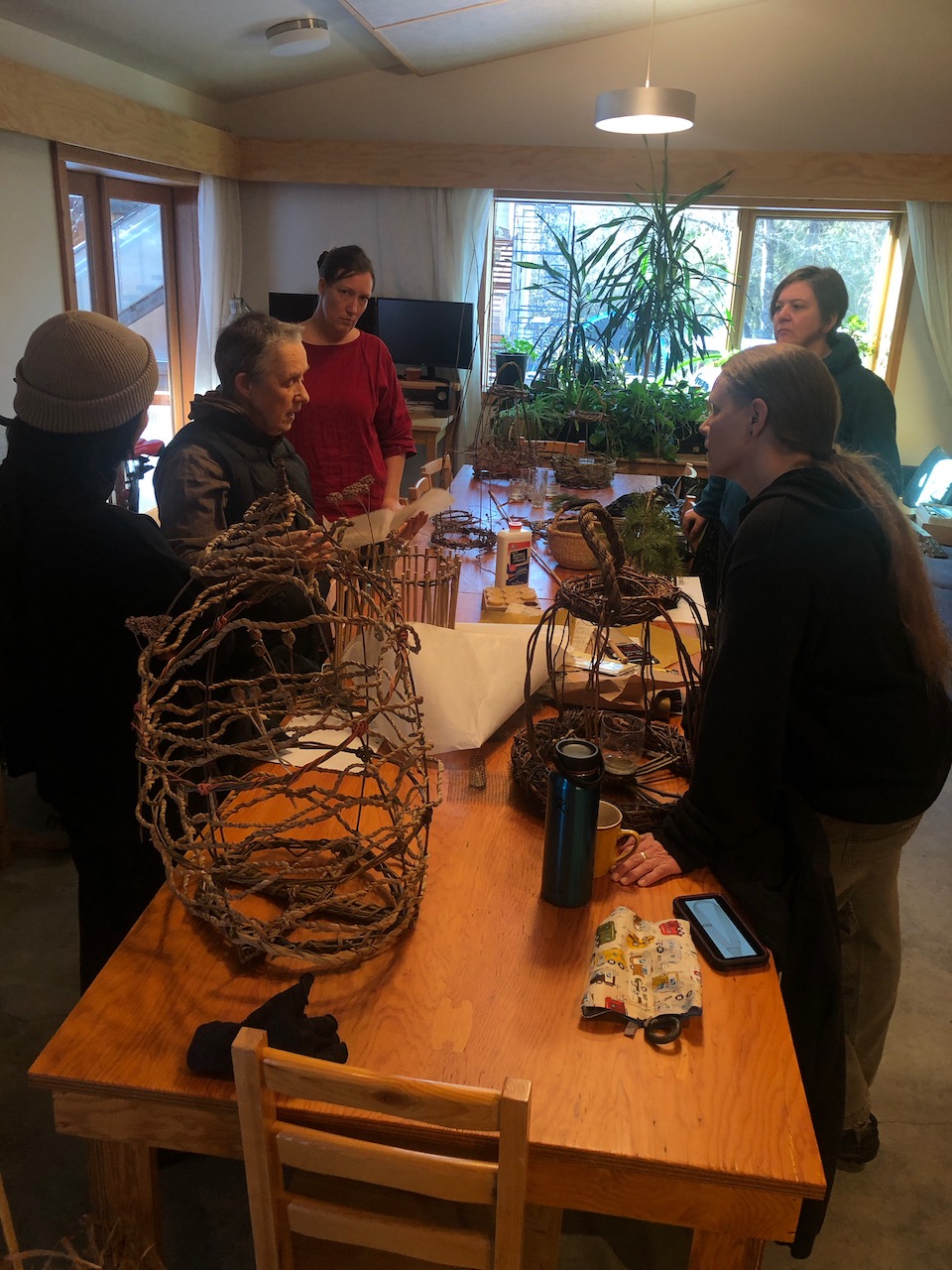
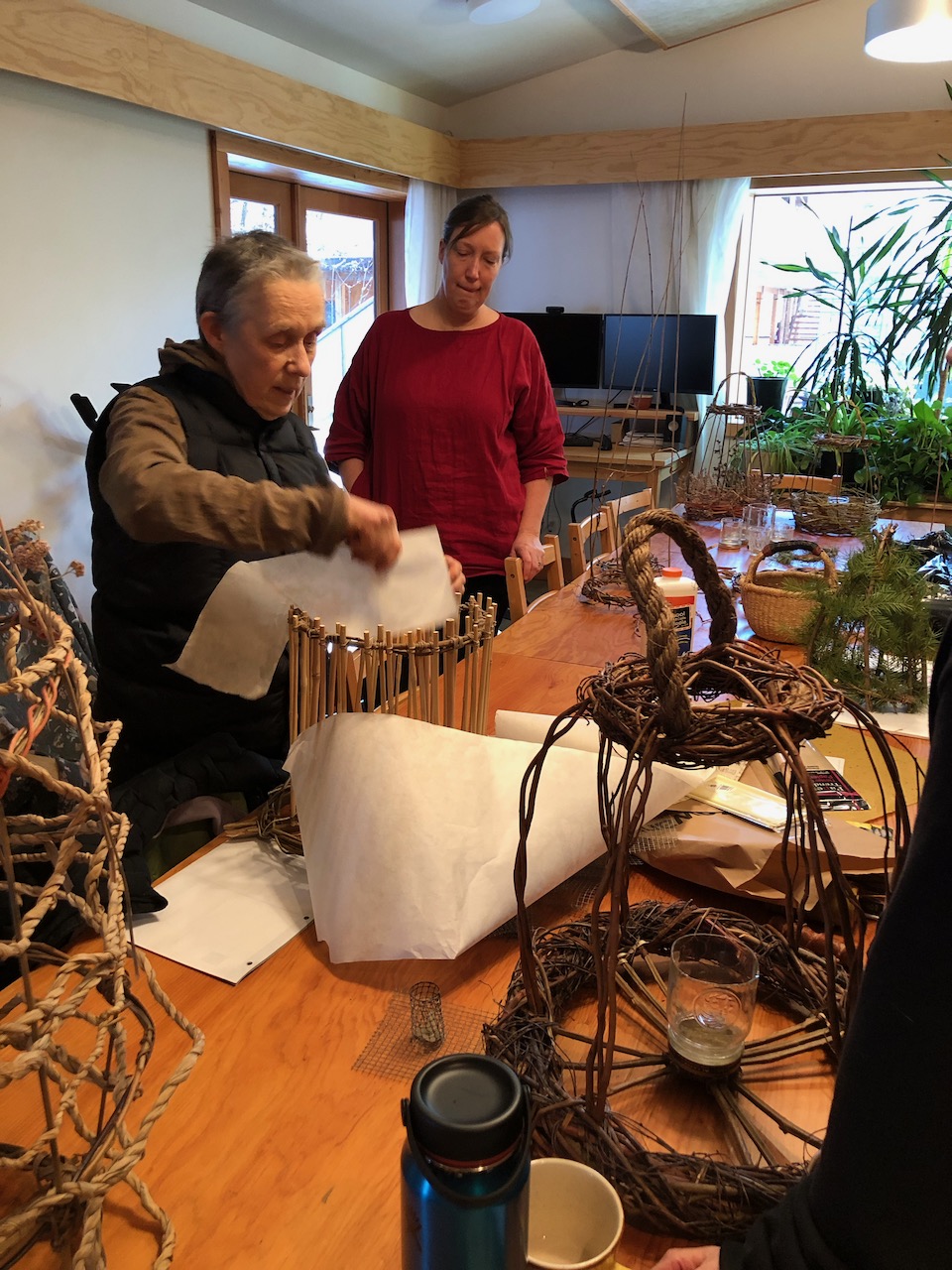
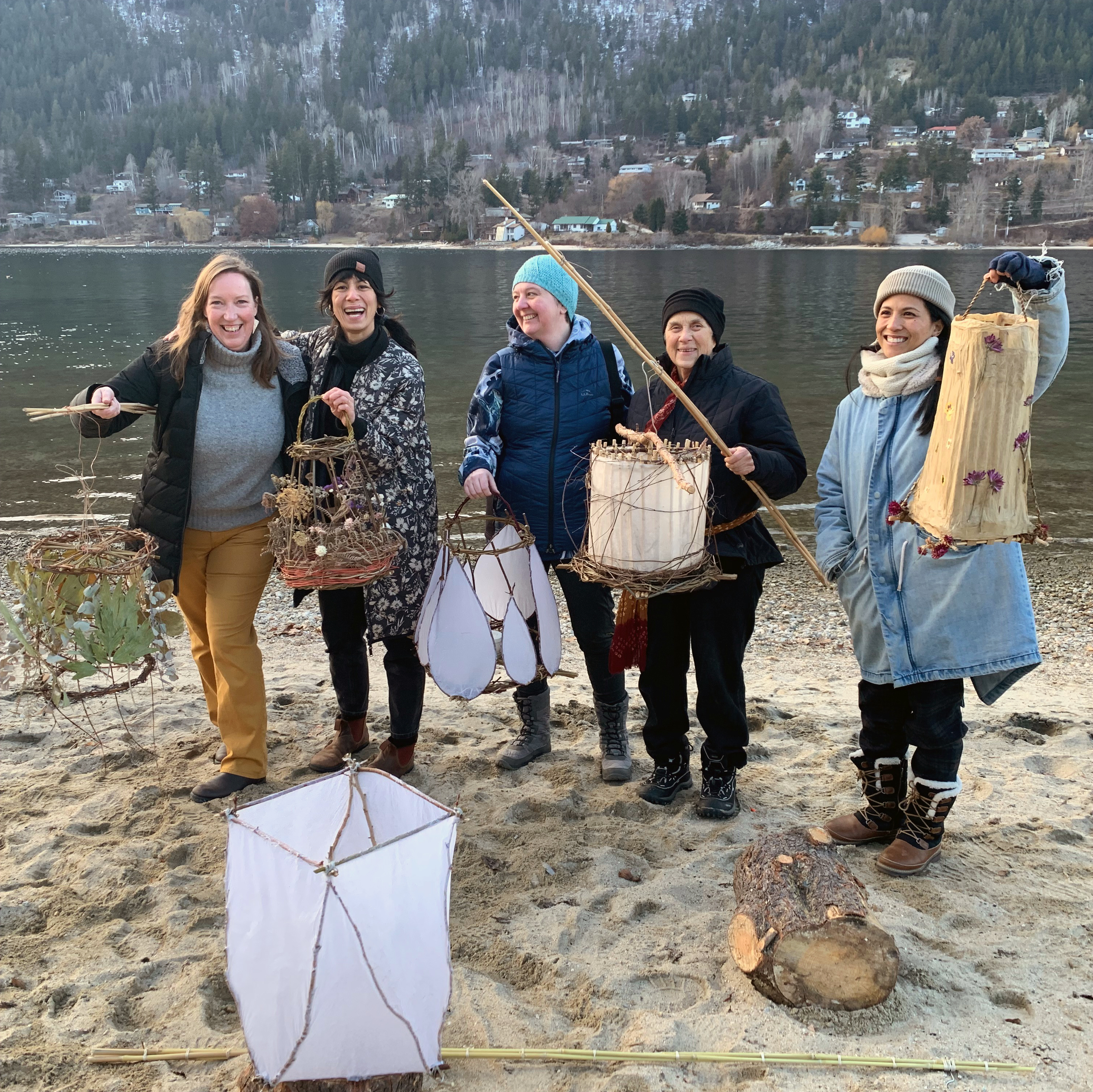
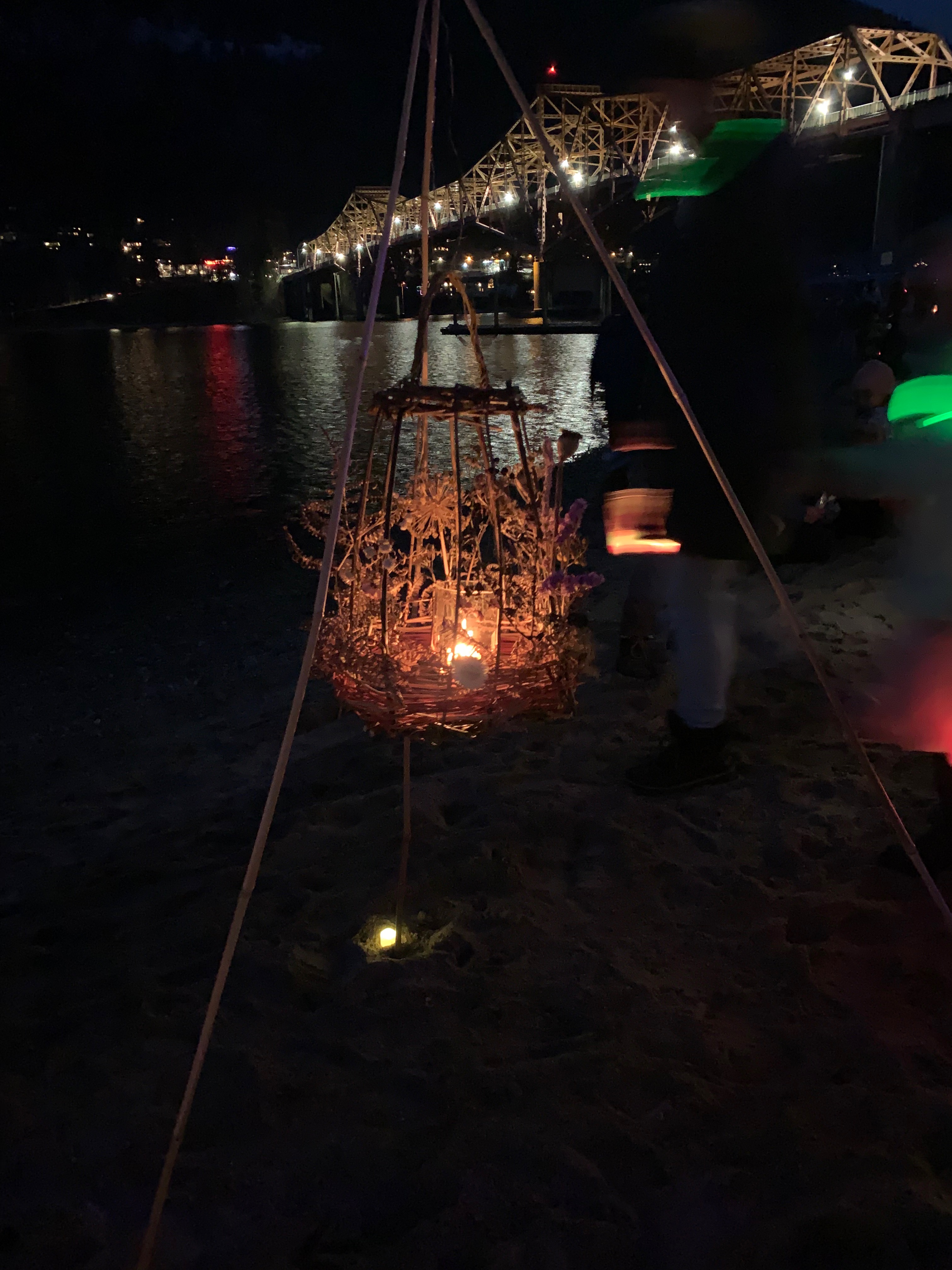
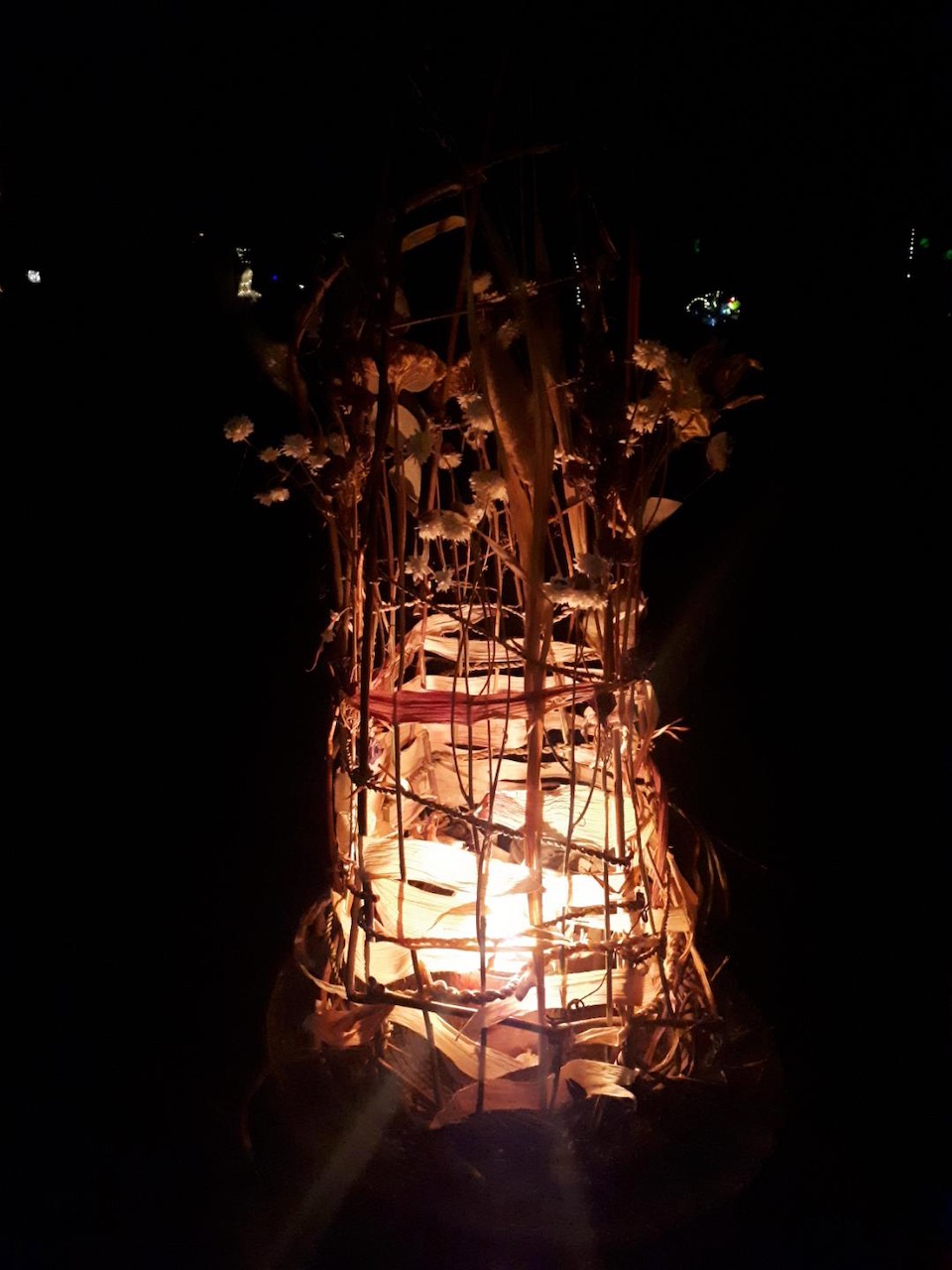
In true Earthand fashion we played with materials that came directly from the land around us — plant materials that we had grown or respectfully gathered, plus paper and fasteners that will return to the earth and leave no trace. We also modelled another of EartHand’s core principles “how to be a producer without first being a consumer”. That is, making with what is already at hand.
Having beautiful lanterns and taking part in the festival was the happy by-product of our time together — our main focus was to share knowledge and skills, strengthen our community bonds and have fun.
thank you to BC Arts Council: Community Arts for supporting our programming.
Do you live in the Nelson area and want to get involved? email earthandgleaners(at)gmail.com and we will connect you with Keiko for future gatherings!
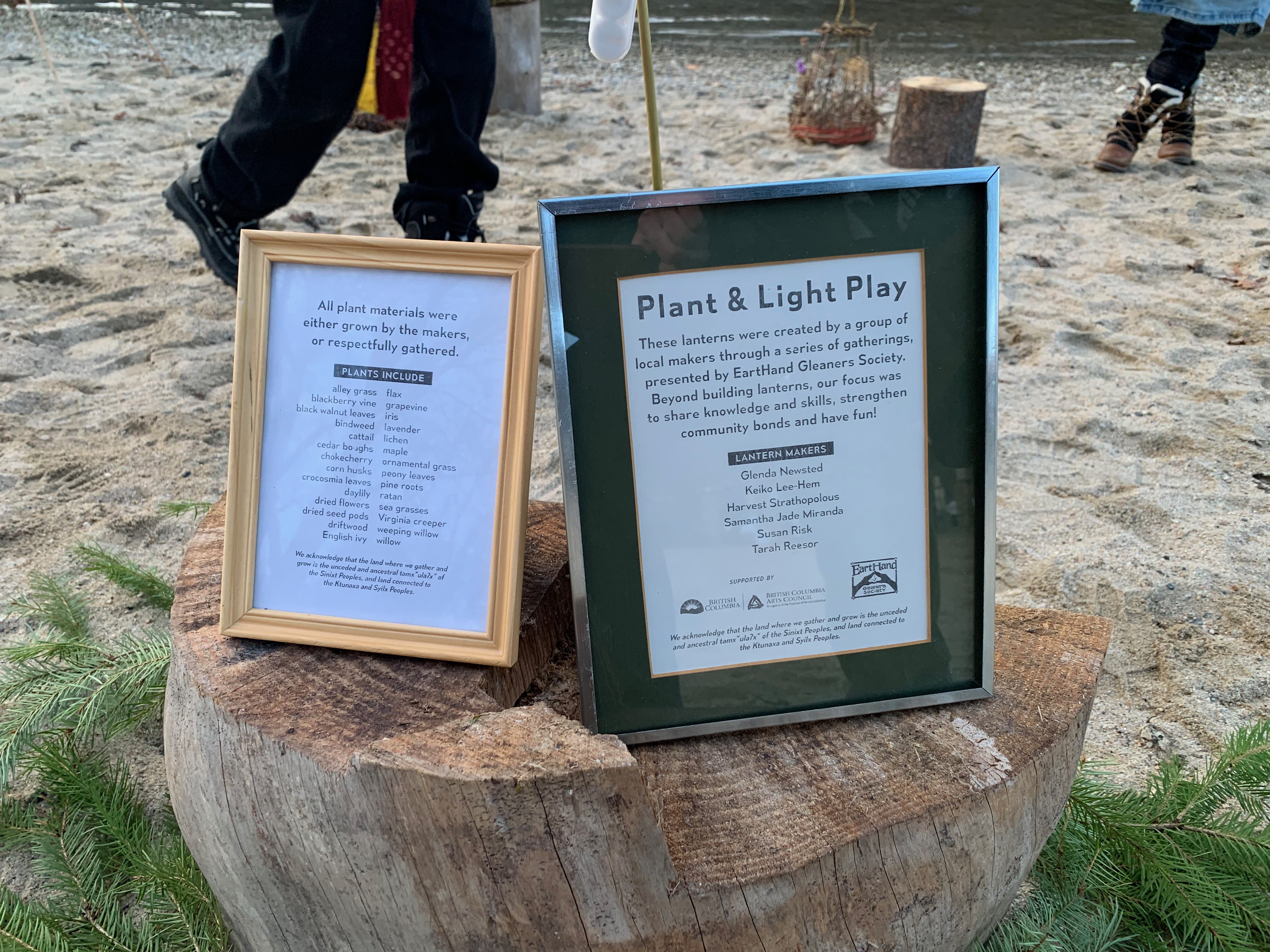
Plant & Light Play These lanterns were created by a group of local makers through a series of gatherings, presented by EartHand Gleaners Society. Beyond building lanterns, our focus was to share knowledge and skills, strengthen community bonds and have fun!
Lantern Makers
Glenda Newsted Keiko Lee-Hem Harvest Strathopolous Samantha Jade Miranda Susan Risk Tarah Reesor
Land Acknowledgement We acknowledge that the land where we gather and grow is the unceded and ancestral təmxʷulaʔxʷ of the Sinixt Peoples, and land connected to the Ktunaxa and Syilx Peoples.
Plant list
All plant materials were either grown by the makers, or respectfully gathered. Plants include: plants include alley grass blackberry vine black walnut leaves bindweed cattail cedar boughs chokecherry corn husks crocosmia leaves daylily dried flowers (allium, coreopsis, oregano, poppy seed pods, statice, strawflower, yarrow)
dried seed pods driftwood English ivy flax
fern grapevine iris lavender lichen maple ornamental grass peony leaves pine roots ratan sea grasses Virginia creeper weeping willow willow
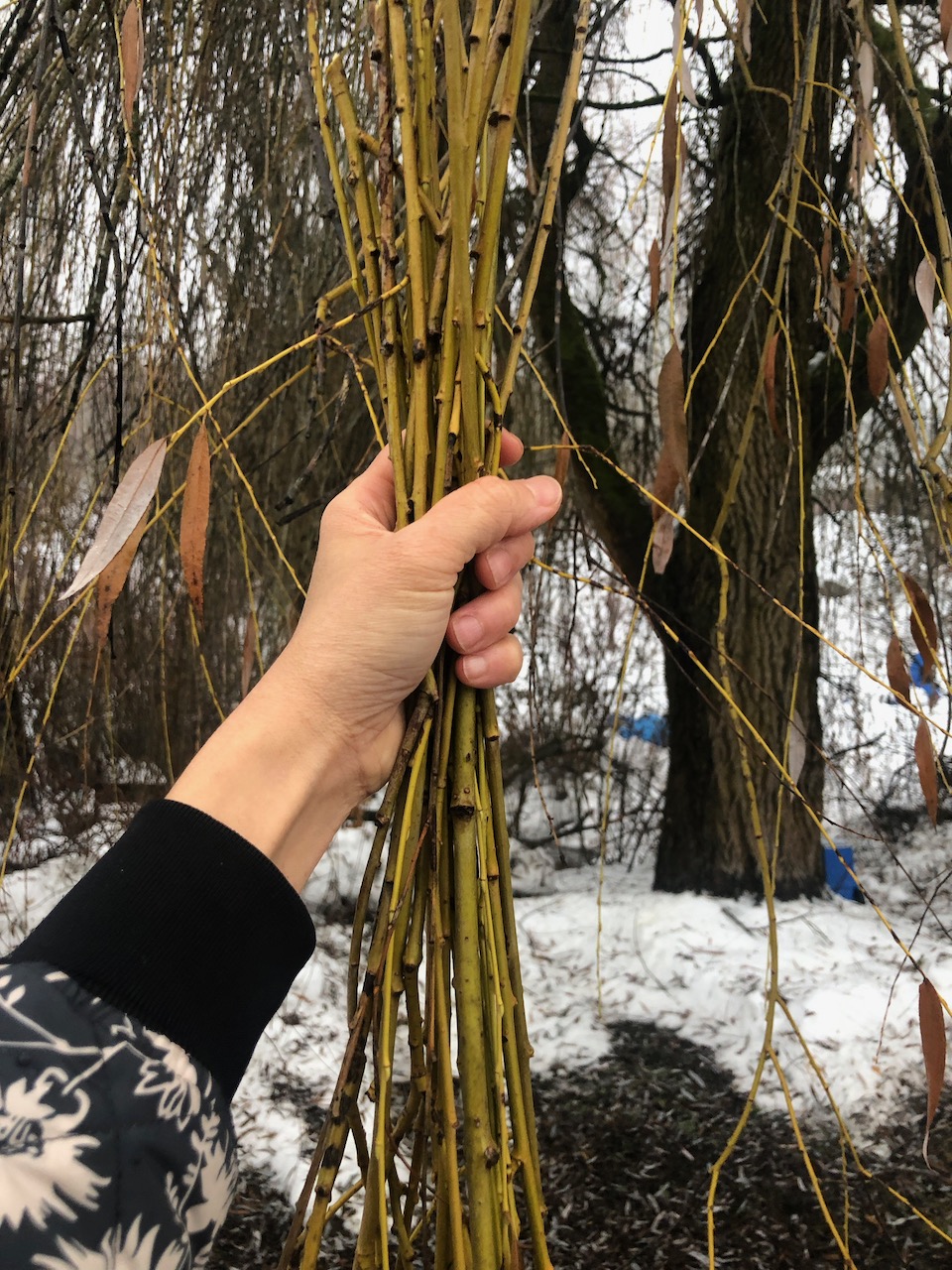
Help with bringing in the willow crop before Spring begins!
It is always an exciting race.. planning dates that hopefully fall between the rains and snow, and before the sap begins to flow.
And yet, every year willow harvest events prove to be on of the best times to be in the garden. Many hands are needed, from cutting rods to the pick-up and sorting, but this is not the time to bring young children along (for safety reasons). Age friendly for 12 and up.
Three dates are scheduled for Means of Production, please take a ticket to aid in our planning and so we can reach out if weather forces us to change our plans.
As we gather through our screens and attend to the official requirements of reviewing 2022 financial documents, approving the 2023 budget and vote in our 2023 board of directors.
Expect stories of 2022 and dreams and plans for 2023!
Voting members of EartHand are all skill holders who received funds from EartHand in 2022, as well as volunteers in positions of authority, but we welcome and hope for many of our community participants to join us for the conversation!
Packages are emailed to voting members 10 days prior to the meeting, packages and zoom links will be sent out Saturday the 4th to community members who register here.
The Mourning QuiltWinter Virtual SocialsWillow and the Wilds Weaving RetreatBlue Nettle
We have some exciting offerings beginning in February that continue to support sharing skills, connecting to plants and meaning-making with our hands; all coming from a place as always of how we can be makers without first being consumers.
More programs will be listed in the months ahead, and we hope you can join us for both virtual gatherings and in-person sessions in 2023. Meanwhile, spaces are limited in our programs so register soon to avoid disappointment!
Virtual Maker Gatherings: Informal sharing sessions hosted by Sharon Kallis
free /sliding scale, click the date for more information and to register
This course is about both the practical and the intangible.
We will learn (or practice) the skills of paper piece quilting while creating a safe enough space to explore grief and mourning.
Using a specific mapping tool called a Voronoi diagram, participants each create a unique constellation of points on a grid that correspond to points of tenderness, grief, or memory…
Mar 8, April 12, May 10, June 14, July 12, Aug 9, Sept 13, Oct 11
Join the online community focused on growing and processing flax to linen.
These sessions will provide the opportunity to create a provincial support network that builds collective knowledge of flax as a textile crop while fostering a network between growers and spinners around the province. Read more and register here
Willow and the Wilds: Weekend Basketry Retreat
April 28, 29, 30
Friday 6-8.30pm, Saturday and Sunday 10.30am-4pm
Co-lead by Catherine Langevin and Sharon Kallis
A weekend intensive exploration of basketry and materials.
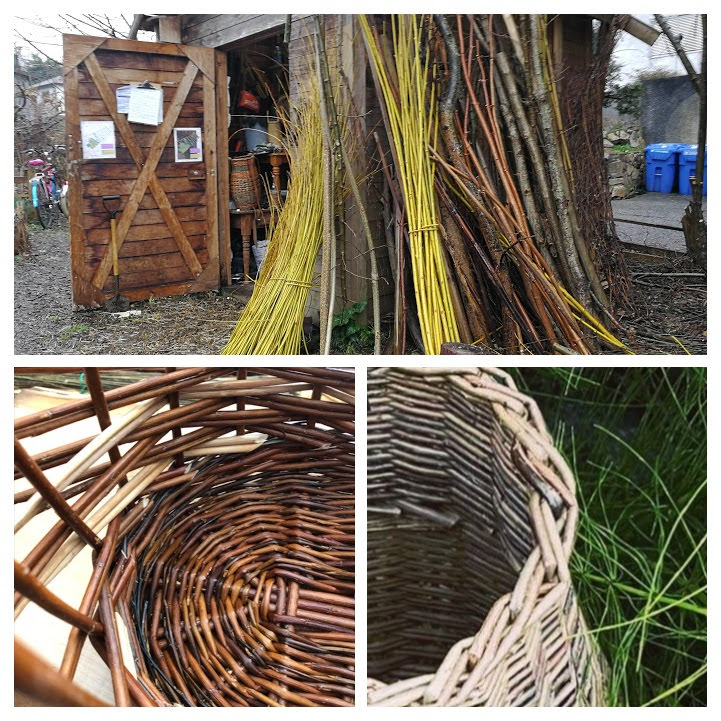
Participants can expect to end the weekend with a new finished woven form and a wealth of experience in learning about local plants for basketry and new – or newly remembered – techniques embedded in their fingertips. Read more and register here
Blue Nettle
6 Saturdays, May 6, June 10, July 15, August 5, September 9, October 14
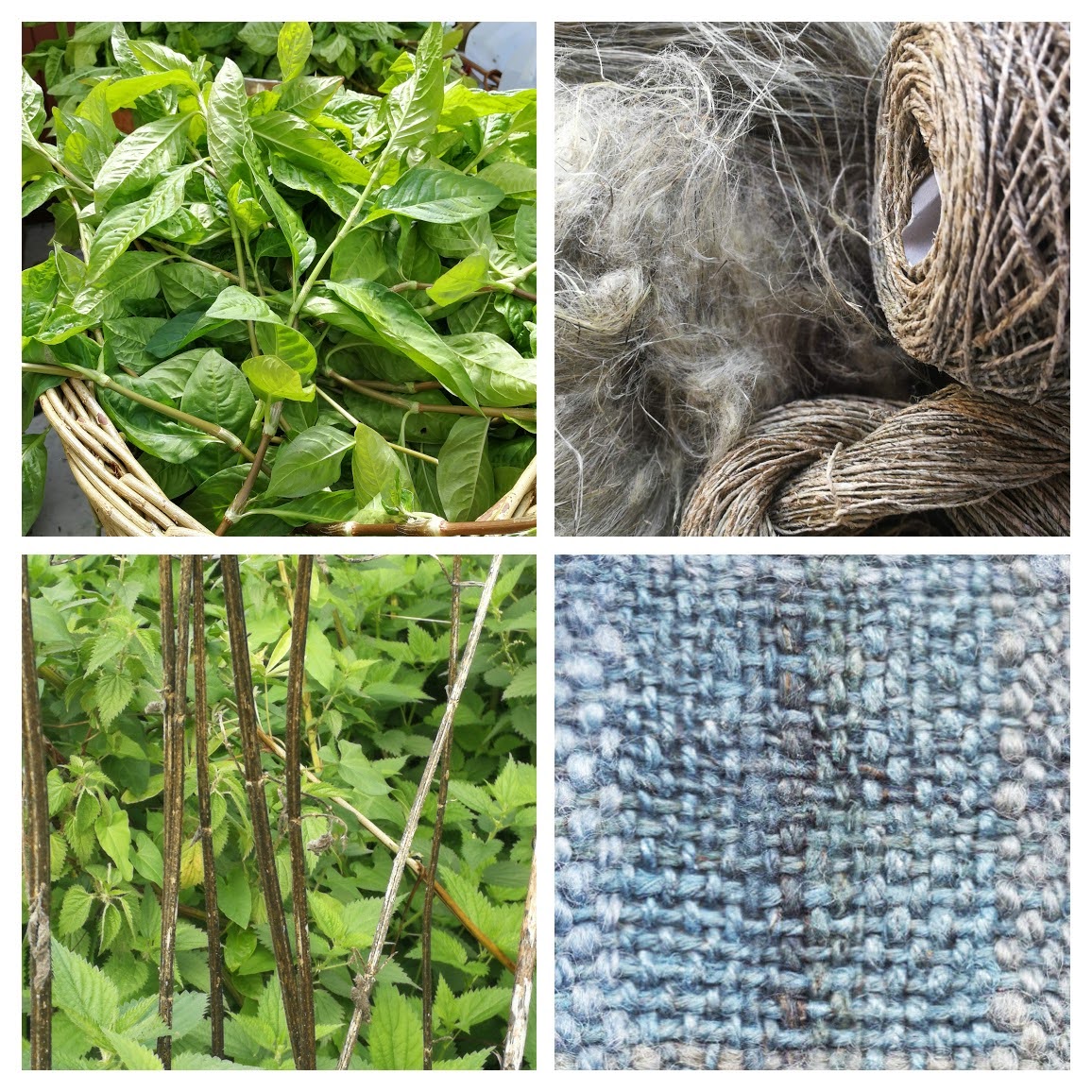
Join Anna Heywood-Jones and Sharon Kallis for a collaborative learning exchange that will explore the steps of processing nettle stalks into spun line or cordage and growing Japanese indigo for pigment extraction. In later sessions, we will work with various indigo vat types and create handwoven textile swatches or sculptural forms with our blue nettle fibres. Read more and register here
The short days of December find us online, in person, and hunkering down for quiet reflective time.
Join us
December 5th- online 7-8.30 pm
The FibreShed Field-School: reflections and opportunities
Melanie and Christa share their experience with the Fibreshed Field School, its effect on the education of Emily Carr students who participated, and the influence this alternative learning experience had on their own practices. Read more and get your free ticket
December 6th- online 7-8.30pm
Spinners Social Circle
Join Sharon Kallis and Jaymie Johnson online during this season of waxing darkness to spin together, share fibre notes, and provide community accountability to get through our fibre reserves in time to knit, knot, crochet, or weave something before the winter’s end. Read more and get your free ticket
Wednesdays December 7th and 14th 5.30-7pm
and Fridays December 9th and 16th 12.30-3pm – in person at the Roundhouse C.C.
Small Conversations: Spinning Fibres
Join Ada Dragomir in the Roundhouse Community Arts and Recreation Centre lobby where she will be demonstrating Drop Spindling—an ancient technique for spinning wool (and other fibres) into yarn or thread. Find out more here
December 20th- online 7-8.30pm
Spinners Social Circle
Join Sharon Kallis and Jaymie Johnson online during this season of waxing darkness to spin together, share fibre notes, and provide community accountability to get through our fibre reserves in time to knit, knot, crochet, or weave something before the winter’s end. Read more and get your free ticket.
Willow harvest time is near!
Have you been wanting to get involved in the gardens but the time hasn’t worked out ?
It’s not too late to give a hand! in the next few weeks the willow will be ready to be harvested in both gardens. If this is something you would like to help us with, please email earthand(at)gmail.com with willow harvest in the title, and we will get in touch when we have some dates scheduled for December and January.
We are thrilled to announce that as a part of our celebration of ‘MOP’ turning 20 this year, we have a video by Martin Borden on the big screen – the Mount Pleasant Community Art Screen – playing until early spring 2023.
The screen is located on the East-facing side of the Independent Building at Intersection of Broadway & Kingsway in Vancouver. The screening schedule can be found here, click on any day or time to view the schedule of when EartHand Gleaners- means of production- will be showing.
The film is approx. 34 minutes long, silent, and shows the 12 months of plant cycles and stewardship unfolding from August 2021 to July 2022.
Thank you to Vancouver Park Board: Decolonization, Arts and Culture and the generous community donations that made this film possible!
Other opportunities to see MOP onscreen include the two seasonal walkabouts with Oliver Kellhammer offered in the Spring and Fall of 2022, both are on our YouTube channel for home viewing and can be found here:
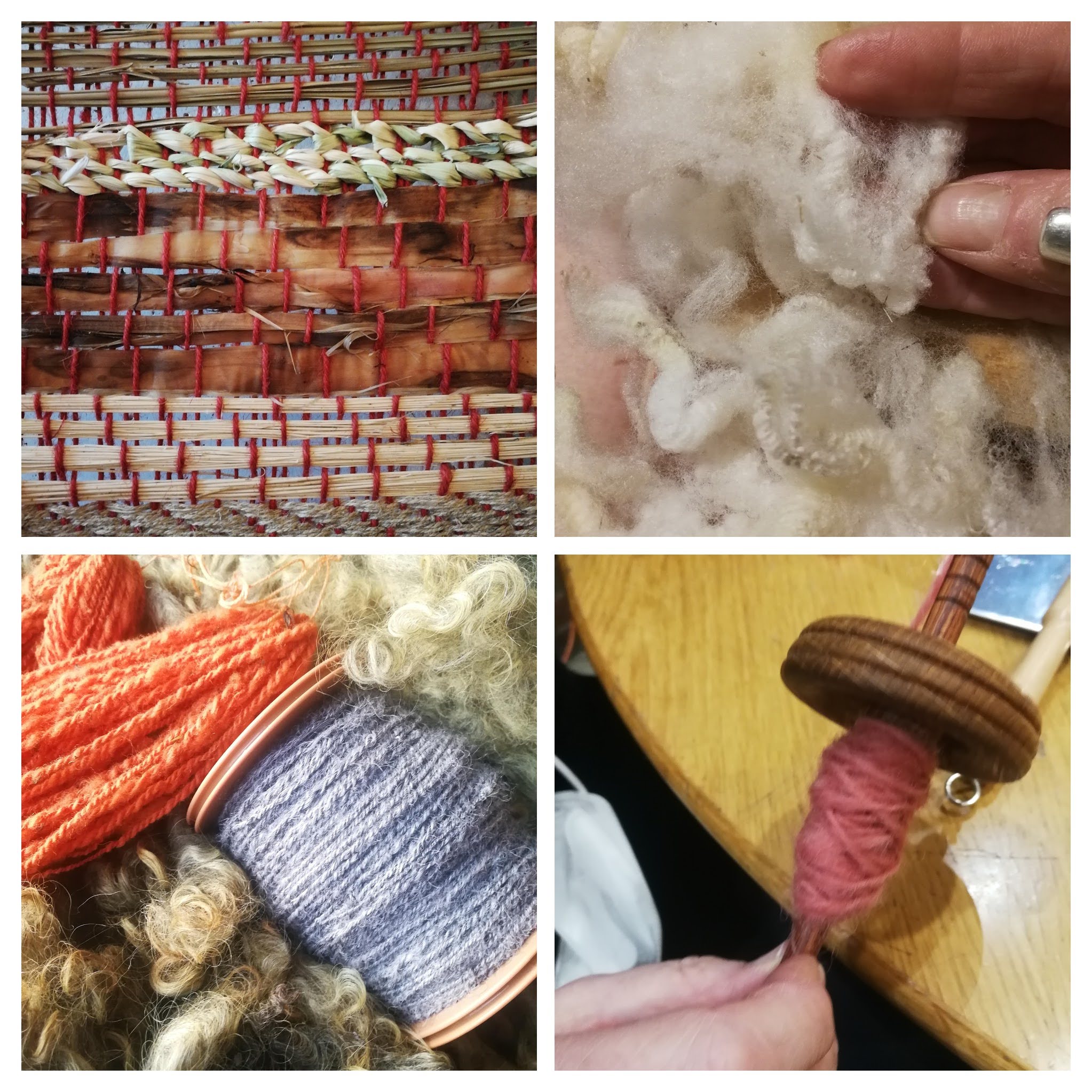
Join Jaymie Johnson and Sharon Kallis for these virtual gatherings that allow us to to carve time for ourselves to process fibres, spin for future projects, and keep spinning those threads of conversations we started in the summer.
Not a spinner? that’s ok too- bring your other handwork that is good to do in the companionship of others.
3 Tuesday nights- 7.8.30 pm ( PT) please get a free ticket for each evening you can join us, zoom links will be sent out the morning of the virtual gathering.
You might notice the technical offerings are strongly focused on materials processing and spinning – jump on those programs quick, as they won’t be back until late in 2023! Winter programs will focus on weaving, knitting, mending and other ways for working with the threads that come from this Autumns’ sessions.
Land Lessons: Weathering Systems Almanac
Monthly virtual drop-in gathering with Jaymie Johnson and Sharon Kallis
weaving detail of work by Gentle Geographies (Cait Hurley), created during the Ancestral Threads Cloth Cohort in 2021-22
While during the Spring and Summer we are outdoors with priority given to weaving fences and tending the land, Autumn and Winter are for nestling in and enjoying the bounty of that work with materials a plenty.
We believe strongly in busy hands while we converse and learn together; sharing ideas, building skill capacity and community connections. We hope you can join us!
When we gather, we look to this poem by Mickey ScottBey Jones based on an original text by Beth Stranos to inform how we come together:
Together we will create brave space. Because there is no such thing as a “safe space” — We exist in the real world. We all carry scars and we have all caused wounds. In this space We seek to turn down the volume of the outside world, We amplify voices that fight to be heard elsewhere, We call each other to more truth and love. We have the right to start somewhere and continue to grow. We have the responsibility to examine what we think we know. We will not be perfect. This space will not be perfect. It will not always be what we wish it to be. But It will be our brave space together, and We will work on it side by side.
Mickey ScottBey Jones ( and Beth Stranos)
As always, so much gratitude for those that come and join in the conversations, and help shape the directions for how we come together again. In this way, the gatherings and conversations for which we meet up are never dull or repetitious, but provide new ways of sinking deeper into areas of collective and personal research, while still holding room for new folks to enter.
We always come back to Ray Oldenburg’s concept of the Third Place – not home, not office, but a place to gather with others – and in the winter when we don’t have a physical space to meet, we are thrilled to create virtual rooms for our conversations to continue.
many hands showing cordage made while walking at the Means of Production garden
“A thread is now a line of conversation via email or other electronic means, but thread must have been even more compelling a metaphor when most people witnessed or did the women’s work that is spinning. It is a mesmerizing art, the spindle revolving below the strong thread that the fingers twist out of the mass of fiber held on an arm or a distaff. The gesture turns the cloudy mass of flax or wool into lines with which the world can be tied together. Likewise the spinning wheel turns, cyclical time revolving to draw out the linear time of a thread. The verb to spin first meant just this act of making, then evolved to mean anything turning rapidly, and then it came to mean telling a tale.”
excerpt from Rebecca Solnit’s The Faraway Nearby ( 2013, Penguin)










 EartHand Gleaners Society