• 2021 has been a rich year of knowledge transfer in the gardens for EartHand!

    We have been so thrilled to have with us this past year three interns from two universities: Sarah Holloway- Rhode Island School of Design and Rebecca Wang and Melanie Camman from Emily Carr University of Art and Design joined us for nearly 500 hours of combined time in the gardens and online doing research and administrative support- understanding how we build programs around the plants that we tend.

    Each person was on their own learning journey, but each has involved mapping one of the gardens in some way that takes us forward as a community in better understanding the plants in our stewardship. Also, how we share information with the larger community and our stewardship groups have been enriched by the work each of these individuals has done.

    Creating a Digital Means of Production Garden (MOP)-

    by Sarah Holloway is ready for you to visit here!

    Completed over two summers, this project by Sarah worked to digitize the experience of arriving at the garden and seeing something new every time. Divided into types plants based on use, you can explore the digital garden and get a taste for the plantings at MOP.

    Intentionally easy to get lost in, like the wilds of MOP itself, plant locations are not revealed in part to aid in opportunities for self discovery on site and reduce possible plant theft or inappropriate harvests from oversharing information online.

    Sarah is back at RISD for another year but has their sites set on settling in Vancouver after graduation so we look forward to having Sarah in the gardens with us in summers to come.

    Melanie Camman with working drawings of garden beds at Trillium Park

    Melanie is currently at Emily Carr pursuing her master’s degree. Weaving is a core part of her practice as is her own ancestral cloth research and she has joined us this summer to help with general stewardship at Trillium Park while working on mapping our seasonal work- giving the stewardship team a better sense of the annual work to be done as well as harvesting and seasonal use opportunities from the plantings on site. The final map is looking beautiful and will be very helpful for garden planning and we are thrilled to have Melanie active in our programs and participating in stewardship, using materials from the gardens in her work whenever school and teaching on the ski slopes gives her space to join us.

    Rebecca Wang graduated from Emily Carr in the Spring of 2021, shortly after beginning her internship with us as a part of the Shumka Centre for Creative Entrepreneurship Artists Apprenticeship Network program.

    Rebecca’s time has been a blend of online administrative zoom time with Sharon on program creation and support, in the gardens learning about the plantings- recording and transcribing to spreadsheet the seasonal work rhythm of the many plants, and helping out at events with the community.

    This Autumn wrapped up the official hours of the program with time spent learning how to develop a community project and writing grants with Sharon. Together they got 2 grants out the door, and if successful it will allow Rebecca to continue working with EartHand in 2022, in a paid capacity as a research artist and program lead in figuring out how we can take our Ancestral Cloth program to a larger and more diverse community. We are looking forward to having Rebecca stay on with us as a garden steward and joining our small dedicated team!

  • A free,  3-part online conversational series about the history and future of Canadian fibresheds with Anna Hunter from Longway Homestead (Manitoba) and Nicola Hodges (Sunshine Coast), hosted by Sharon Kallis ( Vancouver).

    Wednesday nights 7:00-8:30 pm PST

    Nov 3, 10, 17

    Recorded with time-limited access. Registration required for each event.


    Nov 3 – Canadian FibreShed: Wool Processing, Weaving and Knitting Mills

    Anna Hunter will share her current research into the history of wool processing, weaving and knitting mills in Canada, including the challenges that led to the industry decline.


    Nov 10 – Canadian FibreShed: Regional to National, a Conversation 

    Anna Hunter in conversation with  Nicola Hodges unpacks the current status of where challenges stand for Canadian textiles. Anna and Nicola discuss how to move beyond the idea that we will alter our fibreshed significantly  through niche, small-scale making. So, how do we scale up to a larger industry that has principles based in regenerative land practices?

    How do we get “good cloth” into peoples hands, make it the norm and make it accessible beyond a luxury item?

    What cross pollinations do we need? The second half of this session will open up to ideas and conversation with participants.


    Nov 17 – Canadian FibreShed: Closing the Circle

    Identifying the threads and connections we can bring together

    Our final conversation will begin by using the SWOT* assessment as a tool to understand the national fibreshed as we have identified from the conversation on the 10th. Then the majority of our time together will be as a circle, each participant invited to introduce themselves and share what their needs are, and what they can offer others towards building a more connected and vibrant fibreshed.

    Closing: Anna leads us in thinking about what actions we can take as individuals, can we find our peers or those who can use our support to move certain areas of this work forward? How do we collectively leverage our skills and strengths?

     *SWOT: Strengths, Weaknesses, Opportunities, Threats 


    Anna Hunter is a first generation sheep farmer and wool mill owner in Eastern Manitoba, Treaty One Territory. Anna, her husband Luke, and their two sons moved to Manitoba from Vancouver BC in 2015.  She started a small sheep farm, raising Shetland sheep for their beautiful wool. In 2018 they established a small-scale wool processing mill – the only one of its kind in Manitoba.  They process wool and fibre for themselves and other farmers. Anna is passionate about building community and connecting rural fibre farmers with urban consumers, fibre artists and crafters. Anna believes that regenerative agriculture and climate beneficial food and clothing is integral to moving forward as farmers, fibre artists and Manitobans. To learn more about Anna and her farm/wool mill, check out www.longwayhomestead.com

    Nicola Hodges is a textile craftsperson and teacher with an interest in design, local textile manufacturing and fibre farming. She taught for Emily Carr University’s Fibershed Field School, mentoring students in the Warping and Weaving cohort. She has worked with EarthHand Gleaners Society since 2017 teaching workshops on fibre processing and spinning as well as led projects exploring hyper-local natural dyes. She recently had the opportunity to train at Long Way Homestead’s spinning mill as well as travel to study various crafts including traditional knitting design, natural dyes, leather tanning and shepherding. She currently lives on shíshálh (Sechelt) and Skwxwú7mesh (Squamish) territories in xwesam (Roberts Creek) where she manages a research garden for Maiwa Handprints studying the viability of growing dye crops in this bioregion.


    This series draws to a close EartHand Gleaners 2021 project, Weaving Our Community SkillShed: Tending Our Community FibreShed

    We have copies of FIBERSHED by Rebecca Burgess available for loan to those in the Vancouver area thanks to the Shumka Centre for Creative Entrepreneurship. Please email earthandgleaners(at)gmail.com if you would like to borrow a book!


    Supported by the BC Arts Council resilience funds, Vancouver Park Board: Neighbourhood Matching Fund, EartHand Gleaners Society and the Shumka Centre for Creative Entrepreneurship.

  • A free, virtual series to unpack the complexity of decolonizing our tongues and actions. Led by Meagan Innes and Senaqwila Wyss with a weekly guest from our Artist in Residence Program (Jolene Andrew, Cease Wyss, Jaz Whitford and Tori Clark).

    4 sessions

    Thursdays, 7:00-8:30 pm PST

    Nov 4, 25, Jan 14, 28

    Registration is required for each event, all of which have a max of 20 spaces.

    Events will be recorded for internal use only towards creation of a document that maps the learnings for future sharing.


    Nov 4: A conversation about the challenge and complexity of returning language to place with respect and honour.  

    Many Nations are directing great energy into language revitalization projects.  But what are the impacts of settler descendants having access to traditional languages before those whose land we stand upon are themselves able to return to these learnings? This conversation will unpack some of the complexity and begin the conversation around how those of us from other places can support this work.

    Pre-work request: Squamish Language Revival (youtube video)


    Nov 25 – Names of Plants and Decolonizing our Tongues

    A part of how we can build relationships to place is through how we connect and acknowledge  plants as kin. Looking initially at Fireweed and Stinging Nettle which are both plants that have rich cultural traditions in many places, let’s look at how many other decolonized names we can collectively share for these plant relatives. Meagan and Senaqwila will share the Sḵwx̱wú7mesh sníchim for these plants and invite you to do your own research on these, or other plants from your own ancestral roots.

    Pre-work request: 

    -Bring plant names in your ancestral language forward to share with the group, have links etc ready to share if relevant

    Knowledge Keepers Medicine Walk (youtube video)


    Jan 14 – Language and Place: Pushing Beyond Territorial Acknowledgments

    Meagan and Senaqwila will share with the group the Squamish map of place names so we can begin to understand how to deepen our sense of place and territorial acknowledgement- what village site do you live near? What are the true place names for the spots you frequent? Aimed at lower mainland participants, this session is an opportunity to unpack the complexity of geography, borders and regions.

    Pre-work request: 

    Land Acknowledgement | Baroness von Sketch Show (youtube video)

    Territory Acknowledgement Protocol (youtube video)

    Squamish Atlas 


    Jan 28 – Honouring the Life of Plants

    This final session will be part conversation and part workshopping the  creation of personalized prayers or intentional words and actions we can each imbed in our harvesting practice. How do we ask and honour the life of the plant from which we will make food, medicine and crafts?

    What is our responsibility as a human in relation to that plant? What are words or offerings from our own ancestral lineage we can bring into this practice?

    Meagan and Senaqwila share a conversation around teachings within the Sḵwx̱wú7mesh Nation that may be brought into our  personal rituals and collectively the group will discuss other current practices and research into our own ancestral ways.

    Pre-work request:

    -Read the honorable harvest by Robin Wall Kimmerer

    -Personal research into harvest and planting rituals for your own cultural roots, 

    -Watch Spirit Doctors (film)


    EartHand gratefully acknowledges the support of BC Arts Council resilience funds and City of Vancouver for making this program possible.

  • Many of our online Guilds have begun, but we are still meeting outdoors and celebrating the bounty of this season; finding ways to celebrate and honour the plants that feed and nurture.

    SEPTEMBER 25 7.30pm- Documentary Movie Night

    Join Martin Borden and Sharon Kallis at the outdoor screening of the now completed, Wild Fibres short film Martin has created around Sharon’s making of the nettle coat.

    Hastings and Kamloops pop-up plaza, a part of the Neighbourhood Food Week!

    SEPTEMBER 26 1.30-3pm- Rosehips and Stories

    Join Meagan Innes and Sharon Kallis for traditional stories of the place we now call Trillium Park, and gathering of rosehips for winter medicine, and gifting nourishment back to the roses.

    Please pre-register here, bring an umbrella, and a cup to join us at the Strathcona garden cider pressing right after

    RECRUITING NEW TRILLIUM STEWARDS

    Want to get more involved with EartHand and live in the East Vancouver or downtown core?

    We are now seeking new volunteers to join our awesome stewardship team in time for fall planting.

    The team meets weekly in the summer months, tapering off to twice a month through winter and uses Slack to stay in touch about projects and upcoming work. Perks include learning about pruning, weaving garden fences, opportunities to work creatively with the plants on site. Small discount for Earthand paid programming and learn more about hand crafting with seasonal abundance with a great group of people.

    Upcoming Site Orientation session is October 2, 2-4pm, planting date October 16 1-4pm

    email earthandgleaners(at)gmail.com to apply, send a short email with your name, phone number, and let us know if you live in the area, are an artist or maker or other current relationships to gardens and plants that inspire you to join our EartHand Trillium team.

  • Sharon has been busy designing the autumn workshop and guild schedule which features collaborations with artists near and far including past and present Artists in Residence – now is the time to design your own Autumn learning journey with us!

    Summer Weave Extravaganza

    Four consecutive nights to get your weave on! Weaving all things basket related with Sharon and Amy at Trillium North Park

    Aug 23, 24, 25, 26 / 6-8pm / Free, registration dependent upon skill level (see post) / Trillium Park

    Gifts of Time: Dye & Spin

    Spend a Sunday afternoon helping prepare wool for EartHand’s Artists’ in Residence T’uy’t’tanat (Cease Wyss) and Jolene Andrew in time for their winter weaving.

    Sundays / Aug 29, Oct 3 / 1-4pm / Free, registration required/ Trillium Park

    Colours: From the Land to Fleece

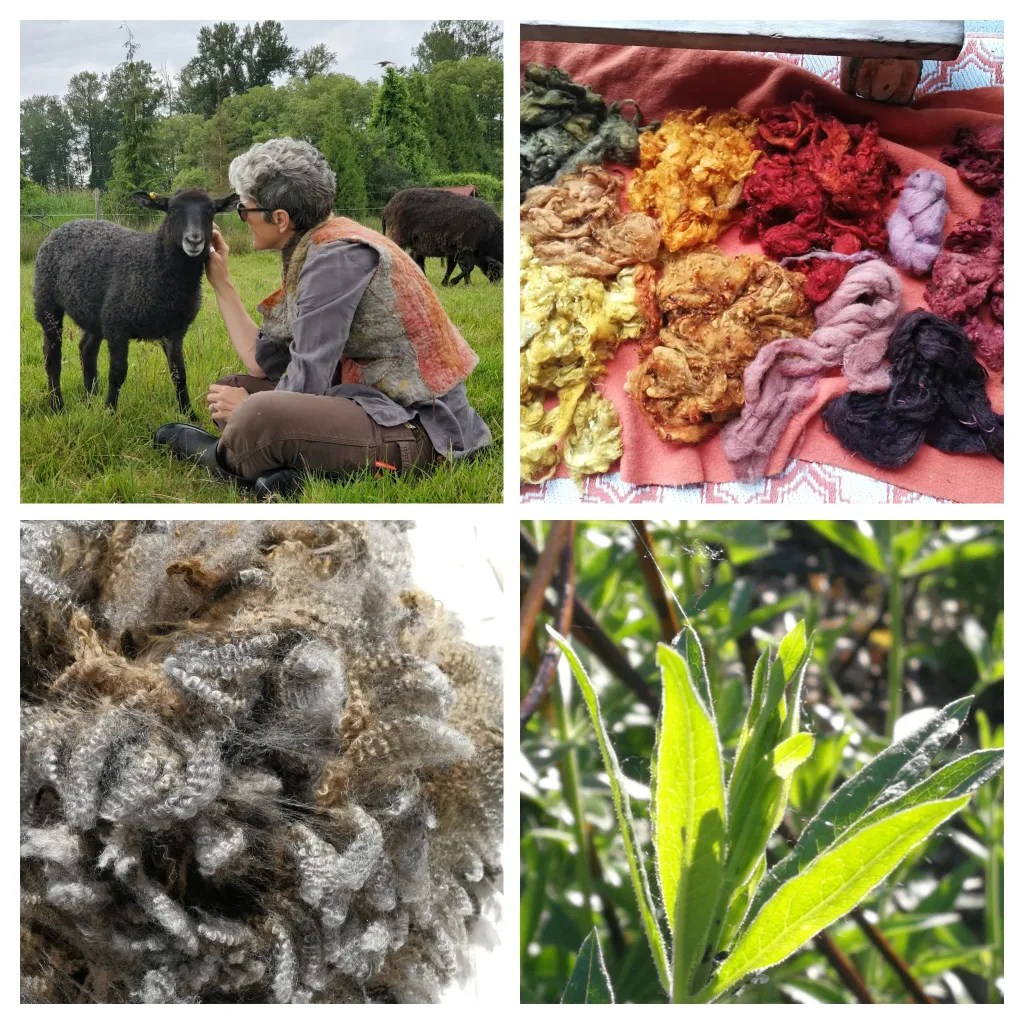
    This dye studio intensive over four Sundays is a chance to work with some of the iconic dye plantings from the Means of Production  and Trillium gardens. Over the  sessions we will dye two small white and grey sheep fleece that have been pre-mordanted with alum. The group of 7 will collectively share the raw dyed wool coming from each dye bath, giving everyone a wide library of local colour for autumn spinning, felting and other winter fibre work.

    Sundays / Sept 12, 19 Oct 17, 24 / 1-5pm / $270 incl. materials / Trillium Park

    Guild: Lessons from the Nettle Sister

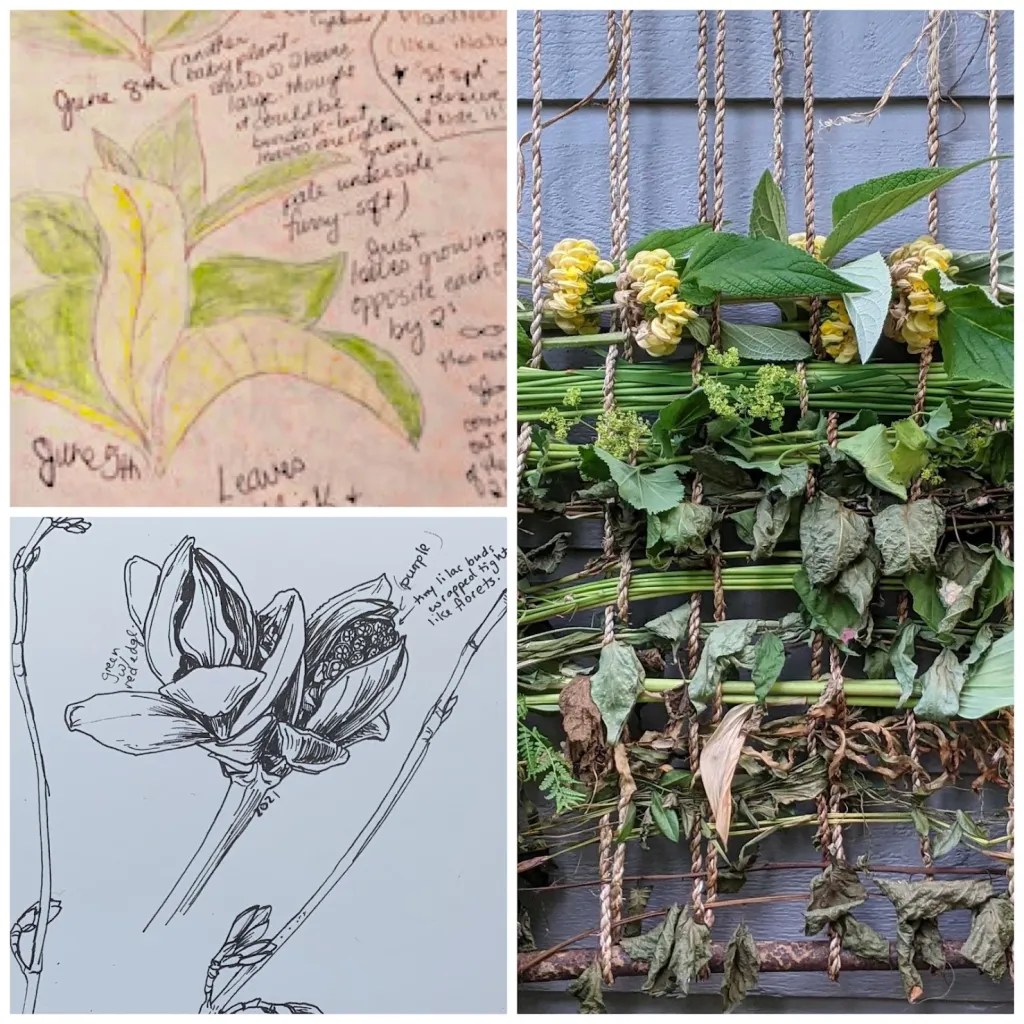
    The six months of virtual monthly meeting times will lead us through from green unretted, water retting stalks, nature/root retted stalks into spring tea and medicine gathering and provide the space and time to come together and share and celebrate “All Things Nettle”.

    Mondays / Sept 20, Oct 18, Nov 15, Jan 17, Feb 21, Mar 21 / 7-9pm PST / $180 / Virtual*

    *guild members in the Vancouver area can have access to EartHand gardens for limited amounts of nettles, flax and dogbane.

    Indigo Vat Research Support Group

    Are you new to Indigo or Woad vats and feeling a little nervous and intimidated? So are we!

    Join Sharon Kallis (EartHand Gleaners Society) and Ivy Stovall (Rewild Portland) for this online research and support group as we learn and share together.

    Tuesdays/ Sept 21, Oct 19, Nov 16/ 7-9pm PST / $90 / Virtual

    Colour Blending and Spinning Guild

    Inspired by seasonal bounty coming from our gardens and kitchens, let’s look at colourways with a different lens. Consider the bounty of autumn apples; flecks of purple, gold, cool yellows and a base line of red- how might that translate to coreopsis, tansy, madder and pokeberry dyes?

    Although this focus is on blending and fibre preparation, if you are new to spinning this is a fantastic way to jump in and fall in love with preparing your own yarn for knitting or weaving projects. Led by Karen Barnaby and Sharon Kallis.

    Fridays / Oct 15, Nov 19, Jan 21, Feb 18 / 7-9pm PST / $90 / Virtual

    Past Threads: Present Place – Winter Ancestral Cloth Guild

    What might your ancestors have been wearing 1000 years ago? 

     Weekly virtual gatherings include discussion time for sharing what we individually are learning in our research with short, supportive tutorials into spinning, dying and weaving using materials locally available to where we each now live. Each step we discuss what we might already know about our personal ancestral connections to those materials or discover what would be the place-specific equivalent. 

    Tuesdays / 10 sessions Nov 23 – Feb. 8 / 7-8.30pm PST / $210 / Virtual

    We have more community events – both virtual and in person – yet to come, so keep an eye on our events listing for up to date information!

  • Last month Jaymie put a call out for folks who have participated in the recent EartHand Guilds to share a reflection of their experience for our blog and newsletter. She was elated to receive this hopeful and thoughtful reflection from Margo who participates in the Means of Production Stewardship group. Here are her words:

    “One day last winter – in the depths of a pandemic funk – I was walking in my new Mount Pleasant neighbourhood when I spotted a man lovingly tending bamboo plants in a garden I had barely noticed at the top of China Creek Park. I asked the man – who turned out to be long time MOP steward Martin Rose – what he was doing. He explained that he was trimming bamboo as part of a stewardship group for the Means of Production garden. He told me a little bit about the garden and how I could connect.”

    Martin in the bamboo grove at the MOP garden.
    Margo holding a pitcher of her thirst quenching turmeric/ginger lemonade at the MOP garden. Photo by Heather Michaud.

    “I knew a little bit about Sharon Kallis from my time at the Vancouver Park Board as Communications Manager. I knew about her work at Trillium and the fibre garden there but had no idea that Sharon and husband David were the driving forces behind a garden that serves so many.  I come to the garden not as a Maker or a fibre artist but as a foodie and passionate cook with a growing interest in plant medicine. I come from a farming family in east central Alberta and last summer rehabilitated my Grandparents’ flower and vegetable garden in the family home I inherited from my Mom. 

    I spent the fearful, early months of the pandemic in 2020 with my hands in the harsh climate of the prairies and I was hungry to dive into the lushness off the coastal garden this year.I’ve learned so much from Sharon, David, Ryan, Heather and the rest of the passionate MOP crew this spring and summer.”

    Means of Production Garden hillside in the spring

    “In no particular order I’ve learned: how to build a willow fence, how to prune thimbleberries and fruit trees, how to trim and mulch fruit trees to give them light and air, how to cure a nettle burn and how to make healing plantain skin balm. I’ve learned that I find strange satisfaction in attacking a pile of running buttercup! I’ve learned how to harvest dye plants and had a beginner’s lesson in working with plant dyes. I have found Sharon to be a uniquely gifted, enthusiastic and patient teacher. 

    The Cultural Territories 101 Guild with Nicole Preissl provided a much deeper understanding and respect for the array of cultural practices and plants used by First Nations around the province. The opportunity to work through the seasons in the MOP garden keeps me anchored to the earth in these times of climate crisis and pandemic. I have discovered that “horticultural therapy” really is the best medicine for any kind anxiety. I am profoundly grateful to be a part of this community of people who love plants. “

    2019 Celebration at MOP with Legion of the Flying Monkeys playing under the willow and hazel canopy
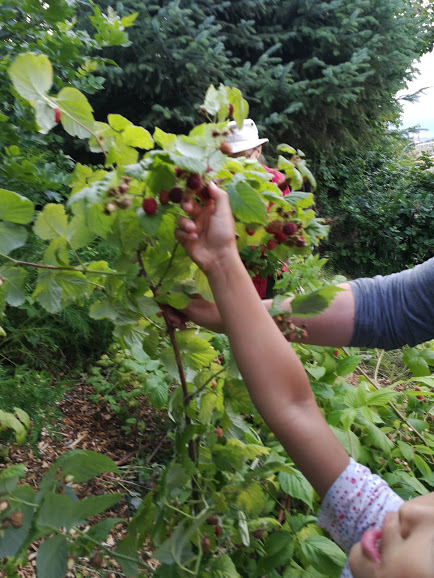
    Picking raspberries at the MOP food forest

    Thank you Margo for this generous contribution and for all that you and everyone in the Stewardship groups do for EartHand and the many humans, plants, and animals that get to enjoy the spaces you help to create.

    EartHand tends two gardens in Vancouver that grow artist materials among other pollinator, medicinal, and food plants. These gardens are cared for by Sharon and David with much support from the hardworking and enthusiastic Stewardship groups. For more information about these gardens visit these links:

    Means of Production

    Trillium North Park

    Wondering how to get involved in stewardship? In late September 2021 look for our call out for training new stewards at Trillium and Spring 2022 will be our next training sessions for Means of Production garden. Sign up for our newsletter here so you don’t miss the announcements!

    Means of Production Garden in the Spring


  • Join us in-person at Trillium Park for these free drop-in summer programs! No registration needed. Follow the links for more details about each including what to bring and what to expect regarding public health guidelines.


    Mending Gatherings at Trillium

    6:00-9:00 pm, 2nd Wednesday of the month

    June 9, July 14,  August 11

    Crafting Summer Socials

    11:00 am-4:00 pm, one Saturday a month

    July 3, August 14 


    EartHand Nelson Social

    3:00-5:00 pm, June 27th, Lakeside Park, Nelson

    Less of a program and more just an opportunity to gather and meet each other in-person for the first time. This casual drop-in social is for those living in and around Nelson, on Sinixt and Ktunaxa Territory.

  • We are thrilled to introduce three awesome people who are joining us with support from their schools. Each intern will be learning about connecting the growing and tending of plants for creative use to workshop development, with a  focus on mapping both the garden beds and seasonal work tasks.

    Rebecca Wang (chenyirebecca.com) is an artist and curator based on the unceded Coast-Salish territories (otherwise known as Vancouver, Canada) and in her hometown Hangzhou, China. Primarily focusing on photography and installation, her practice investigates the absurdity ingrained in the structures that uphold the everyday which is often characterized by capitalist consumer culture. Through her work she hopes to destabilize the default ways of knowing, perceiving, and existing that disconnect one from their belongings and surroundings. Rebecca received a BBA with a joint major in Economics from Simon Fraser University in 2012 and a BFA with a minor in Curatorial Practice from Emily Carr University of Art + Design in 2021. As the Programming Assistant at EartHand Gleaners this year, she is assisting the mapping project at Means of Production garden and facilitation of artist residencies in the summer.

    Rebecca has a paid internship supported through the Shumka Centre’s Artists Apprenticeship Network and will be working with us 150 hours over the summer and autumn months.

    Sarah Holloway is a young artist completing her undergraduate degree at the Rhode Island School of Design (RISD) in furniture design. Her work is currently focused on locality in internet creation and handicraft.

    Sarah Holloway will be joining EartHand as a visiting artist this summer. She will continue working on the project she began with us last year, coding a digital garden representation of the  Means of Production Garden. Using photography, drawing, and the written word, she will document and record the plants growing in MOP and their traditional human uses. The first phase of the project, completed last summer, can be viewed at www.mopdigitalgarden.com

    Sarah  has support from the Rhode Island School of Design to spend the full summer focusing on completing the Digital Mapping Means of Production project she began with EartHand in the summer of 2020.

    Melanie Camman is a service designer and design researcher. She is currently completing a Master’s in Design at Emily Carr, studying how decolonization and pluriversality can impact her design practice with the goal of addressing power inequities in research, exploring storytelling as a medium and fibre/weaving as a method for embedding and telling stories. Her project with Earthand Gleaners is creating maps for the two of the garden sites which will support the decentralization and agency of the volunteer/guild members in collectively determining what work is needed in the gardens and when. She spends her time in the garden growing edible and medicinal plants, tending to the worms who turn food waste into soil, chasing low tide sandbar beaches, encountering all kinds of precipitation while snowboarding the North Shore mountains or sitting in the red chair while knitting and watching superhero tv shows.

    Melanie’s blog: http://fullresgradstudios.ecuad.ca/mcamman/

    Melanie has support from the Shumka Centre for Creative Entrepreneurship’s Satellite program to continue work with Sharon in August and September assisting with mapping the Trillium gardens and community program development.

  • UPDATE: all spaces are full for new stewards at this time- with provincial restrictions on gathering we do need to limit the number of people we have in the a garden. please keep following us, and we will look to more training sessions in 2022.

    Once a month-ish short, online meetings happen to discuss current tasks in the garden and community notes are then posted in a Slack channel for reference. Each month there are several informal  work parties where you can meet up with other stewards for doing various garden work, or take your own tools and go on your own with a clear outline of what work is required.

     The benefits of being a steward include  sharing  in some of the garden bounty, seasonal opportunities to participate in free learning sessions or workshops in either permaculture or hand skills connected to seasonal crop use. Meet neighbours and fellow makers and make new friends while spending time caring for the plants and trees in this special little urban oasis.

    Priority will be given to Mount Pleasant residents and/or makers with an existing practice or interest in using materials from the land.

    All gardeners are required to bring their own garden gloves, wear closed toe shoes while on site and fill out a volunteer form at the first session. Our intention is to train new and experienced gardeners in the care of the  art and food crops with the hope people will participate and make a commitment to the garden for a minimum 8 month time frame of a few hours a month- many of our gardeners have been working here for years! 

    Please Note: we do not grow personal crops, this is not a community garden with individual plots

    For more information about the garden visit our MOP page here.

  • We are so excited to announce two new guilds launching this month that are enticing enough to keep you on Zoom during these beautiful late spring and summer evenings:

    Local Colour: Dye and Documentation Guild with CZarina Lobo – For the Intermediate dyer, starting June 1st and running 6 sessions spaced throughout the spring to early fall.

    For inspiration check out CZarina’s website The Twisted Fibres and instagram @the_twisted_fibres!

    Brushes to Brooms Guild with Nicole Jahraus – This guild is starting on May 20th and is already full! It filled up so fast that we’re taking names and contact info of folks who missed out and want to be contacted in the event Nicole is able to run a second one! Please visit the guild page (linked above) and add your name to the list by selecting a ‘Waitlist’ ticket at the bottom of the page.

    In addition to these paid programs we also have two free programs running thanks to BC Arts Council Funding that you can register for on a date-by-date basis:

    Cultural Territories 101 with Nicole Preissl – Next sessions are May 18th and June 1st, register for each by following the link and scrolling down to the bottom of the page. After these session we will break for the summer and finish this series in the fall.

    Seasonal Almanac Journal Guild with Sharon Kallis and Jaymie Johnson – Sessions occur on the last Monday of each month until November. Register for each individually by following the link and scrolling to the bottom of the page.