So thrilled we are able to gather in small groups again outdoors and do this in person.
As an organization with a motto- how do we be makers without first being consumers-, selling sticks feels very weird indeed. However, these are weird times we are living in, so here we are, hosting our first ever makers market.
Normally, we have stewardship sessions that allow people to access some of the plants we are tending. Or, we have in person workshops that use the fibre and dyes from the gardens, and a small materials fee is budgeted into the workshop cost. This helps EartHand with some of our base operating costs, and keeps the maker materials flowing out into the community.
Because of the pandemic, we have not been able to gather in groups for either land tending or skill sharing. We have a surplus of maker-ready plant materials and a loss of revenue, so it is sales-by-donation time!
Materials include:
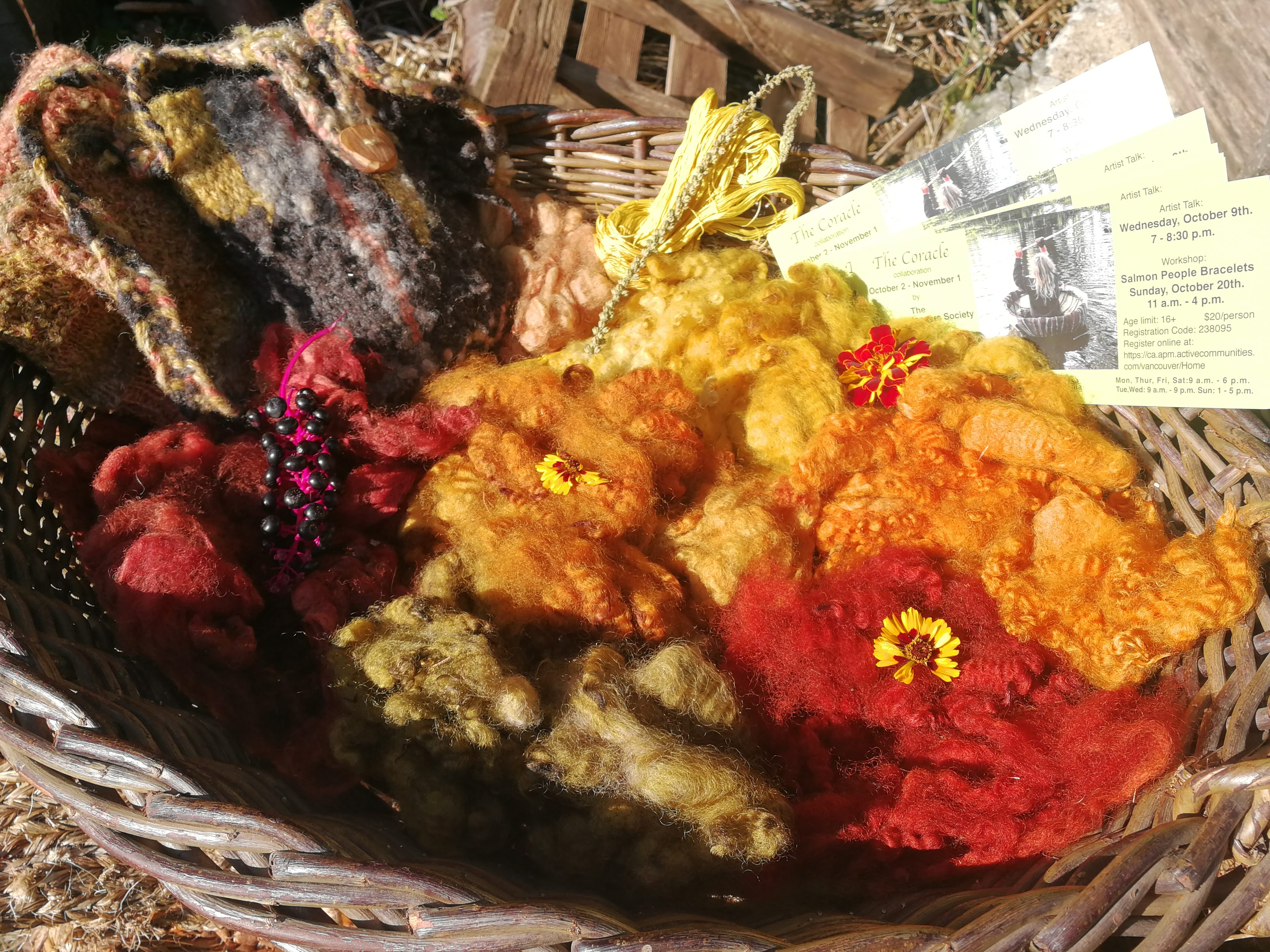
retted flax straw, nettles, milkweed, dogbane, ash and willow rods, other weaving fibres and raw wool and dye plant seeds.
Shopping requires a ticket to keep our numbers small. please refer to the instructions on the tickets regarding community health and safety while on site for the sale.
Virtual to Real Time Fence weaving tutorials have been a success!
Who knew, when the pandemic first began changing our way of gathering from in person to virtual -that we would be learning garden fence weaving online at the one year anniversary?
So far, it has gone remarkably well and we have two fence weaving interns almost ready to lead community groups themselves! Training sessions start online for understanding the core basics, so when we do gather no hand to hand work is required.
… Before Spring ends, someone remind Sharon to measure how many meters of fences get made, we are on a roll!
Here are a couple of short videos you might find helpful that we made for our first project of assisting Beaconsfield Community gardeners.
Leaping from Rebecca Burgess’ ground-breaking book FibreShed (published2019).
From that FibreShed perspective we identify our unique ‘Shed’ and bring Coastal Indigenous perspective to the centre of the work.
Neighbour stewards, Master Gardeners, young art students, university educators, First Nations knowledge and skill holders, and other individuals teach and learn here side by side.
The garden transforms – a teaching site fostering understanding of the land and plants from a horticultural and ethnobotany perspective; opening up dialogue- furthering our steps of Reconciliation.
The sedge zone is a somewhat neglected area and is the area of our focus. We hope to improve the planting and design of this area. more weaving grasses and other intertidal-found plants -encouraging a ‘new’ interest in using the sedge for weaving and making this a vibrant area of the park.
This project will inspire through hearing guest speakers discuss other supportive fibre shed communities and deepen our understanding of the plants and the restoration work we do- reconnecting our human hands to the plants around us.
We have 8 copies of Rebecca’s FibreShed book to circulate through the community for short loans if are unable to purchase your own copy. Please reach out by email to earthandgleaners(at)gmail.com with BOOKSHARE in the title, we will get back to you as soon as we can and let you know a rough time estimate for your loan. Thanks to Shumka Centre for book purchase! All books picked up and returned to Trillium North Park as arranged.
Thank you to Vancouver Park Board: Neighbourhood Matching Funds which have made this project possible!
Means of Production Through January and February- harvesting willow, hazel, ash and early pruning of apple trees and thimbleberry bushes, fence work begins! Crocus, snowdrops are underfoot, daffodils are blooming and the golden plum trees are about to pop.
Trillium North Park through January and February- trimming willow, roses, snowberry, tending nettle beds and planning began for redesigning the sedge zone. The planted zone is full of birds and its a lovely spot to sit on a rock and listen. Underfoot find young yarrow, lupin and nettle just poking up from the soil.
Thank you to all of our community stewards in each garden! The groups currently meet online to discuss work, then go and work on their own.
We look forward to when provincial guidelines allow us to gather on site again in groups, and then will open the stewardship to new members.
With spring equinox almost here, it is time to work on making our summer colour dreams come true.
Sharon gathered, dried and packaged several of her favourites last summer and fall from Means of Production and Trillium park.
She has in the range of 10-20 packages of the following seeds available, and we are asking for $3 donation per pack. First come first serve, email your request to earthandgleaners(at)gmail.com, your seeds will be put aside and order confirmed. payment and pick up( no mailing) arranged by email.
Madder
Weld
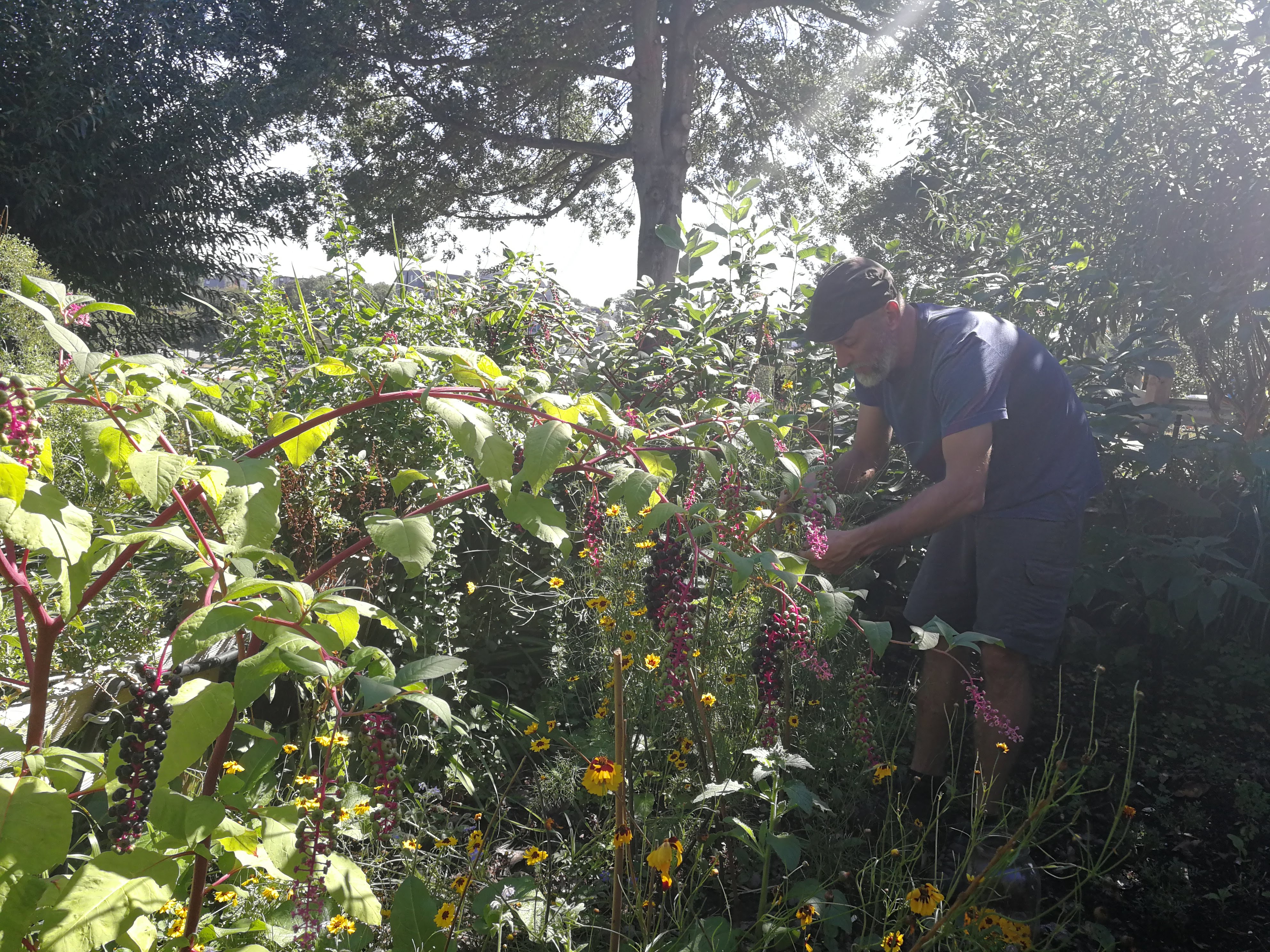
pokeberry ( toxic-not recommended for gardens with young children)
First Spring Offerings- popping up like lupins and yarrow!
March is just around the corner and a few new programs are now on our calendar ready for you to join.
Did you know, March is when nesting season officially begins? It means no more hard pruning of bushes or shrubs which might disrupt new nests. It also means there is lots of mate finding and chatter going on!
Interested to know more about what the birds are saying? Sara Ross is leading two Bird Language Guilds this spring to make it easier to fit your schedule. Each Guild is $40 for the two online dates
These virtual Bird Language sessions are opportunities to learn some of the core signals and sounds birds send to each other. Right away you will begin to understand and interpret what you experience in the world outside your home. With recordings and bird pictures, Sara will guide you through the basics of the spring season- no experience necessary.
Interested in hearing Sara talk about birds? check out our YouTube channel to hear what Sara recorded for us last spring.
New Program!
Spring Solidarity: Nature Protection and Connection Guild with Sara Ross
Every-other week. 4 sessions. Thursday evenings 7:15-8:45pm PST March 25, April 8, 22, May 6
Are you a Land or Water Protector? Do you want to be? In this virtual guild we will bring our minds together to explore how the energy of our lives can shape and transform the world around us. We will practice taking our bearings from the land, and so be informed by our connections to human and more-that-human relations (plant, animal, stone, ancestor…)
What do you love? How do you care for it? This is an invitation to move towards action with others. You are welcome as you are.
Through discussions and short readings we will explore a range of topics including:
Emergent Strategy. Affinity. Communication with the natural world as inspiration and anchor. First steps on how to engage. Who and what do we speak for? Evaluating tactics. Asking We Walk: a method for self-reflective engagement and healing. Skills for self-care and balance.
Sara Ross loves the natural world and doesn’t want humans to destroy it all. She is currently protecting Water, Land, Indigenous Rights (and our liveable future on the planet) by stopping the Trans Mountain pipeline expansion. Using media, art, birds, land-walking, and community organizing Sara works with others for a healthier planet. She is particularly energized by seeking collaboration with others, and loves to spin wool at the front lines.
We are so thrilled to have Sara return to share her gifts with us!
other dates to know about for March:
Sunday March 21st- hold that date for some version of a Makers’ Market… virtual or in small booked appointments…, this will be a chance to purchase small bundles of nettle, milkweed, willow, other forest products from our gardens and dye plant seeds…Stay Tuned!
Artists Talk with Rebecca Burgess
Tuesday March 30 7-8.30pm- Free Virtual Program
Join us for this inspiring and informative talk by artist, writer and activist Rebecca Burgess!
This free talk is a part of EartHand’s Weaving our Community SkillShed: Tending our Community FibreShed program, and is made possible by the support of Vancouver Park Board Neighbourhood Matching Fund.
Hold the Date: April 18 7-8.30pm-
Trillium Gardens: looking to the past, planning for the future
As EartHand Gleaners and Vancouver Master Gardeners begin a revitalization project of one of the planted swathes at Trillium Park, we turn to Cease and what she can share about the rich and vibrant life and history of this area pre-contact and rail development. Cease will share her thoughts on new plantings and her experiences in other urban remediation projects.
Register in advance for this webinar: This talk for Concordia is open to the public, please note: 3pm (PST)
Sharon will speak to the holistic nature of how experiences from the Means of Production Garden and the EartHand Gleaners community have informed her personal arts practice.
T’uy’t’tanat -Cease Wyss and Jolene Andrew join Sharon Kallis in asking the following questions through a journey of connecting to our own ancestral cloth traditions.
How do the plants and fibres define a culture? A place?
What are the similar teachings being reciprocated between two culturally distinct styles in weaving and other Indigenous technologies and design?
How do we identify the proper relationship to the land where we stand when we come from somewhere else?
How do we inspire respect and awareness of our kinship to the plants and animals with whom we share this place?
And how – when our ancestors have come from afar – can we be local-focused makers and be good allies in supporting waking sleeping knowledge for Indigenous peers?
Jolene Andrew and Cease Wyss embark on a learning journey, learning about traditions in making ceremonial and functional everyday items from yellow cedar and mountain goat, and other elements from the respective territories and teachings.
What they learn through the year influences and shapes the direction for community research and participatory events hosted by EartHand Gleaners both virtually and in two urban educational learning gardens.
Collectively we wish to unpack how allies can make space for traditional knowledge transfer and cultural development in community – so that all people in community can benefit from the teachings. We need to all understand the importance of autonomy and knowledge sharing to foremostly centre, respect, and uphold knowledge to belong to the Indigenous community members, and benefit the community the most when it comes to sharing traditional knowledge.
A combination of online zoom talks/demonstrations and in-person park time will be shaped based on pandemic response requirements.
Jolene Andrew is Gitksan Witsuwiten and has worked with The Urban Indigenous Community in the Lower Mainland for 18 years. Her specialization is in strategizing to build resilient communities through Indigenous approaches. Community and systems engagement, community planning and designing initiatives, and organizational development are some of the ways she works in community. She is also an artist and has a passion for land based practices to promote health and culture.
T’uy’t’tanat-Cease Wyss is an ethnobotanist, media artist, educator, and activist of Skwxwu7mesh/Stó:lō/ Hawaiian/Swiss ancestry. She has been traditionally trained by Indigenous knowledge keepers and Elders. She has been a practicing media artist for over 25 years, producing work nationally and internationally.
Much of this residency will unfold in quiet ways; giving space for the personal work as required and also due to pandemic limitations on public gathering. Here is outline of what we expect to unfold.
Spring: Goat & Cedar, Willow & Wool
Fibre gathering and processing time.
Cease and Jolene with Tsawaysia Spukwus working with yellow cedar and goat wool, gathered from molting mountain goats. Deepening knowledge base on pounding cedar and separating fibres, preparing goat wool for spinning.
Appropriate moments for community learning through labour assistance may be found.
Working with willow bark and local sheep fleece, these locally available materials from Barnston Island and Means of Production garden are explored as parallel urban-access fibres.
Begin the steps for Willow harvested and processed by community members blended with wool in processing and weaving methods similar to the cedar and wool.
~A virtual artists talk will be scheduled in late April to talk about the project
Summer: Spinning it together-, seed fluff: fireweed, dogbane
Focusing on trillium fibre bed that grows dogbane and fireweed, a series of artists research time on site and sharing of experience with the public through spinning fibres.
Public events may include: a fireweed fluff sorting and spinning celebration, stewardship sessions of fibre beds, and plant walks of both Trillium and Means of Production.
Fall: Weaving Our Threads
Cease and Jolene focus on the regalia they are each making for their family at this time and where appropriate that experience is shared with the community in whichever ways are feasible.
Fall Public events may include a final virtual artists talk and a series of virtual and live weaving classes and/demonstrations offered as both registered paid programming and as free online or in person demonstrations in the learning gardens.
Sign up for the newsletter, or watch for events tagged Down from the Mountain.
What kinds of fibre projects are you hoping to take on this year?
We are ever-working to assemble a series of Workshops, Guilds along with online tutorials so you can custom choose where you get support for your own learning adventure.
It is always important for us to both foster a community of fellow makers and provide technical assistance- from our homes to yours!
Here are a few links that will help you get going…
Caitlin ffrench helps explain how to mordant that wool ( or silk) here on youtube so you are dye pot ready for spring
Sharon Kallis does a quick anatomy of a drop spindle explanation so you can better understand what to build or purchase here on youtube
Sharon Kallis and David Gowman looking at the Warp Weighted Loomhere on youtube
NOW- Ready for Guilds and Classes?
David Gowman is leading a Weighted Loom Building Guild– so you can take on bigger weaving projects without losing floor space to a floor loom!
6 sessions on Sundays 10-11.30am from Jan 31 to April 18- AND- if you live in Vancouver and need an assist on the drilling, David will be able to work with you on the lawn at his Strathcona neighbourhood studio outside of zoom Guild time. Find out More and Register Here
Sharon Kallis is teaching a 2 night drop spindling class to get you comfortable with a spindle. on Wednesday nights, Feb 3 and 17 Find out more and Register Here
Karen Barnaby and Sharon Kallis co-lead a Wool Prep Hackery Guild 4 Saturday mornings, Feb 13, 27, March 13, 27 $60. Find out more and Register Here
NEW Guilds and classes will keep popping up like crocuses, so watch our events listing page for other spring offerings.
Don’t forget- our FREE community open studio and knit nights are also online through zoom, so keep an eye on postings under Community Listings– a great way to still feel connected to other makers through these winter nights
Have you been a part of our community this past year- in person or virtual?
We would love for you to join us online as we officially wrap up 2020.
Saturday Feb 6th 10.30am- 12noon PST
Members who register before Saturday Jan 23 will be emailed the financial and AGM package on the 23rd, members who register after the 23rd will be emailed the package as soon as possible prior to the virtual meeting.








 EartHand Gleaners Society