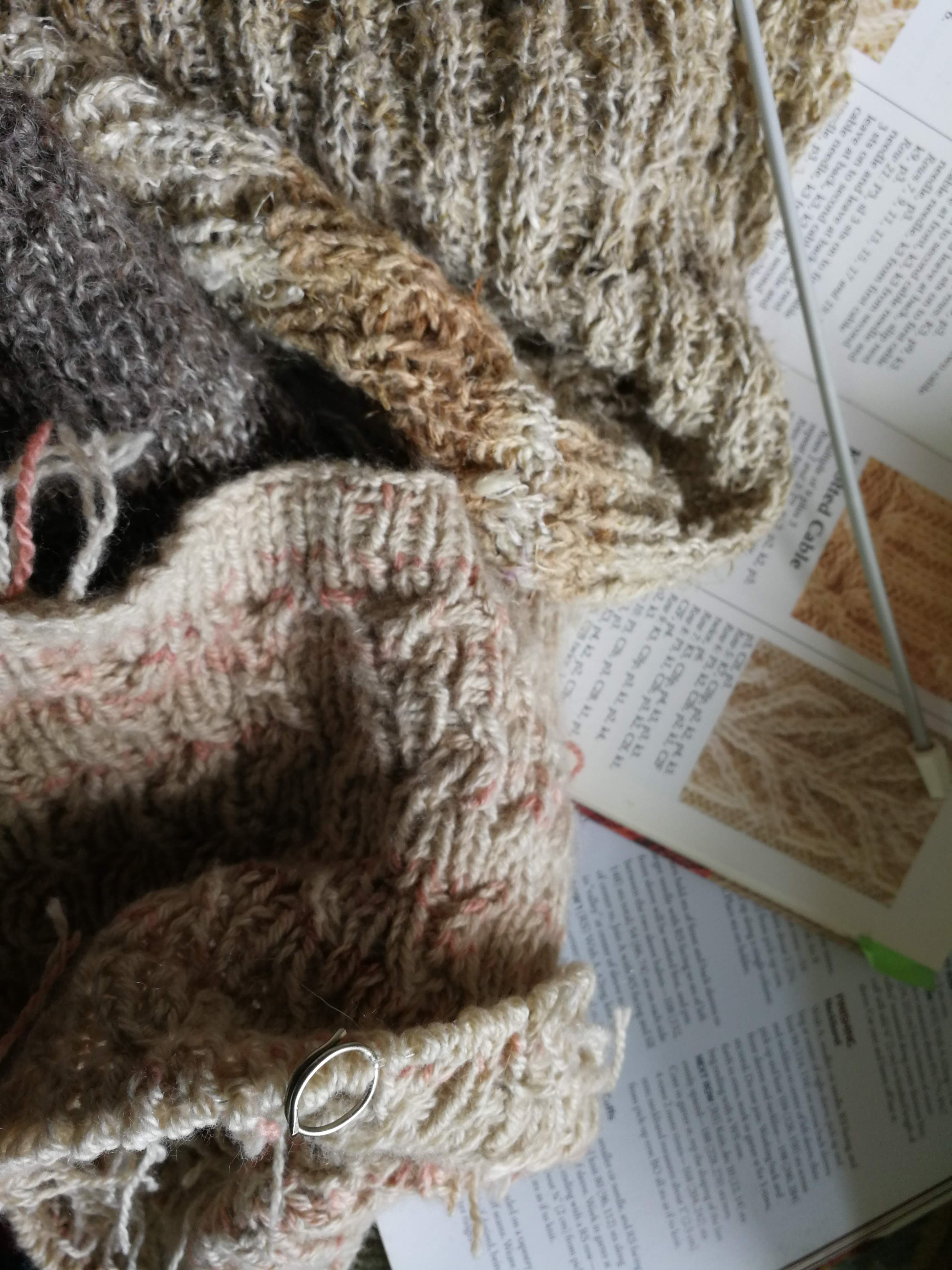
• On-line or in-person?

    Crafting together continues one way or another!

    If there is one thing I am learning in all if this- adaptability is the key to my emotional resilience… making plans, changing them, then letting go and changing them again- all with grace and ease is the game of the day.
    I still catch myself occasionally expecting to just go out the door to solve a problem, then realize I need to make an appointment to go in that shop, put in an online order, then wait until it is my turn to be served.
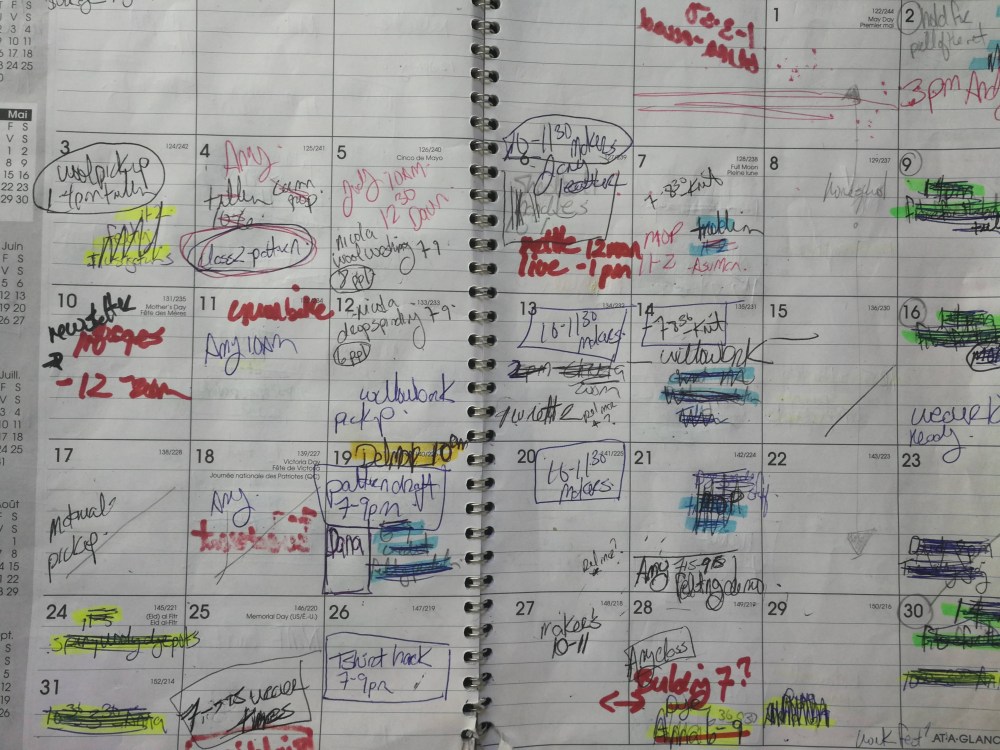
    Does this look familiar… for those that still use paper?


    But- Is it possible I am a kinder person now then I was 3 months ago? 
    I certainly expect way less of myself and the world around me.
    My patience is much higher, my awareness that others are struggling with daily challenges is heightened – everything goes through an internal filter now , and all of it so far for me has come out classed as a “champagne problem” in the grand scheme of things… the missed dental, doctor appointments and delayed  eye exam- were those life and death?

    No, so no worries!

    I hope I can hold this new perspective forward as we move into out next phase of life returning to (a new) normal. And, I hope for you, that your filter is also saying “champagne problem” and your own challenges have not been heightened to horrible stresses in the scale of life or death.

    For EartHand- all my beautiful plans were tossed out the window, my day-timer has never been such chicken scratch! Can you relate?
    I am actually enjoying just planning one week at a time- looking ahead no more then a few weeks, because… who knows?

    Less planning based on where I THINK  the garden season will be at from experience, and more following both what the gardens and other opportunities tell me to do in the moment- and making stuff on the spot as offerings to share.
    So with that, new opportunities for you to learn and explore on your own- with online support!
    I wish you well and look forward to seeing you again- in person or online.
    with best wishes,
    Sharon Kallis

    Felting:

    Super excited to have Amy go virtual on demonstrating felting on May 21st- check it out here

    Weave Along Online Tutorial:

    Sharon has created a weave along page to help get thru various steps to making a water bottle carrier and Karen Barnaby provided inspiring recipes for cold soups to fill those jars. Check it out here

    Bonus! You can purchase a Gleaner’s Weaver Kit (while supplies last!)

    for $25 and 1 future stewardship credit. Purchase here

    Kit includes 35-40 yucca blades, 6 pineapple tops and several 4-5 ft canes of thick willow ready for bark stripping. Pick up your bundle at Trillium- Monday between 10am and 12noon May 18 or by arrangement.

    BIRDS < BIRDS < BIRDS!

    Sara Ross created some beautiful content for us to share online since we couldn’t be with her in the garden. She has shared some background about bird language and the practice of having a sit spot to develop a connection to nature and awareness of seasonal changes. Take a look at this website post and see the links to the youtube videos and more.

    • Trillium and Means of Production Garden both have perfect spots for selecting as sit spots with good perching rocks situated throughout- the gardens are beautiful right now and visiting is encouraged! Sharon and David have been maintaining the gardens and keeping view points more open then ever to assure ease of spotting others and maintaining social distance while on site- read the garden stories below for musing from Sharon on time in the garden right now. 

    Harvesting time!
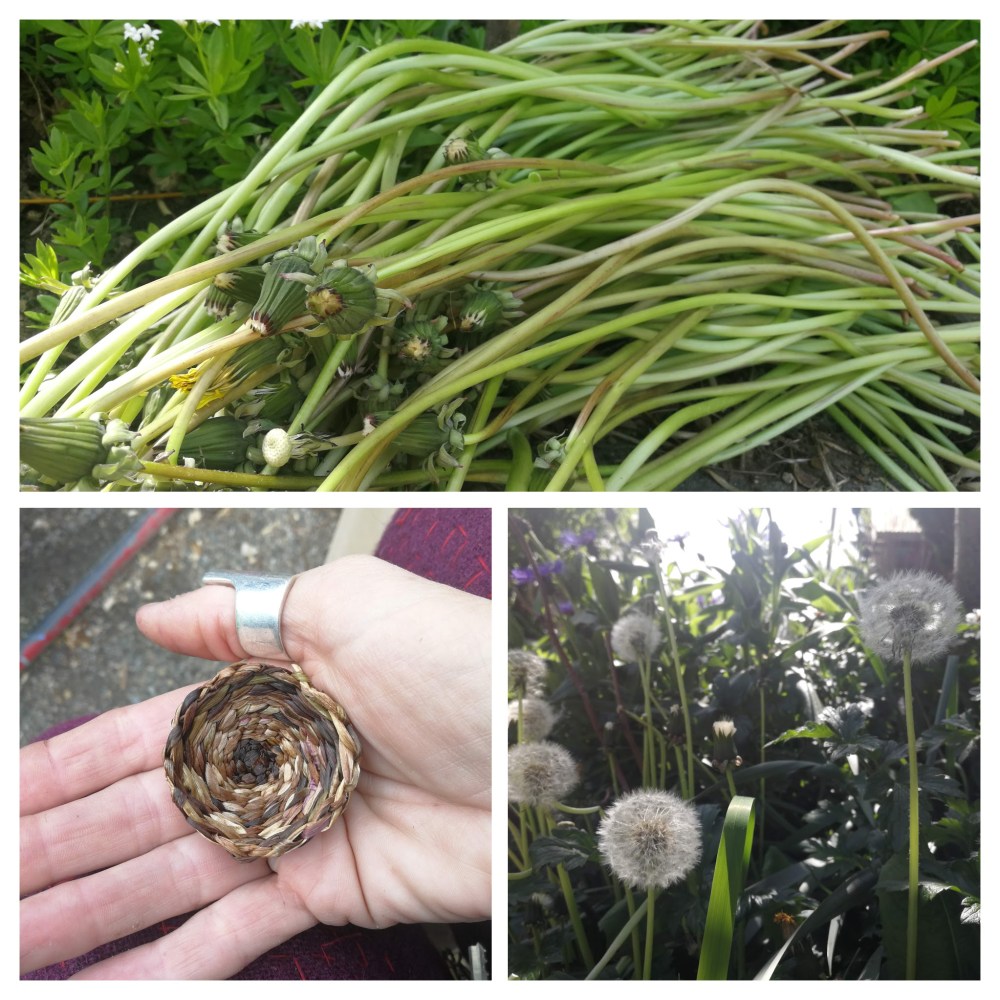
    Did you know, you can be gathering dandelion stems from long grasses after seeds are produced, spent daffodil stalks and false or dead nettle stalks? All of these plants are in  high number now, and chances are you find them in places people won’t mind you harvesting- ask neighbours about their daffodils! Just cut stems as long as possible and hang to dry until they wither, then they will be ready for  soft basketry weaving projects with a quick soak and wrap in a wet towel.
    We hope we will be returning to small group stewardship sessions in later June, and should know more from Park Board soon!

    Stories of the Gardens:

    Both MOP and Trillium are really at their best this time of year- iris, lupine and centuria abound at either site. And best of all, the new growth greens everything up, revealing “new” view corridors. The green is not so overgrown right now to hide the beautiful sculptural bones from  cropping and shaping as we tend the plants thru seasonal harvests.
    Spending so much time with David alone in the garden this spring has really brought home that perhaps the MOP garden and hillside is our legacy. This spring we have really taken on big projects; David has done in a day what we talked about for 10 years- he  leveled the terrain at one of the lower fruit crop rows making it so easy to navigate, and the crop is now a raised bed!
    I have been working on extending pathways, opening up beds and weaving new fences- there is also what we call, “the beach” a fantastic new raised area between hazel and and willow, a platform for now until it is ready to plant. Seriously, go to Means of Production- you will be amazed at what is happening!
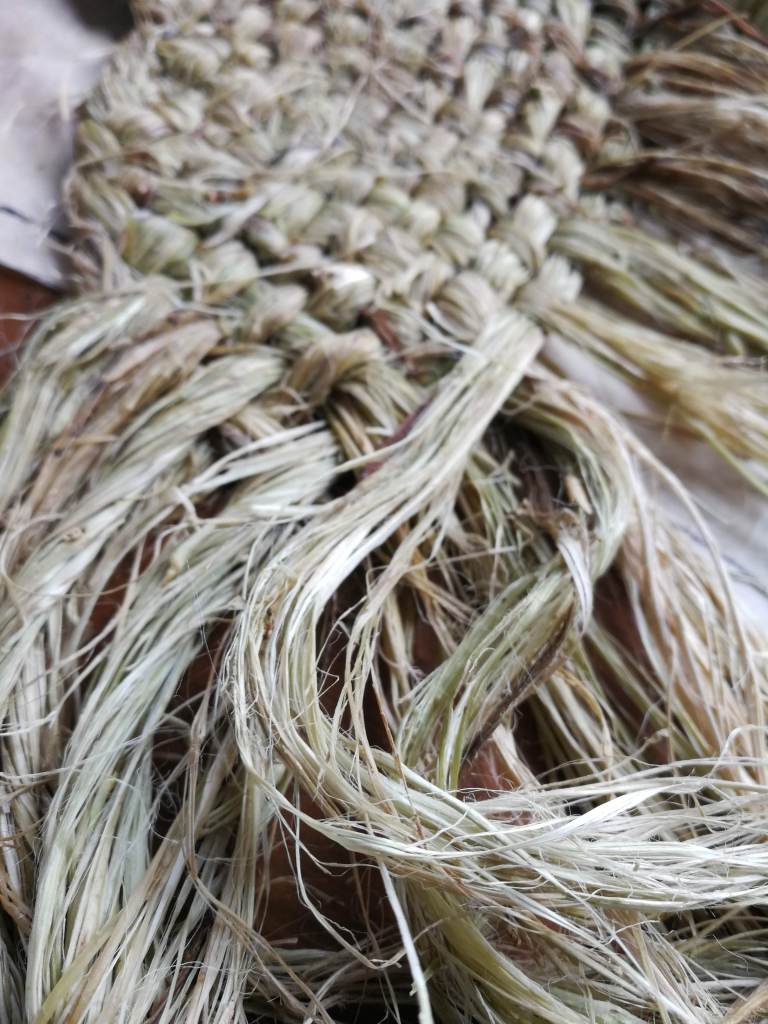
  • Sharon is working on a nettle garment, and hopes for your company working alongside her virtually.  When we  make for ourselves, are all those who have taught and shared with us not alongside as well?

    In the spirit of community labour, Sharon and Amy invite you to join them online for these mid sized groups ( 12 places)

    4 sessions- weave and braid at your own pace, have a chance to see how the nettle braiding is progressing and enjoy virtual company of others, hosted by Amy Walker.

    Sharon acknowledges BC Arts Council for the production grant that has made this project possible.

    Free tickets to hold your virtual place and get the zoom participation link

    May 25, June 8, June 15, June 22

    About this project:

    A Coat Cut is invocation and metaphor of precarious protection.

    A Social Fabric is mitigation of the ravages gifted from industrialized consumption.

    Everything about our clothing is relational; each garment a literal and metaphorical woven artifact that tells a story  of our  interdependence to others and this earth. 

    Yet currently, faceless makers of our garments work  in far-off places and rising consumption levels seem a form of social hysteria.

    But have humans ever been  able to clothe ourselves independently, sustainably? 

    Many hands are required to stretch a leather skin, harvest the crop, shear and spin  wool. Perhaps someone else did the dying, weaving or sewing. 

    An awareness of value, time, labour and resources existed for the daily objects we handled.

    A Coat Cut: A Social Fabric is a work which proposes a response to our globalized reality through the technologies and methodologies of a past brought forward into the present. 

    This  is a multi-disciplinary work encompassing:

    • contemporary craft and design – a wearable hand-made coat
    • social practice – skill sharing and cultural dialogue through hosted public events

    documentary –  highlighting both skill holders and relationships that make A Coat Cut possible to make, featuring conversational dialogue from public events.

  • More workshops coming up- taking old garments and making new again!

    May 26th- Tshirt hack time- check it out here

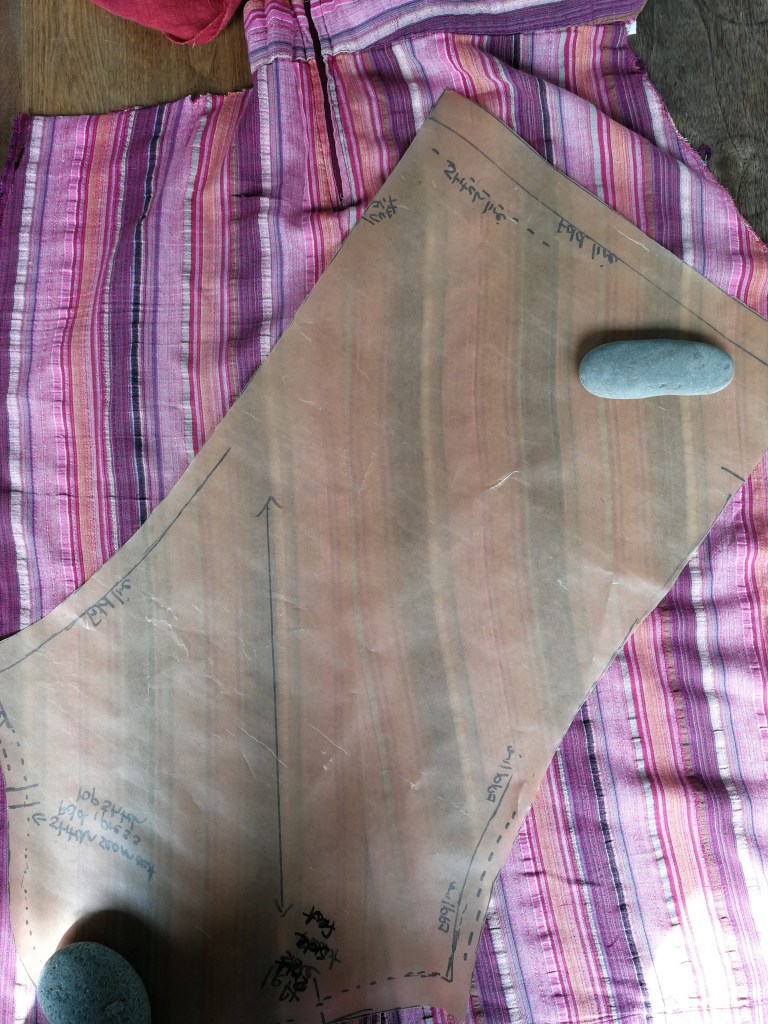
    June 2nd- pattern hacking and drafting 101- lets figure out your garment construction together- register here

  • Join this pay-what-you-like Zoom video conference felting demo with Amy Walker using local Gotland fleece from Barnston Island.

    Thursday May 21st 7.15 pm

    Link to register for the WESHOWUP demonstration

    This introduction to felting will show you the materials, tools and methods I use to make felt and give you an understanding of the felting process. There will also be a follow-up Zoom class to register for if you want to make felt of your own. A registration fee of $2 will be charged on We Show Up – and there will be an email inviting you to pay a few bucks at the end if you feel like it. Amy Biker Walker is the thinker / organizer / maker of Makemobile.ca – a mobile art studio / cargo bike. She worked as a production felter for five years at Funk Shui Atelier on Granville Island and she facilitates mobile sociable making in Vancouver with natural, non-plastic materials as much as possible

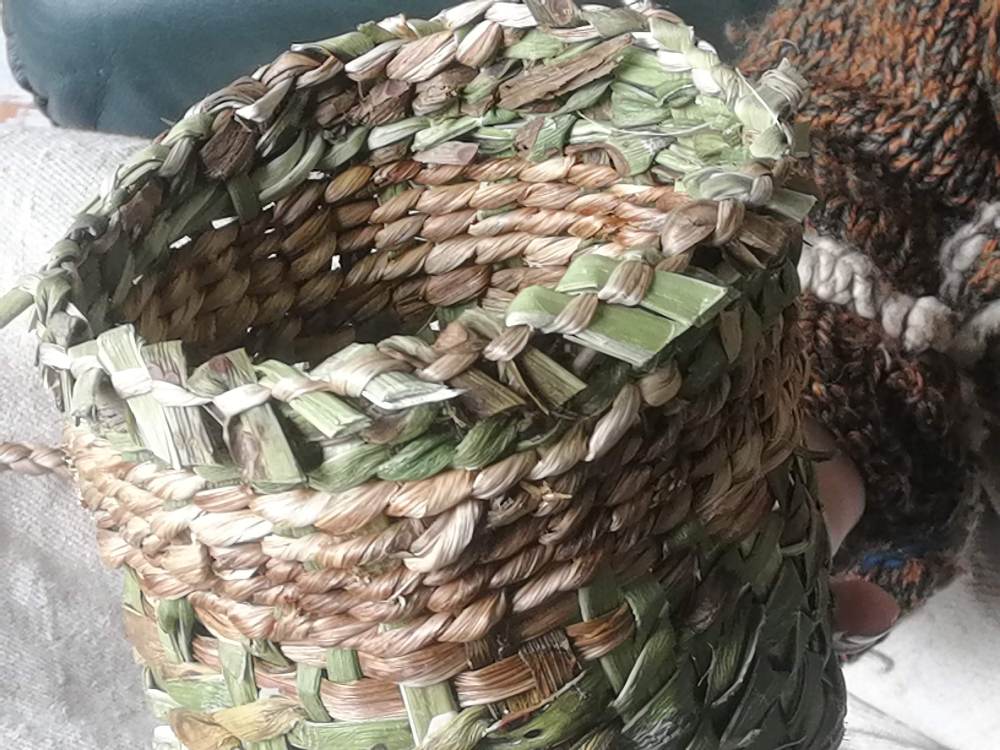
  • Weave a lunch pack or water bottle cover

    Mason jars are such handy containers for on the go- and as we move on to the next phase of Covid 19 re-opening…being outdoors and travelling more – why not choose now to make yourself a handy jar cozy?

    An added bonus, Karen Barnaby has shared her favourite cold soup recipes with us- lunch contents for when your jar cover is made. See the bottom of this post for recipes.

    What you will need– materials to use for your warps and weavers and handle.

    Use a jar with straight sides- beware of rounded jars where your weaving will form an undercut and be locked on to the jar

    Sharon uses yucca (about 6 leaves) a few leaves of dried iris and 16 daylily stalks for the 4 ply braid hand- you can use threads and yarn scraps, fabric strips or plants- strong plants like yucca are great for weight.

    a crochet hook, scissors, tapestry needle, needle nose pliers are all handy, but you can make due with a jar, a sharp point for stripping fibre and strong hands.

    Weave Along online steps:

    These are silent tutorials with ambient urban noises and bird song. Read descriptions for aid, consider this like sitting beside me watching my hands move, lots of repetition helps get the techniques ingrained.

    We would love to see your results! Share with us on facebook

    Now what to put in that jar?

    Recipes as promised!

    Raw Asparagus Soup

    The cashews and avocado give the soup its creamy texture. Eat it soon after it’s finished to keep the flavour and colour of the avocado.

    • 1/2 cup (125 mL) raw cashew halves or pieces
    • 2 cups (500 mL) water
    • 1 lb (500 g) fresh asparagus
    • 1 cup (250 mL) raw spinach leaves, packed
    • 1 clove garlic, smashed
    • 1/4 cup (60 mL) green onions, green part only, chopped
    • 1/2 cup (125 mL) thinly sliced, trimmed fennel bulb, optional
    • 1/2 tsp (2.5 mL) finely grated lemon zest 
    • 2 Tbsp (30 mL) freshly squeezed lemon juice
    • 1 ripe, medium avocado, peeled and pitted 
    • 4 thin slices lemon

    Cover the cashews with cold water and refrigerate for at least 2 hours or up to overnight.

    Trim the woody ends from the asparagus. Cut off 12 of the best looking tips, then cut each tip in half lengthwise and reserve. Chop the rest of the asparagus into ½-inch (1.25 cm) pieces.

    Drain the cashews and place them in a blender along with the 2 cups (500 mL) water and the remaining ingredients except for the reserved asparagus tips. Puree until completely smooth. Check the thickness and seasoning. Adjust with more water if needed, lemon juice and salt.

    Pour into bowls and garnish with the reserved asparagus tips and a slice of lemon.

    Makes 4 1 cup (250 mL) servings

    Chilled Zucchini & Yogurt Soup with Fresh Mint 

    The spinach makes this soup a vibrant green.

    • 3 Tablespoons (45 mL) extra virgin olive oil 
    • 1 cup (250 mL) thinly sliced green onion
    • 2 cloves garlic, minced
    • 2 pounds zucchini, trimmed and thinly sliced
    • 2 cups (500 mL) chicken stock or water 
    • 1 cup (250 mL) packed spinach leaves
    • 1 1/2 teaspoons (7.5 mL) sea salt 
    • 3 cups (750 mL) plain yogurt
    • 3 Tbsp (45 mL) finely chopped fresh mint
    • Freshly ground black pepper to taste
    • 2 Tbsp (30 mL) fresh lemon juice
    • In a large pot, heat the olive oil over medium heat. Add the green onion and garlic; cook until the green onion wilts. Add the zucchini and turn the heat to high. Toss the zucchini until it wilts. Add the 1/3 of the chicken stock and salt and bring to a boil. Remove from the heat.
    • Transfer the zucchini mixture to a food processor or blender and puree until smooth. Add the spinach and puree again. Mix with the remaining chicken stock and whisk in the remaining ingredients. Refrigerate until chilled. Before serving, check and adjust the seasoning. Makes 4-6 servings
    • Gingered Yam Soup 
    • You can use sweet potatoes or squash in place of yams.
    • 2 lbs (1 kg) yams, peeled and cut into 1-inch (2.5 cm) chunks
    • 2 cups (500 mL) thinly sliced onion
    • 1 good tasting apple, cored and coarsely chopped
    • 2-inch (5 cm) segment of ginger, thinly sliced
    • 6 cloves garlic, peeled
    • 1 tsp (5 mL) turmeric
    • 1/2 tsp (2.5 mL) cinnamon
    • 1/4 tsp (1 mL) nutmeg
    • 10 cups (1500 mL) unsalted broth (vegetable or chicken), or water
    • 1 14 oz (400 mL) can coconut milk

    Place the yams, onion, ginger, garlic, turmeric, cinnamon, nutmeg and broth in a large pot. Bring to a boil, then turn down to a simmer and cook for 30-40 minutes until the yams are tender. 

    Puree the soup in a blender with the coconut milk. Taste and adjust the seasoning. Cool and refrigerate. The soup will thicken when cooled and can be thinned with water. Check the seasoning as this too will be reduced and adjust as you see fit.

    Makes approximately 8, 2 cup (500 mL) servings

  • We were super excited Sara was going to do walks with us this Spring, and when that couldn’t happen we asked Sara to embrace technology and bring the gardens to our homes.

    In honour of Bird Week this guest post by Sara Ross takes us on a walk (a sit-spot actually) at Trillium North Park and Means of Production Garden. Who are the birds using these wonderful pockets of indigenous and art-material plants? And what are they up to?

    There is so much good reading, listening and link-following ahead- get a cup of something and cozy up to a screen to be inspired when next you go to the gardens!

    (note- if you want to watch these videos full screen, visit the EartHand Youtube channel to view them directly. Headphones recommended. Thanks to Ifny Lachance for tech support.)

    “It’s waaaaaay spring! The leaves have arrived and most have already turned from yellow to green. Bird song fills the air, and in many places it is easier to hear because of the current slow-down. Friends have asked me… are there more birds this year? Good question! Lee’s see what we can see and hear.

    I had a few technical issues while creating these video and sound recordings. As a result there are several places where video cuts out. One part of my story about the history of the salt marsh was lost altogether, so here are some additional notes that fill in the lost recordings and point towards further resources.”   ~Sara

    Mean of Production Garden, May 6 2020

    The Salt Marsh. History of Land/Place at Trillium Park

    People have been living in Vancouver for 3,000 years, and in the Greater Vancouver area for 8,000. Before that there was a massive glacier, or a glacial river outflow in this place. A large area (see pic of map by Celia Brauer & Bruce Macdonald) including where Trillium North is now, and stretching to the base of the hill at Means of Production garden, was a salt marsh and intertidal zone called Skwahchays. At that time the marsh would have been home to so many wild creatures: birds, mammals such as elk and deer, crab and other shellfish and fish, plants that many of us would not even recognize for their diversity.

    In the 1930’s the marsh was destroyed by being filled in to use as a rail yard.

    In about 2007 remediation was started, and by 2014 the main tree plantings in the North part of the park were completed. Since then the area has been stewarded by Earthand Gleaners and friends, and we see the plants and trees… and associated birds are thriving.

    map by Celia Brauer & Bruce Macdonald
    Trillium North Park is located in the pinkish area just to the left of where the map says crab (I think). Khiwanah’esks ‘separated points’ is now Main Street. Burrard Inlet is the water to the north.

    VIDEO: Trillium Bird Wander

    Intro to Bird Language and a few stories about the birds that are here, including anna’s hummingbird, 4 species of sparrows, orange-crowned warbler, cooper’s hawk, european starling, crows, cormorants. Cooper’s Hawk photo credit: Laurel Dykstra.

    More bird notes:

    The main bird voice heard throughout this video is white-crowned sparrow.

    On re-watching, at 6:38 I notice that a person walks behind me on the other side of the bushes. Shortly after that, the sparrow begins to alarm, and I suspect they are connected.

    Birds seen or heard at Trillium North Park

    • crows (with nesting materials)
    • glaucous-winged gull
    • canada geese
    • tree swallow
    • white-crowned sparrow (singing a lot through video)
    • golden-crowned sparrow
    • lincoln’s sparrow
    • savanah sparrow
    • orange-crowned warbler
    • wilson’s warbler
    • american robin
    • house finch
    • anna’s hummingbird
    • cormorants (flyover)
    • european starlings
    • bushtits
    • northern flicker
    • killdeer
    • western tanager

    VIDEO: 5 Voices of Birds at Means of Production

    Intro to the 5 voices of the birds, including understanding baseline. Song, companion calling, juvenile begging, male-to-male aggression, alarm.

    More bird notes:

    10:58 – 11:08, when I’m talking about juvenile begging and starlings and crows what I hear on re-listening is a baby crow being fed by a parent.

    11:43 and 11:52 we hear a loud sound comparable to the sound a sneaker makes on a gym floor. It’s the Anna’s Hummingbird doing an aerial territory display!

    VIDEO: Invitation to Connection and Intro to Sit Spot

    Starts with a nice audio of birds and pan of the beautiful gardens at Means of Production. Learn about Sit Spot. I focus on bird sounds in this invitation, but note that you can pay attention to whatever catches YOUR interest at your sit spot (except NOT your to-do list). Pay attention to plants as they unfurl, bud or develop seeds, insect visitors, clouds, birds, four-legged creatures, water, wind, whatever.

    Birds seen or heard at Means of Production Garden:

    • ruby-crowned kinglet
    • warbling vireo
    • swainson’s thrush
    • house finch
    • black-capped chickadee (excavating a nesting cavity in Paulownia!)
    • european starlings (nesting)
    • orange-crowned warbler
    • yellow-rumped warbler
    • wilson’s warbler
    • yellow warbler
    • western tanager
    • goldfinch
    • anna’s hummingbird
    • crows (nesting)

    Try a sit spot, a short How To:

    What makes a good sit spot?

    Choose somewhere that is very close to you, easy to access… so not more than 5 minutes walk from your house, ideally closer.

    Pick a place where you feel safe, and where you can be alone without talking to other humans. It needs to have some nature, but does not need to be a super-wild space. Even sitting at your window is fine. Perhaps you can have a second spot that you visit less often which is more wild?

    Visit your spot often at different times of day and seasons. While there, expand your senses and get curious. Working on hand-crafts at the same time is ok, providing you still have some attention free to be present to your sit spot.

    Some people take notes or nature-journal while there if it helps you focus. Others save the note-taking until later or never. It is best if you can share your nature stories and observations with another person, but if that’s not possible it is valuable to share with your journal.

    7 local birds that will help you study bird language

    These birds spend all or most of the year here, and generally hang out fairly close to the ground. 

    • american robin
    • song sparrow
    • dark-eyed junco
    • spotted towhee
    • pacific wren
    • anna’s hummingbird
    • black-capped chickadee

    Hear their different vocalizations such as song, companion, and alarm at Bird Language Audio Recordings

    Links

    Bird Language Audio Recordings

    How to Learn Bird Language in 5 Steps

    Sit Spot Link (Wilderness Awareness School)

    8 Shields

    Wilderness Awareness School

    History of False Creek Watershed

    What the Robin Knows, Bird Language book by Jon Young

    Helping Birds in local parks.
    Please keep your dog on a leash except in clearly marked off-leash areas. Dogs harass birds and destroy nests.

    Clean up fishing line and nets and any other plastic trash that you see in nature to prevent bird entanglement and ingesting.

    BIO: Sara Ross is a Burnaby-based mother, cyclist, explorer, maker, care-taker of land, harvester & gleaner of wild plants, land defender. She loves birds, and loves the thrill of catching sight of a hunting cooper’s hawk on the wing. She is a former Lead Instructor at Soaring Eagle Nature School, and has worked, studied, and practiced with nature-connection & birds in this region for 20+ years. Sara has led the Crow Roost Twilight Bike Ride since its inception. Sara also runs a micro-business called Land Connection Medicine which features super-local & limited-edition plant medicine tinctures.

    Sara Ross with copper and cherry blossoms, April 2020

    Mean of Production Garden, May 6 2020

    White-crowned Sparrow sings from favorite song perch at Trillium North Park, May 6 2020

  • The 2 hour talk and demonstration by Sharon Kallis from April 21st

    – a show and tell of garments she has made from older garments and tips and tricks to inspire others to try at home…. the whole darn talk!

    Content and time markers to help you  find what you are curious to hear.

    A huge thank you to the kind and patient people who joined Sharon for this live online talk!

    • Intro: context and background of where I come from 12.58
    • personal history of wardrobe hacking 25.39
    • studio tour 29. to 34
    • closet sort 35.- 41
    • family cloth, skills, re-makes and 2nd hand fabric industry 43.30 – 49.29
    • fabric choices and family lace story 49.38 – 53.21
    • prewash instructions 53.12
    • first sweater cutting story 54. – 55.30  
    • Sweater pile show and tell 55.40 – 106.57
    • Scissors for cutwork 108
    • Wool prep and deign bits 1.10
    • Knitwear fit and stretch 1.14
    • Drape neckline 1.19.04
    • Pattern layout and patching 1.20.28
    • Scoop neck explained 124.50
    • Making a simple 3 piece shaped knit tank 126.50
    • Vests and pattern drafting 1.33.54
    • Old wool coats to vests 140.07
    • cardigan to dress 141.-
    • sleeves for back of garment 143.
    • interfacing 144.53
    • Sweater clipping demo 146.56
    • Coat with pant sleeves and pocket reuse 152.50
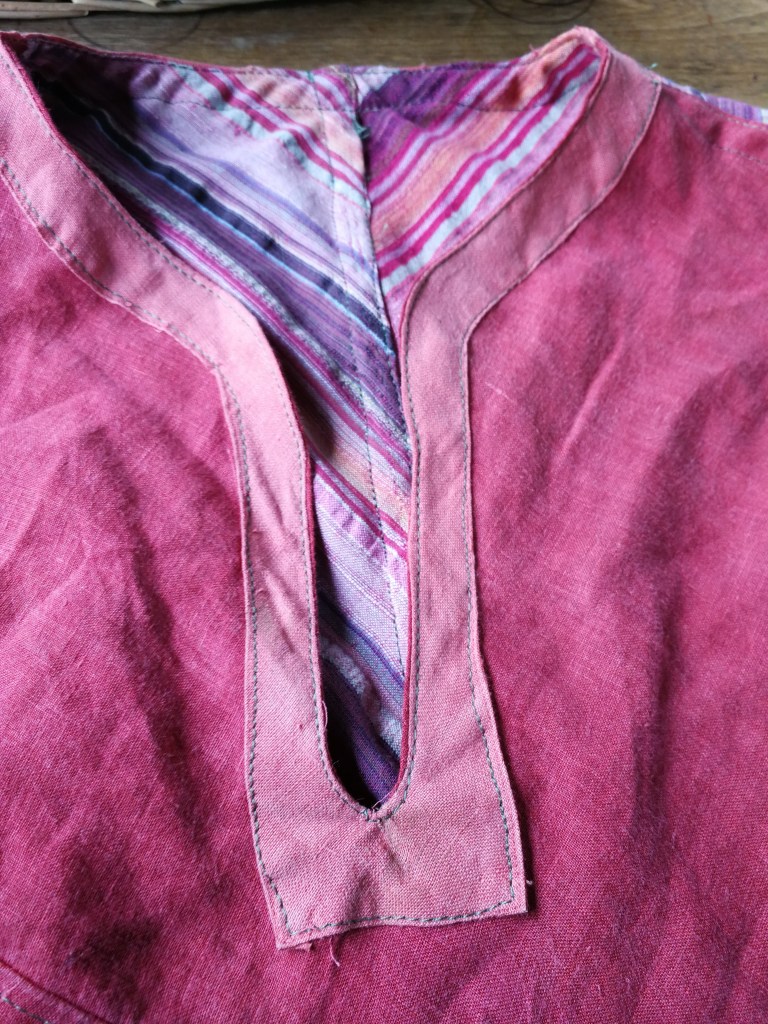
    • Bias shirt pattern drafting to make in pants- project in progress with bias stretch explained 157
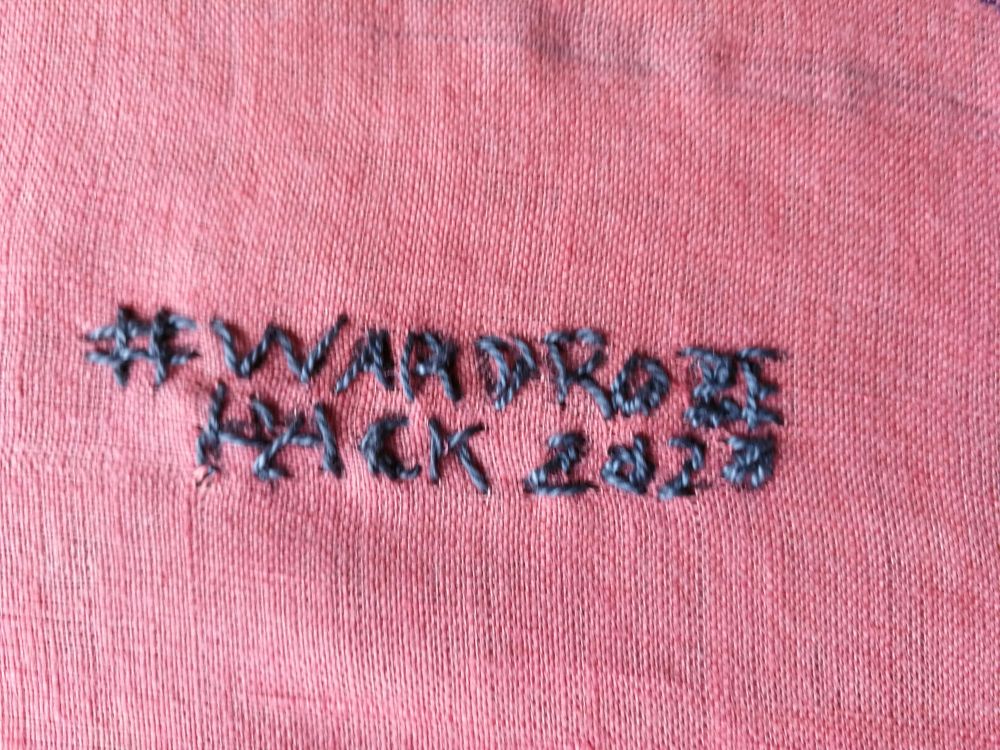
    • #wardrobehack2020 202.35
  • Take a look at our events calendar to see fresh programming all designed to keep you busy making and learning from home throughout this time of social distancing.

    Now thru May, we have a variety of knitting clinics, making circles and artists talks you can connect to through your computer. We are also working with our skill holders to support them in being able to teach from home- and are sharing links for the classes they will teach thru the weshowup platform. ( allowing pay what you can after the class).

    We will continue to add content to our Youtube channel as we can, and meanwhile hope you and your family are staying safe and healthy… and hopefully enjoying a new-found pace of slow and local living.

  • Join Sharon Kallis and EartHand Gleaners in elevating your existing wardrobe for the remainder of 2020 for all your clothing needs and desires.

    Let’s clothe ourselves and create a new culture by our choices in what we make, what we wear and what we decide or decline to purchase.

    • What garment ‘key pieces’ do you need?
    • What neglected clothing can you reclaim for that new piece?
    • After a year of solving your own clothing needs how will your personal and unique fashion style emerge?
    • What new skills will you have learned? 

    BE THE FASHION CHANGE YOU WANT TO SEE IN THE WORLD 

    Because of  Covid-19, we have paused fast-fashion and the rabid textile consumption machine. Now, let’s just hit the stop button.

    Our collective Wardrobe Hack style can truly make a statement;  a shift in fashion culture, production values and in maker and consumer culture. 

    PARTICIPATE IN THE WARDROBE HACK

    Declare out loud, online or alone:

    • I promise to respect the cloth
    • To look twice, then thrice at any garment I have decided to toss
    • I will find another life for that garment beyond a donations bin
    • I will remake, re-fashion and reconsider my way through my closet to solve my garment needs for 2020
    • I will ask for help
    • I will proudly walk down the street, entirely comfortable in looking like I was dressed by a child genius
    • I will be bold, vulnerable and fearless in my fashion choices 
    • I  proudly know  my less-than-perfect  look shows that I seek change from the status quo
    • I will not go back to ’business as usual’ for ordering online, cheapest-possible, or best deal options
    • I will find skill holders to teach me and local producers to support when I do need to purchase

    Ways to Participate!

    Do a wardrobe sweep and see what your core pieces are.

    • Pants vs skirts or dresses? Sweaters vs button downs or t-shirts?
    • What are the comfortable core garments  that you want to emulate? 
    • Garments  bought new in the last 12 months are worth repairing for the next 12 months. Make a commitment to keep that garment functioning and get mending.

    Do another wardrobe sweep to cull your closet of excess: garments not being worn sort into the following categories:

    • PATTERNS: Great fit but worn out and maybe its a pattern for something new
    • FABRIC: Lousy fit but love the colour / fabric maybe I can make something new with it
    • Knit wear: keep T-shirts/jersey  and sweaters in two different piles within the fabric and pattern categories
    • Finally, make a pile of “I never wear this because I don’t like the ___________ and could change that” (and then start making those changes)
    • Join EartHand’s online sessions to learn some basics on clothing re-makes or adventure out on your own and share your results
    • Get stitch-picking, cutting, pattern-drafting and remaking
    • Document what you start with, document your successes, document your misadventures and learning
    •  keep your scraps, you never know when those will come in handy

    When Social Distancing requirements in your community end, consider hosting a making circle and a materials swap –  trade old garments for new inspiration!

    Share on social media: # wardrobehack2020

    check the Events Listing for Wardrobe Hack listed events and other slow clothing tagged events and classes. and catch the virtual artists talk by Sharon discussing this project and touring her wardrobe remakes on April 21st.

  • We are thrilled to partner with Caitlin ffrench in changing this event to an online session.

    Limited space- reserve your spot here

    April 14th 5-7pm

    Caitlin ffrench will be discussing how to forage for and make artist materials from within your land base.  You will learn about the oil and watercolour paints, inks, wildcrafted pigments, and charcoals that Caitlin makes as well as the work she produces using these materials.  Caitlin will also be discussing the health and safety of producing artist materials, as well as the ethics of wildcrafting. This will be a 2 hour online demonstration hosted on Zoom. Upon registration you will be emailed a Zoom meeting ID and Password to join the demo.  The demo starts at 5pm (PST) sharp. The cost is $1 (cad) to reserve your spot, and after the demo you will be asked choose the amount you would like to pay (either $5, $25, or $50 cad)